How Fast can Emergency Accommodation be installed?
The Deployment Timeline Is Not a Single Number
Manufacturer spec sheets quote assembly times. Headlines repeat them. But assembly time and project-ready time are fundamentally different things. A foldable sleeping unit may unfold in 20 minutes, but if the site has no power, no water connection, and no access road for the delivery truck, nobody is sleeping in it that night.
The real deployment timeline for emergency or temporary accommodation is the sum of several workstreams, some sequential, some parallel:
- Decision and system selection
- Sourcing and order confirmation
- Transport and logistics
- Site preparation
- Delivery and physical assembly
- Utility connections (power, water, drainage)
- Interior fit-out and furnishing
- Safety checks and commissioning
- Handover and occupancy
In modular construction, the defining advantage over conventional building is that several of these workstreams can run in parallel. Units can be sourced and transported while the site is being prepared. But that parallelism only works if someone is coordinating the whole chain. Without coordination, parallel workstreams become disconnected tasks that finish at different times, and the project waits for the slowest one.
Quoting "48 hours" or "4 to 6 weeks" without specifying what that number includes is not useful. This article breaks down each stage so you can build a realistic timeline for your specific scenario and understand where the real acceleration and delay points sit.
System Selection Sets the Clock
The single decision that most affects your deployment speed is which modular system you choose. This is not primarily about quality or cost. It is about matching the system to the use case, the required duration, and the conditions on the ground.
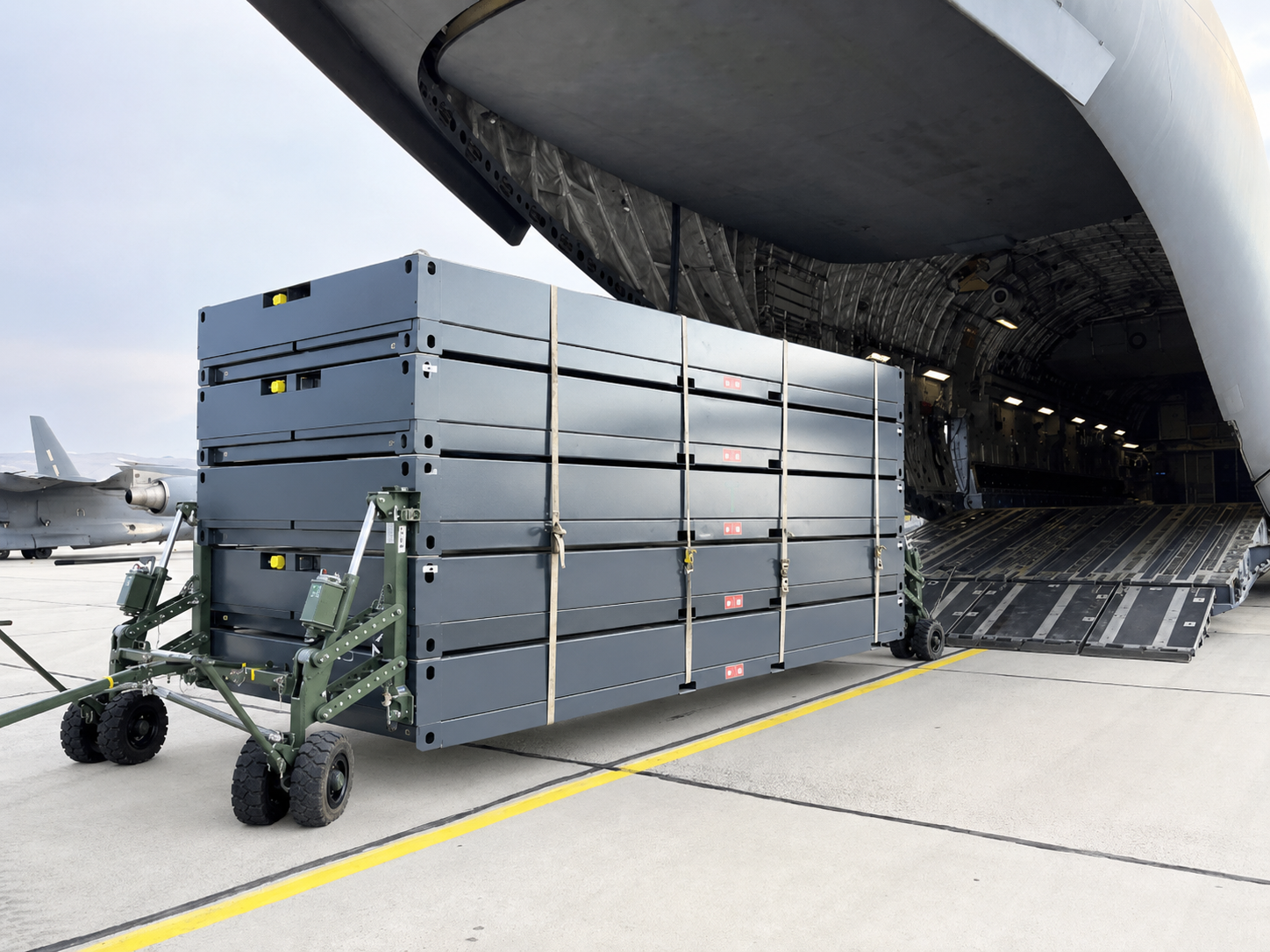
Foldable and collapsible containers
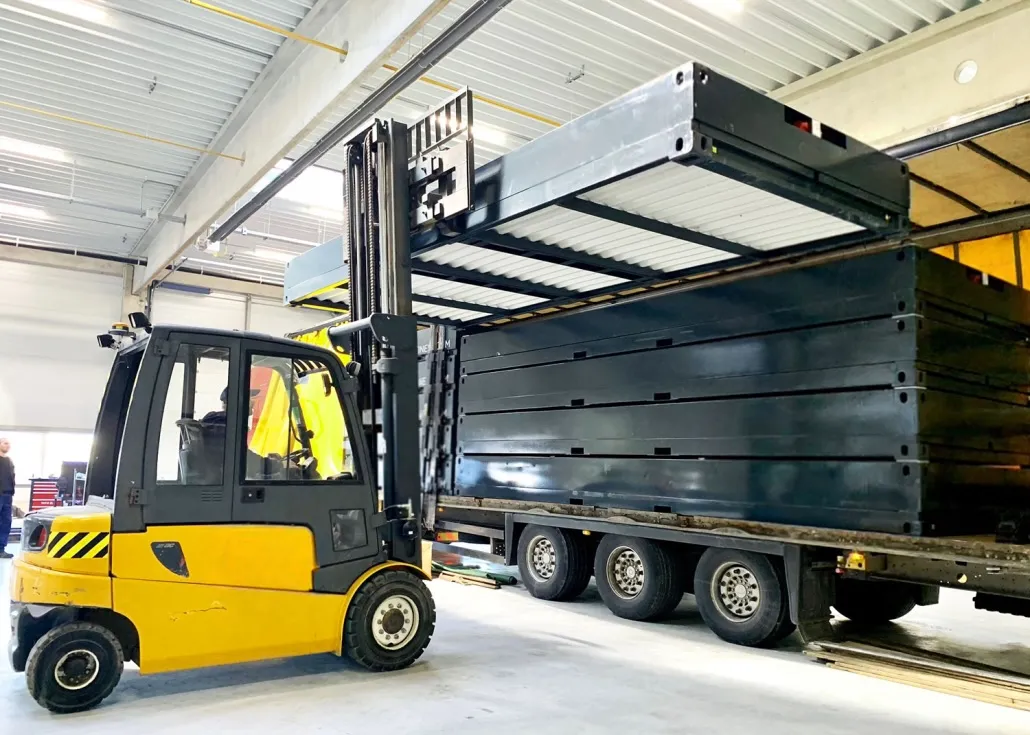
These are purpose-designed for speed. A foldable sleeping module ships flat, four to six units per standard truck, and unfolds on site in minutes with minimal equipment. Physical assembly of a small camp of 20 units can realistically be completed within a day. These systems suit first-response scenarios: disaster relief, military field camps, workforce crew accommodation where the priority is beds under a roof immediately.
The trade-off is interior specification. Foldable units are functional, not luxurious. They provide shelter, basic insulation, and a secure sleeping environment. For a 72-hour emergency response, that is exactly right. For six-month refugee housing in a European city, it may not meet the dignity and comfort standards you need to defend publicly.
Standard modular buildings
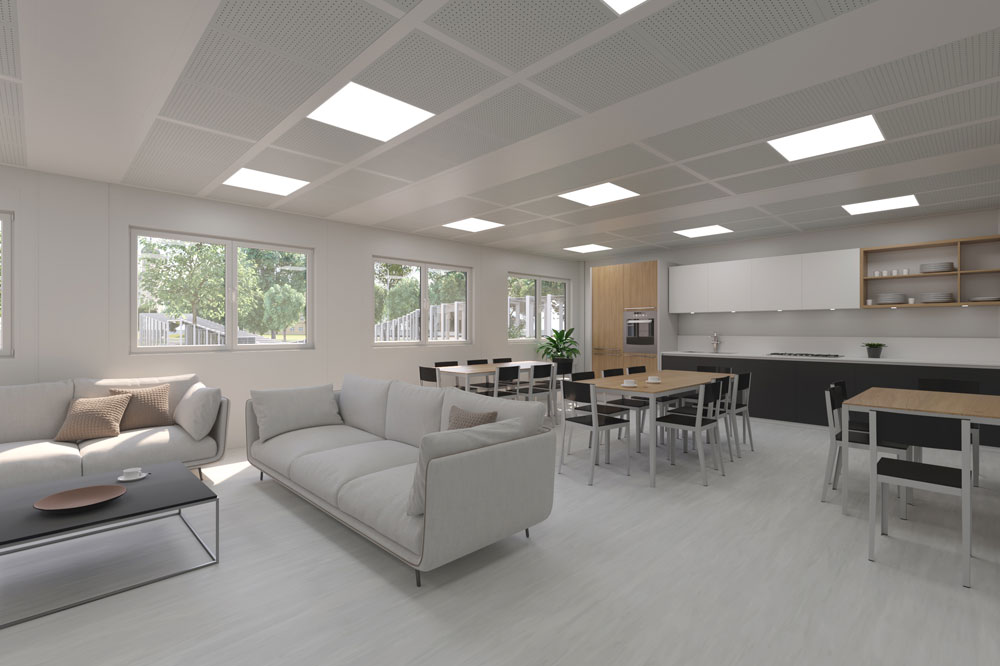
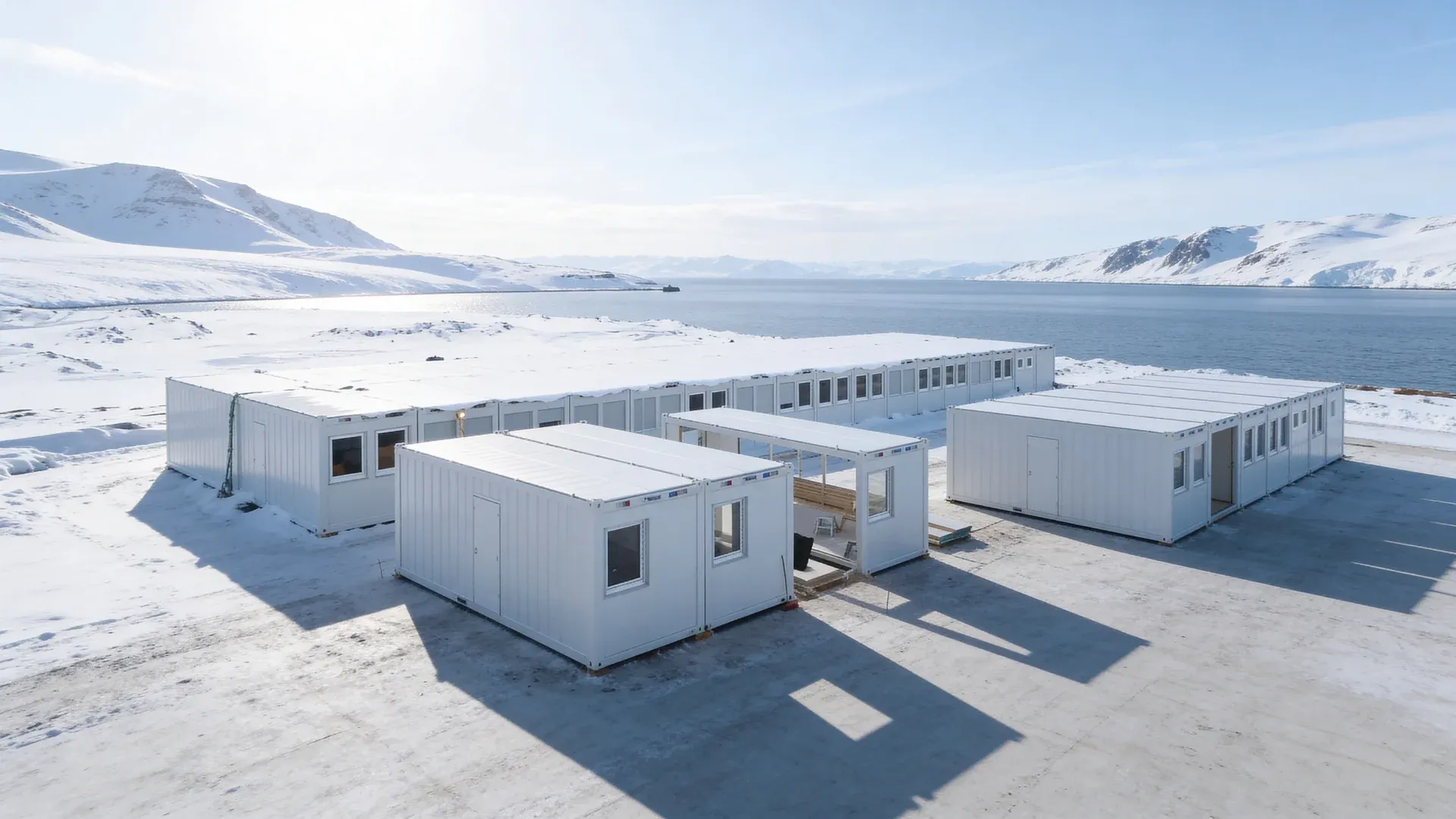
Pre-fitted container-based modular units, typically 20 or 40 feet in length, arrive on site largely complete. Walls, flooring, windows, electrics, and sometimes plumbing are factory-installed. On-site work involves positioning, levelling, connecting units to each other and to utilities, and finishing interface details. A multi-unit facility of 10 to 20 modules typically requires one to three weeks from delivery to operational status, depending on complexity.
These systems suit medium-term to long-term accommodation: refugee housing that will operate for one to five years, temporary school buildings, transitional workforce housing. They offer genuine room comfort, proper thermal insulation, and layouts that feel like buildings rather than containers.
Premium modular systems
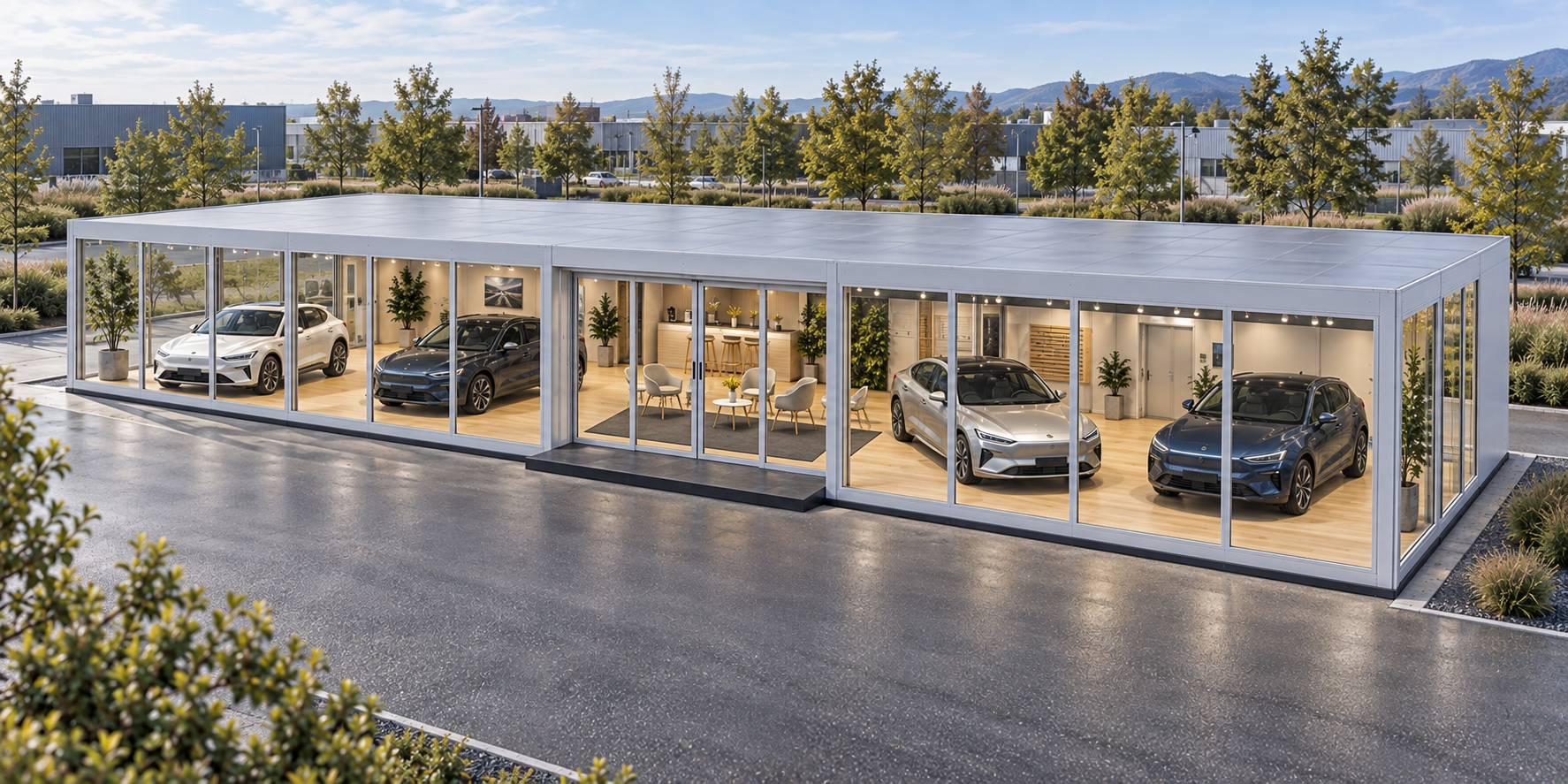
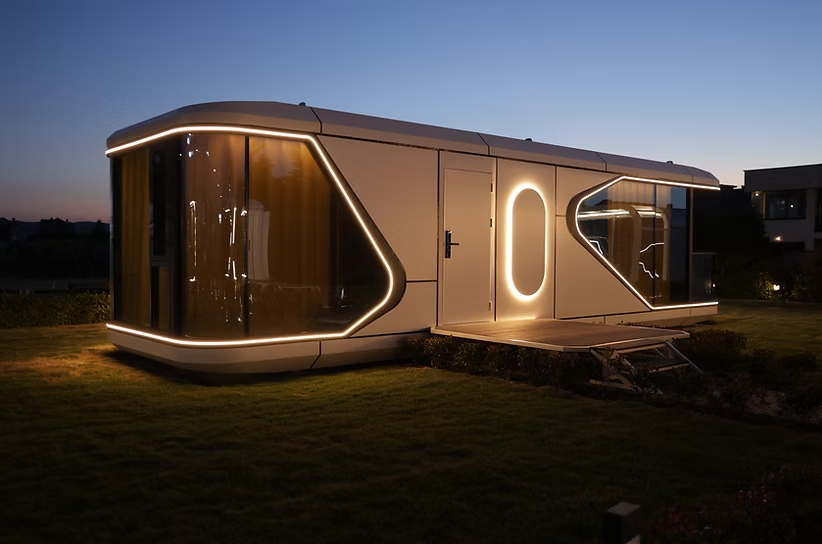
Where temporary accommodation must serve a public-facing or long-duration role, higher-specification modular lines offer improved thermal performance, better acoustic separation, and architectural finishes that make the building visually indistinguishable from conventional construction. Setup time is comparable to standard modular, sometimes slightly longer due to more complex jointing and finishing.
Why this matters for your timeline
If you select a foldable system for a scenario that actually requires standard modular quality, you will either deploy something inadequate and face pressure to replace it, or you will pause mid-project to change specification. Both outcomes cost more time than choosing correctly at the start. Conversely, specifying a premium modular facility for a two-week emergency response wastes weeks of lead time that the situation does not allow.
HEPF's product portfolio spans the full range: the FL BedStay Line for rapid-deploy sleeping modules in emergency, workforce, and military contexts; the Classic and Plus Lines for longer-term accommodation where dignity and comfort are non-negotiable; and the Sanitary Line for the toilet, shower, and changing facilities that every accommodation project needs but too many planners remember last. A single project partner with this breadth can recommend the right system for the actual scenario rather than selling whichever product they happen to stock.
Logistics and Transport: The Hidden Timeline Driver
Transport planning often consumes more calendar time than assembly. Understanding why helps you plan around it.
Volume and fleet requirements
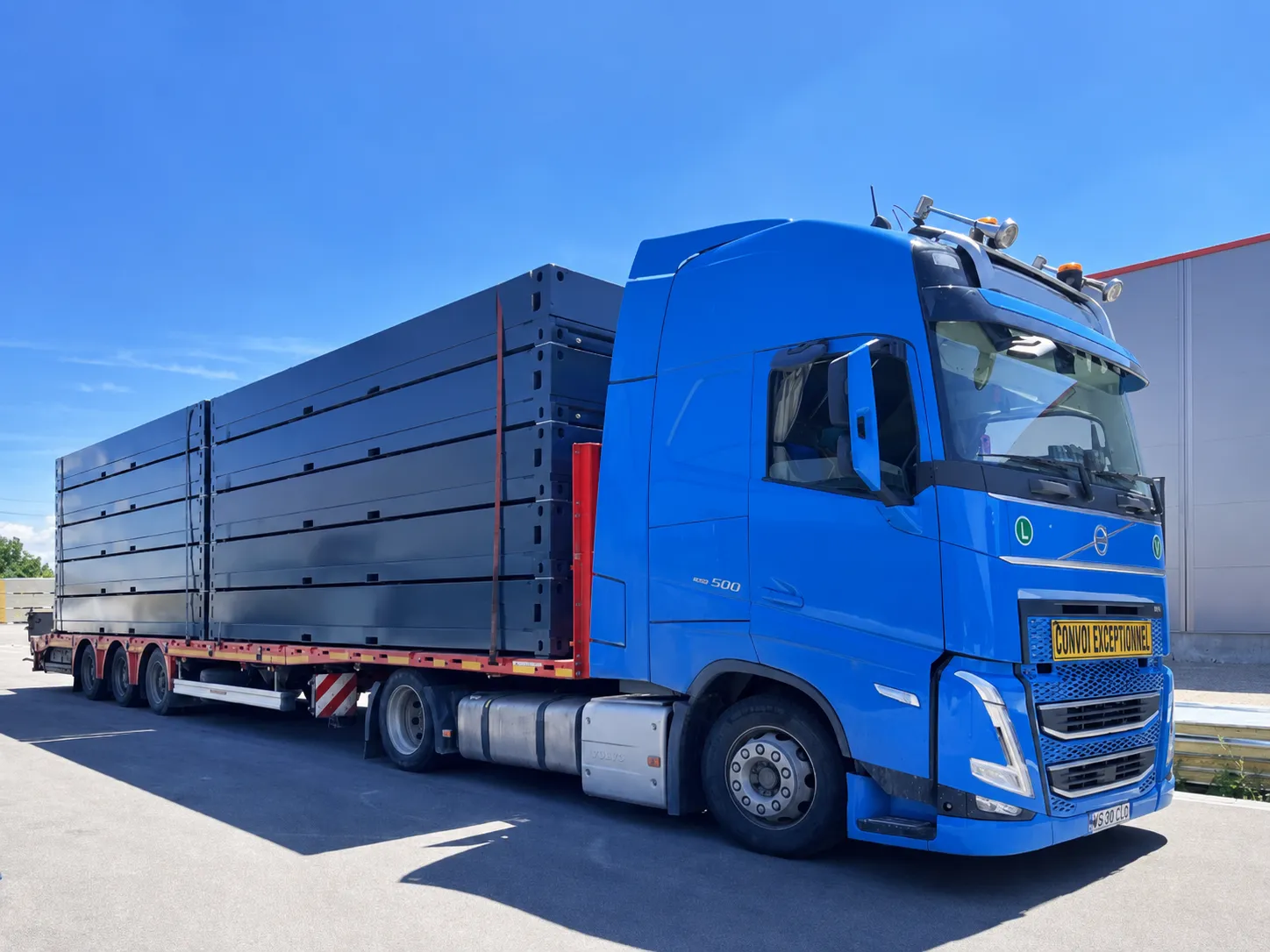
A standard 20-foot container module occupies one full truck. To deliver 20 units, you need 20 truck journeys. Foldable containers of equivalent footprint ship collapsed, fitting four to six units per truck. The same 20-unit project requires four or five trucks instead of twenty. This is not just a cost saving. It is a scheduling compression: fewer deliveries mean fewer time slots to coordinate, fewer road permits to obtain, and a shorter delivery window on site.
Cross-border movement in Europe
If you are deploying within a single country, transport is relatively straightforward. Cross-border projects add complexity. Within the Schengen area, there are no border stops, but oversized loads (units exceeding 2.55 metres width or 4.0 metres height in most EU and EFTA states) require national road transport permits and sometimes escort vehicles. Permit lead times vary: two days in some countries, two weeks in others.
Switzerland sits outside the EU customs union. Even with bilateral agreements, imports from the EU require customs clearance. If your units are sourced from a production facility outside Switzerland, factor in customs processing time and documentation. A coordinating partner familiar with these routes can prepare documentation in advance and avoid clearance delays that catch first-time importers off guard.
Pre-positioning
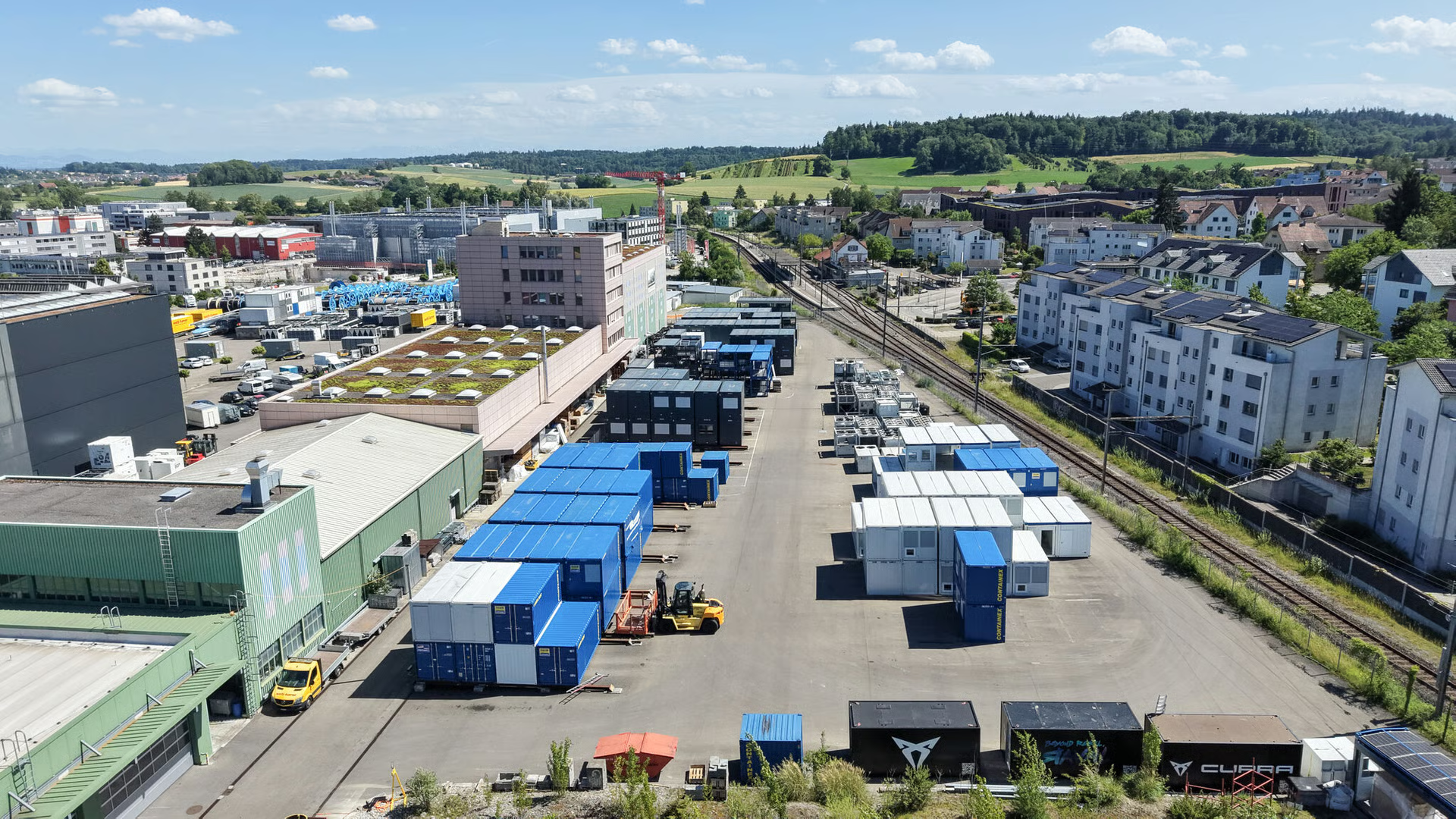
Organisations that face recurring emergency needs, such as civil protection agencies, military logistics commands, or NGOs operating in disaster-prone regions, should consider pre-positioning. This means maintaining an inventory of foldable or rapidly deployable units in a strategic location before a crisis occurs. The cost of storing flat-packed foldable units is modest relative to the time saved when a deployment order comes. HEPF coordinates sourcing, delivery, and installation across Europe, and supports rent, lease, and buy-back models that make pre-positioning financially viable without permanent capital commitment.
Site Readiness: What the Ground Needs Before Units Arrive
The site is frequently the bottleneck. Units ready at the factory, trucks booked, permits in hand, and then the site is not prepared. Every day a site is not ready after units arrive is a day of idle hire charges or wasted deployment window.
Minimal preparation (foldable units)
Foldable and collapsible containers are designed for unprepared ground. A roughly level, cleared surface is sufficient. No concrete foundations. No piling. In a genuine emergency, a gravel-levelled car park or sports field works. This is why foldable systems dominate first-response scenarios: they tolerate imperfect sites.
Moderate preparation (standard modular)
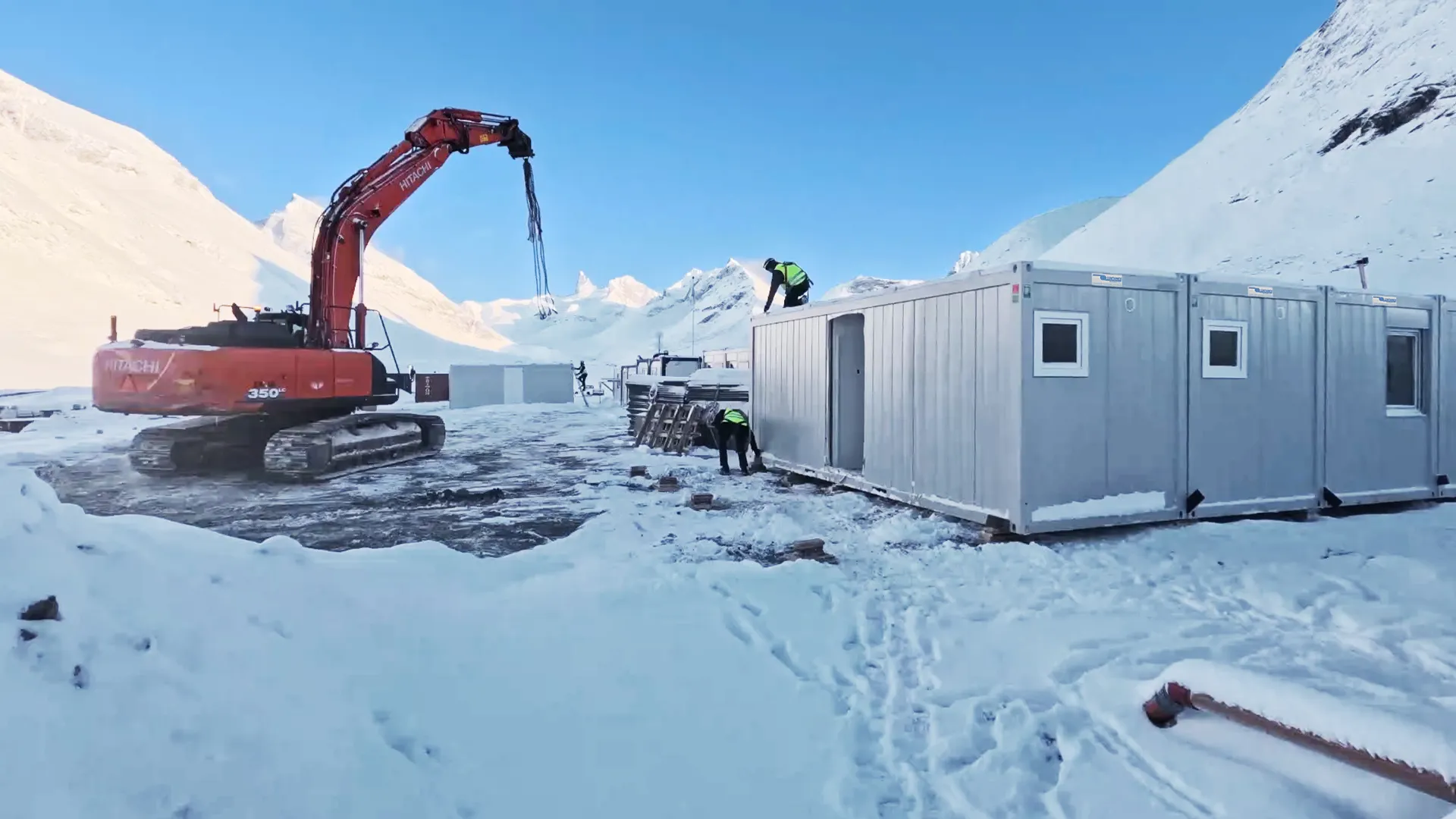
Standard modular buildings need a level base. This can be simple concrete blocks, timber bearers, or screw piles rather than a full foundation slab. Preparation typically takes three to seven days depending on ground conditions and access. If you start site preparation the day you confirm the unit order, it can be complete before the units arrive. If you wait until delivery day, you lose a week.
Utility connections
Power, water, and drainage are often the longest single task in a deployment project. Temporary power can be provided by generators for the first phase, but connecting to mains electricity, water supply, and sewage or drainage infrastructure requires coordination with local utility providers. In urban settings, this can take one to four weeks depending on the municipality. In rural or greenfield sites, it can take longer.
For sanitary facilities, fresh-water and waste-water connections are not optional. If your accommodation includes toilets and showers, as it must for anything beyond a single overnight stay, plan utility connections as a critical path item from day one.
Parallel planning eliminates dead time
The most effective way to compress your overall timeline is to run site preparation and utility connection planning in parallel with unit sourcing and transport. This requires someone to coordinate both workstreams from the start. If your unit supplier handles only delivery and your civil works contractor handles only site prep, and neither talks to the other, you will have gaps.
Regulatory and Permitting Realities
Permitting can add days or months to your timeline depending on how the accommodation is classified and which jurisdiction you are in.
Emergency declarations
In a declared emergency, whether natural disaster, conflict-driven displacement, or public health crisis, cantonal or national authorities in Switzerland can invoke fast-track provisions that bypass normal building permit timelines. Similar provisions exist across Europe. Germany's §246 BauGB, for example, allows deviation from local zoning plans for refugee housing for up to three years, a provision extended during the 2015 refugee crisis and again in 2022.
But emergency declarations are not automatic, and not every temporary accommodation need qualifies. Workforce housing for a construction project, temporary school buildings during a renovation, or event accommodation do not typically fall under emergency provisions.
Temporary vs semi-permanent classification
In Switzerland, temporary structures intended for use under 12 months may qualify for simplified cantonal building permit processes, but rules vary significantly by canton. Structures intended for longer use, or those connected to permanent utilities, are more likely to be classified as buildings and subject to full permit requirements, including compliance with VKF fire safety standards and potentially SIA norms for structural and energy performance.
The classification decision is not always obvious, and getting it wrong costs time. If you apply for a temporary permit but the canton determines your installation is semi-permanent, you restart the process.
How experience reduces regulatory risk
HEPF has delivered modular housing for refugee accommodation in Hüttikon and public-sector projects for Stadt Zurich. This is relevant not because it guarantees your permit, but because a partner with direct experience of municipal coordination in Switzerland understands the documentation requirements, the typical review timelines, and the questions authorities will ask. That experience compresses the back-and-forth that delays first-time applicants.
Coordination, Not Just Hardware
A container arriving on site is not accommodation. It is a steel box on a truck. The gap between delivery and occupancy is filled with work that someone must plan, sequence, and manage.
What happens after delivery
- Positioning and levelling on prepared bases
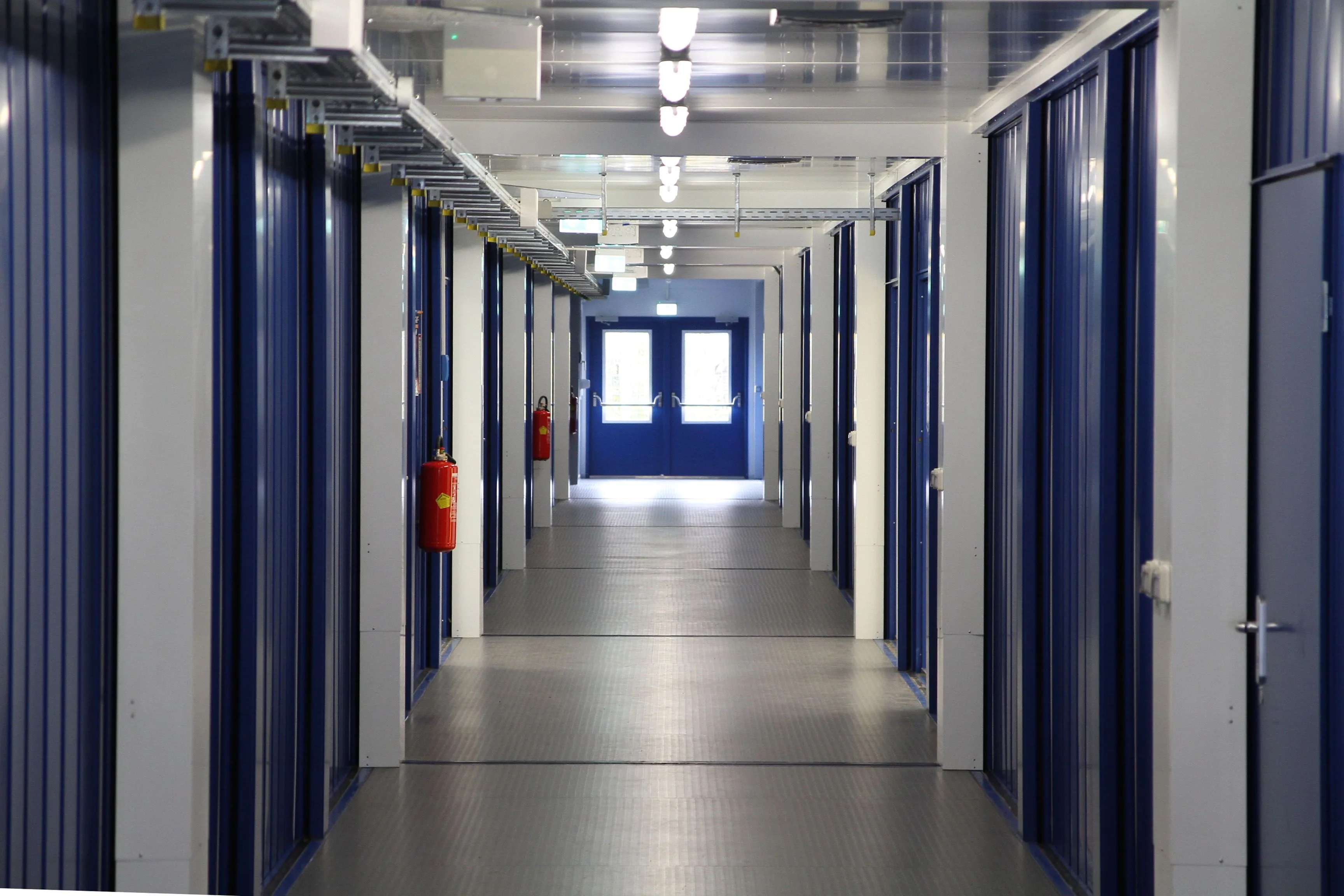
- Connecting units to each other (corridors, covered walkways, shared walls)
- Electrical connection and testing
- Plumbing connection and pressure testing
- Interior fit-out: furniture, bedding, signage, safety equipment
- Fire safety checks: extinguishers, smoke detectors, escape routes
- Accessibility verification for barrier-free units
- Client walkthrough and formal handover
Each of these tasks requires either a specialist trade or an informed generalist who can coordinate multiple trades on a compressed schedule. On a large deployment, the difference between a well-sequenced handover and a chaotic one can be a week.
Single-partner coordination vs fragmented supply chains
If you source units from one supplier, transport from another, site prep from a third contractor, and utility connections from a fourth, you are the project manager by default. Every interface between contractors is a potential delay point: one finishes late, the next cannot start, and the schedule cascades.
A project partner that handles planning, configuration, sourcing, delivery, and installation coordination provides a single point of accountability. You make one call, not four. This is the structural difference between buying containers and deploying accommodation.
Realistic Timelines by Scenario
These ranges assume competent coordination and reasonable site conditions. Adverse weather, permit complications, or supply chain disruptions can extend any of them.
- Natural disaster first response (foldable sleeping units): 24 to 72 hours from dispatch to first occupancy, assuming pre-positioned or locally available stock and a site that needs only basic clearing.
- Refugee or asylum accommodation (standard modular housing): 2 to 6 weeks from decision to move-in ready. The wide range reflects the variance in permit speed, site condition, and utility connection timelines.
- Temporary school or public building (modular facility): 4 to 10 weeks including permits, foundations, fit-out, and commissioning. Education buildings have additional requirements around fire escape, ventilation, and accessibility.
- Event infrastructure (sanitary, retail, accommodation): 1 to 4 weeks depending on scale, with the lower end achievable for self-contained units on prepared event sites.
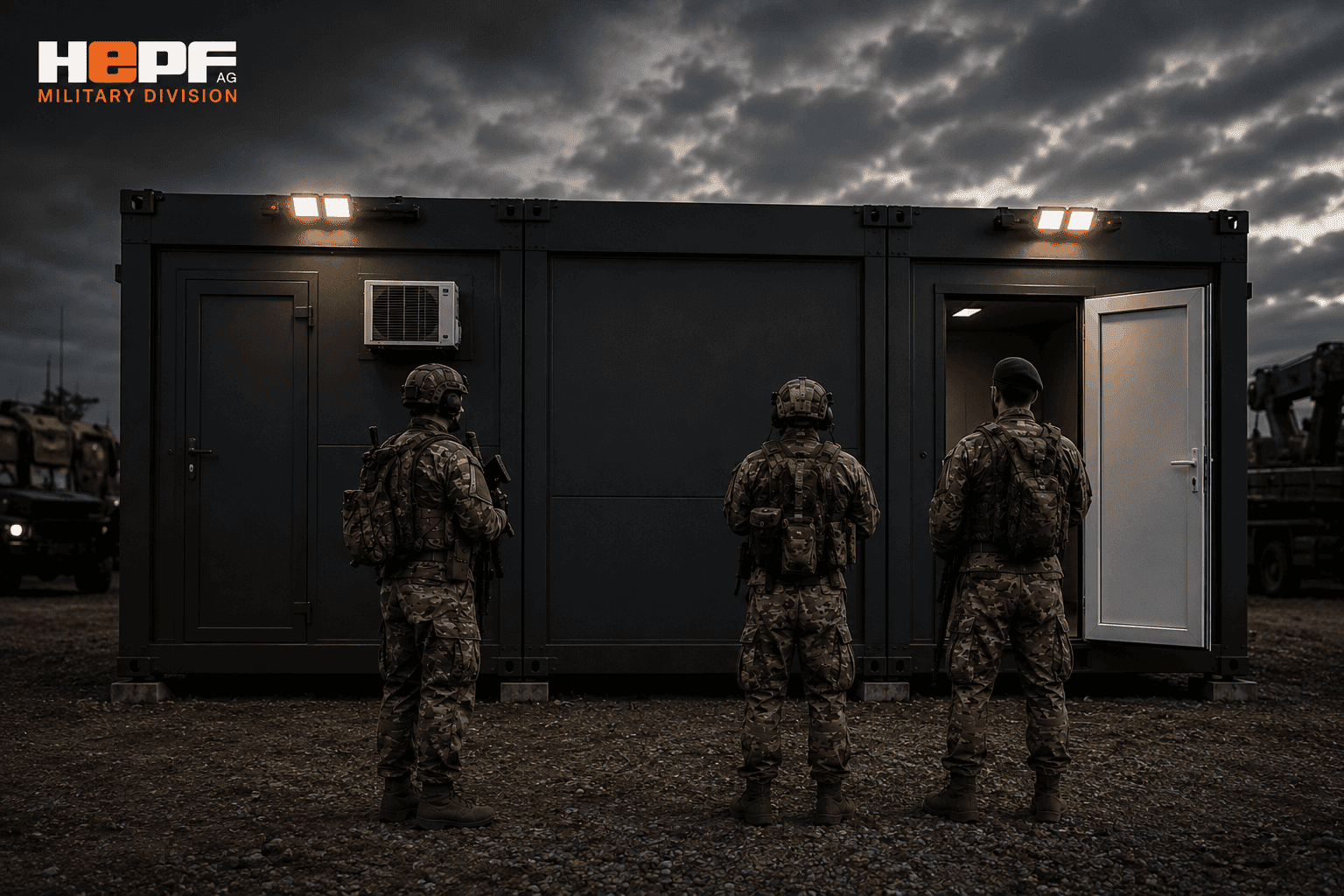
- Military or field camp (foldable units): 24 to 48 hours for unit deployment on pre-approved military land, where permit and utility constraints are typically managed internally.
Each scenario demands a different system, a different level of site preparation, and a different coordination intensity. Treating them as interchangeable is how timelines collapse.
Common Bottlenecks That Slow Deployment
- Indecision on system type. Weeks lost comparing options without expert guidance. If you are unsure whether you need foldable, standard, or premium modular, get advice early. The system choice unlocks everything downstream.
- Underestimating utility requirements. Power and water connections are not afterthoughts. They are critical path items that need to start on day one of planning.
- Permit misclassification. Applying under the wrong category, or assuming no permit is needed, triggers restarts.
- Fragmented supply chains. Multiple vendors with no single coordinator means interface delays at every handoff.
- No pre-planning. Organisations that treat every deployment as a first-time event repeat the same learning curve and the same delays.
How to Accelerate: Practical Steps for Organisations Planning Ahead
If your organisation may need emergency or temporary accommodation in future, these steps taken now will save weeks when the need arises.
- Establish a framework agreement with a modular infrastructure partner. This pre-qualifies the supplier, agrees pricing structures, and sets out delivery and coordination protocols. When a deployment order comes, you skip the procurement cycle.
- Define use-case requirements in advance. How many people, for how long, in what climate, to what standard of comfort and compliance. Document these as ready-to-issue briefs.
- Pre-approve sites. Work with your municipality to identify potential deployment locations and obtain conditional permits or standing approvals for temporary structures.
- Choose a partner with a complete product portfolio. If your partner only sells one system type, every recommendation will point to that system. A partner whose range spans foldable rapid-deploy units through to premium modular buildings can match the system to the scenario honestly.
- Plan in parallel from day one. The moment units are confirmed, site preparation and utility coordination should begin. Not after. Not when delivery is scheduled. Immediately.
- Consider rent, lease, or buy-back models. These reduce the financial barrier to preparedness. You can hold framework capacity without committing to ownership of assets you may not need for years.
HEPF supports all of these structures. Rent, buy, lease, and buy-back options mean organisations can build genuine emergency preparedness without locking capital into idle assets. The principle is straightforward: plan modular solutions as proper infrastructure, not as afterthoughts assembled under pressure.
.webp)
Book a free consultation
Open, non-binding and tailored to your project.