Rent, Buy or Lease a Container: How Project Duration Changes the Maths
The Question You Should Actually Be Asking
Most people start with "should I rent or buy a container?" That is the wrong question. The right one is: how long do I need it, and what happens when I am done with it?
The answer to that question changes the financial picture dramatically. A three-month site office and a five-year modular school building are entirely different propositions, even if both start life as container-based structures. The rent-or-buy decision is not a price-tag comparison. It is a project-planning exercise, and the variables that matter most are duration, specification, reuse potential and what you do with the unit at the end.
This guide walks through the real cost logic at each time horizon, from short-term rental through the murky middle ground of 6 to 24 months, to long-term ownership. By the end, you should be able to map your own project to the right commercial model and know what questions to ask before committing.
Why the Simple "Buy vs. Rent" Comparison Misleads
Online calculators and basic guides typically compare a monthly rental fee against a purchase price, then divide to find a breakeven month. That arithmetic is not wrong, but it is incomplete. It ignores most of the costs that actually determine which option is cheaper over the life of your project.
The real cost equation includes:
- Transport and crane or forklift costs for delivery and collection. These apply whether you rent or buy, but a rental incurs them twice (delivery and return), while a purchase incurs them once per deployment.
- Site preparation. Depending on your ground conditions and the unit type, you may need compacted gravel, concrete pads or levelling work. This cost is the same regardless of commercial model.
- Configuration and fit-out. If you need electrics, insulation, plumbing, partitions or IT cabling, rental units may come pre-fitted to a standard spec but offer limited customisation. Owned units can be modified freely, but the cost is yours.
- Maintenance and servicing. Under a rental agreement, the provider typically handles structural maintenance. If you own the unit, you carry that responsibility and cost.
- Insurance. Rented units are often insured by the provider (check your contract). Purchased units need your own cover.
- De-installation and removal. Someone has to disconnect, lift and transport the unit off site at project end. Under rental, this is usually included or quoted as a fixed fee. Under ownership, you organise and pay for it, or you negotiate a buy-back.
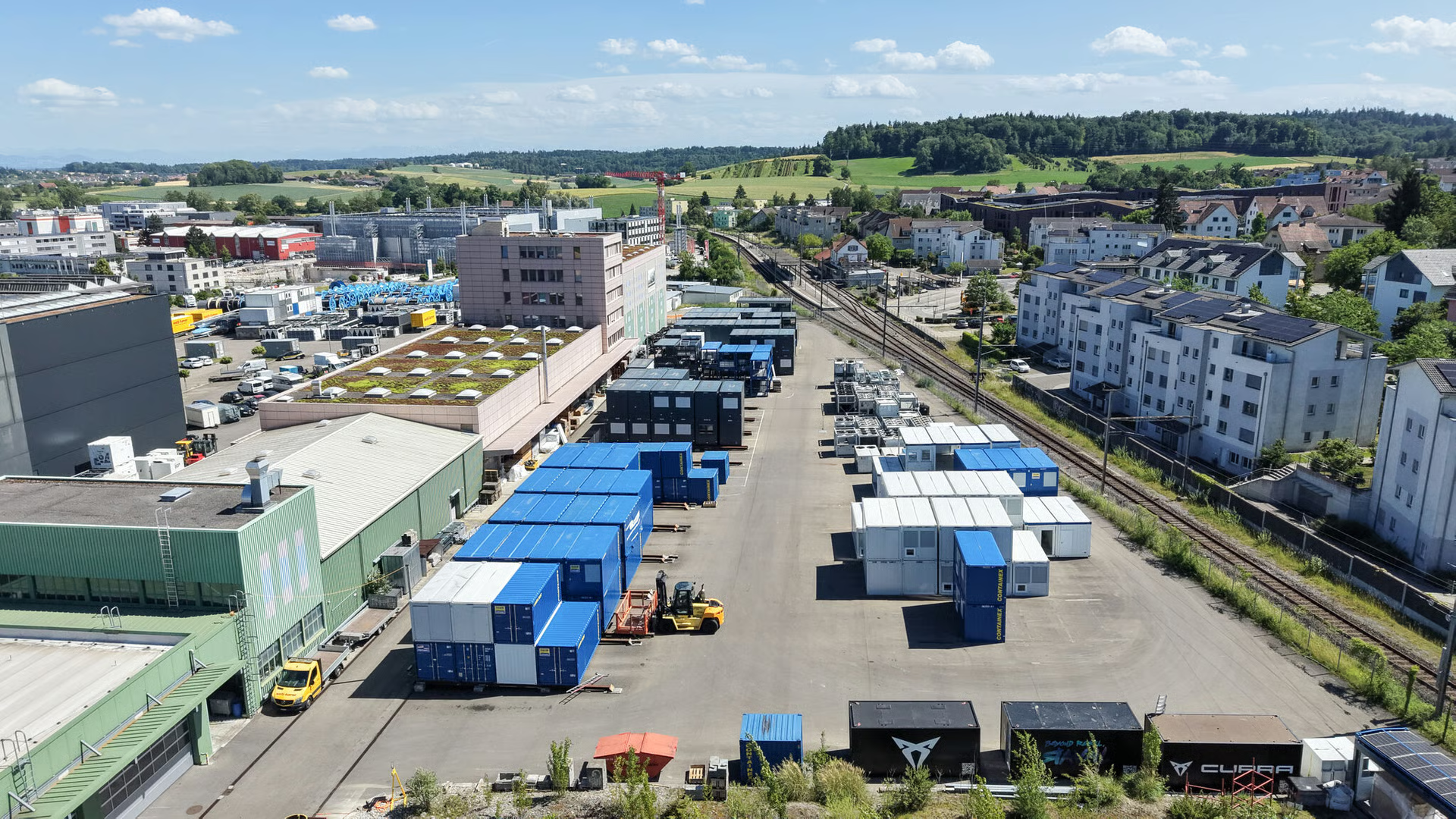
- Storage between uses. If you buy a unit and your next project is six months away, where does it sit? Storage yards charge fees, and an idle asset earns nothing.
The point is not that buying is secretly expensive or that renting is a trap. It is that you cannot compare the two without accounting for total project cost, including what happens after the project ends.
HEPF coordinates the full path from requirement to installed facility, which means the commercial model decision sits within a broader project plan rather than being made in isolation. Clients can buy, rent, lease or use a buy-back arrangement depending on what the project actually demands.
Short-Term Needs: Under Six Months
For projects with a defined, short duration, renting almost always wins. The logic is straightforward: you avoid tying up capital in an asset that will sit idle soon after, and you hand back the maintenance and end-of-life problem to the provider.
Where short-term rental fits best
- Event infrastructure: toilets, showers, storage, catering support, ticketing and retail units needed for days or weeks
- Seasonal storage: overflow capacity during peak periods
- Interim site offices during construction phases
- Temporary classrooms while a school building is renovated (if the renovation is genuinely short)
What to watch for in short-term rental contracts
- Minimum rental periods. Many providers set a minimum of one or three months, even if you only need the unit for two weeks. Check whether a shorter-term option exists for your use case.
- Delivery and collection fees. On a short rental, these fixed costs represent a large share of total spend.
- Damage and cleaning clauses. Understand what condition the unit must be returned in and what charges apply. Site environments can be harsh on containers.
When short-term rental does not make sense
If you need significant customisation, such as internal partitions, specialist electrics, plumbing or branded fit-out, a rental may not accommodate those modifications, or you may pay for changes you cannot recover. In those cases, even a short project might justify purchase or a lease with modification rights.
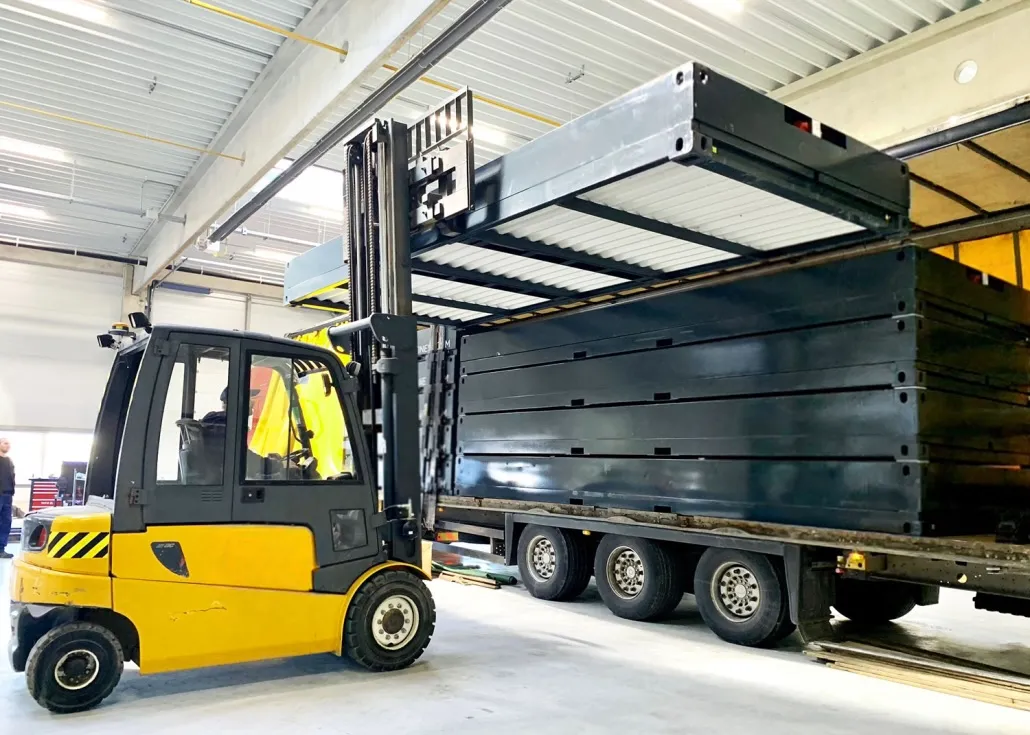
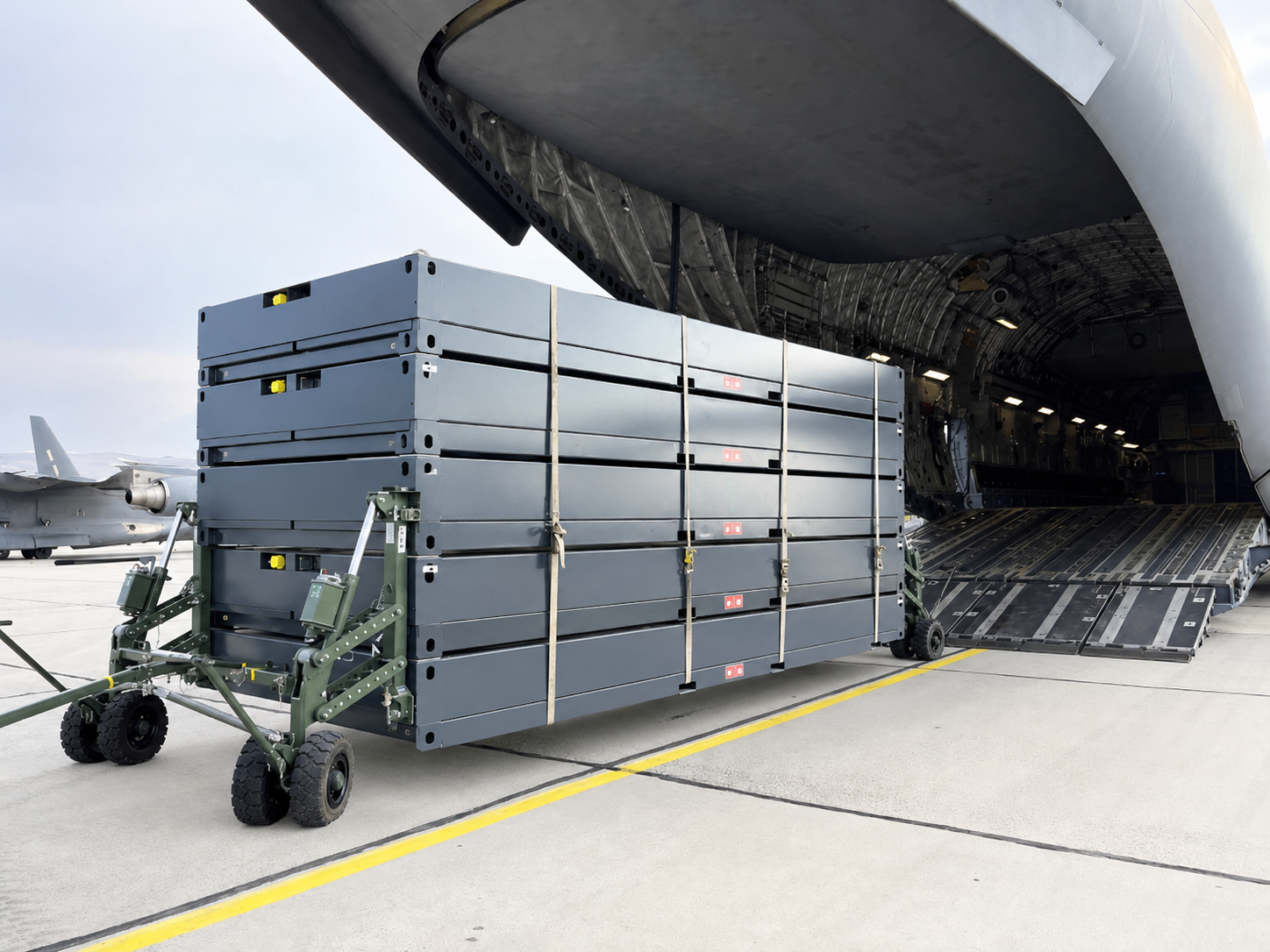
For events and short-duration projects, rental works across product lines: secure storage units for on-site lockup, sanitary modules for toilets and showers, and foldable pop-up units that ship flat and deploy in minutes, cutting logistics costs further.
The Grey Zone: 6 to 24 Months
Factors that pull the breakeven earlier (favour buying sooner)
- High local rental rates relative to purchase price
- Modifications you want to make that a rental agreement restricts
- A clear plan to reuse the unit on a subsequent project
- Stable project duration with low risk of early termination
Factors that push the breakeven later (favour renting longer)
- Uncertain project end date, where you might need the unit for 8 months or 20
- No storage location available after the project
- A preference for serviced, maintained units where the provider handles upkeep
- Regulatory uncertainty, such as a permit application that may or may not be approved
Leasing as a middle path
Leasing is the option most guides skip entirely. A lease gives you a fixed monthly cost, typically over a defined term of 12 to 60 months, without the capital outlay of purchase. Depending on how the lease is structured, the provider may retain ownership (operating lease) or transfer it at the end (finance lease).
From a cash-flow perspective, leasing behaves like rental. From a project-planning perspective, it behaves more like ownership: you have a dedicated unit for the full term, you may have more freedom to modify it, and you are not exposed to rental rate increases.
In Switzerland, the tax treatment differs too. Rental payments are deductible as operating expenses in the period incurred. Lease payments may be treated similarly under an operating lease, but a finance lease is treated more like a purchase with financing, meaning the asset may appear on your balance sheet and depreciate over its useful life. If this distinction matters to your organisation, your accountant will want to see the lease terms before you sign.
HEPF offers leasing alongside rental and purchase, giving clients in this grey zone a structured option that avoids both the capital outlay of buying and the cumulative cost of open-ended renting.
Long-Term and Permanent Use: Two Years and Beyond
Over multi-year timelines, cumulative rental fees almost always exceed the purchase price. A fitted office container rented at CHF 450 per month costs CHF 16,200 over three years and CHF 27,000 over five, above purchase price. At this horizon, buying is the default rational choice, with a few important caveats.
What ownership gives you
- Full control over modifications, configuration and branding
- No ongoing rental obligations or rate increases
- Potential resale or redeployment value at end of use
- In Switzerland, purchased modular buildings classified as business assets can typically be depreciated over 8 to 15 years, depending on whether they are treated as movable or immovable property
What ownership demands
- Maintenance responsibility, including structural upkeep, servicing of mechanical and electrical systems, and weatherproofing
- Insurance coverage, which is your obligation as owner
- Compliance with regulations for the duration of use. If the unit is occupied (as an office, classroom, or housing), Swiss workplace safety standards from SUVA apply, along with cantonal fire protection regulations under VKF rules and accessibility requirements under the Behindertengleichstellungsgesetz (BehiG)
- Storage logistics between deployments if you plan to reuse the unit
Do I need a building permit for a container on my site?
In Switzerland, the permit requirement (Baubewilligungspflicht) depends on the canton, the duration of placement, and whether the unit is occupied. As a general rule, structures intended for temporary use below a certain duration threshold may be exempt or subject to a simplified process, but occupied buildings, meaning spaces where people work, learn or live, almost always require a permit if they remain in place beyond a short-term period. Cantonal building authorities set the specifics, and these vary. Before placing any modular unit intended for occupation, check with your local Bauamt.
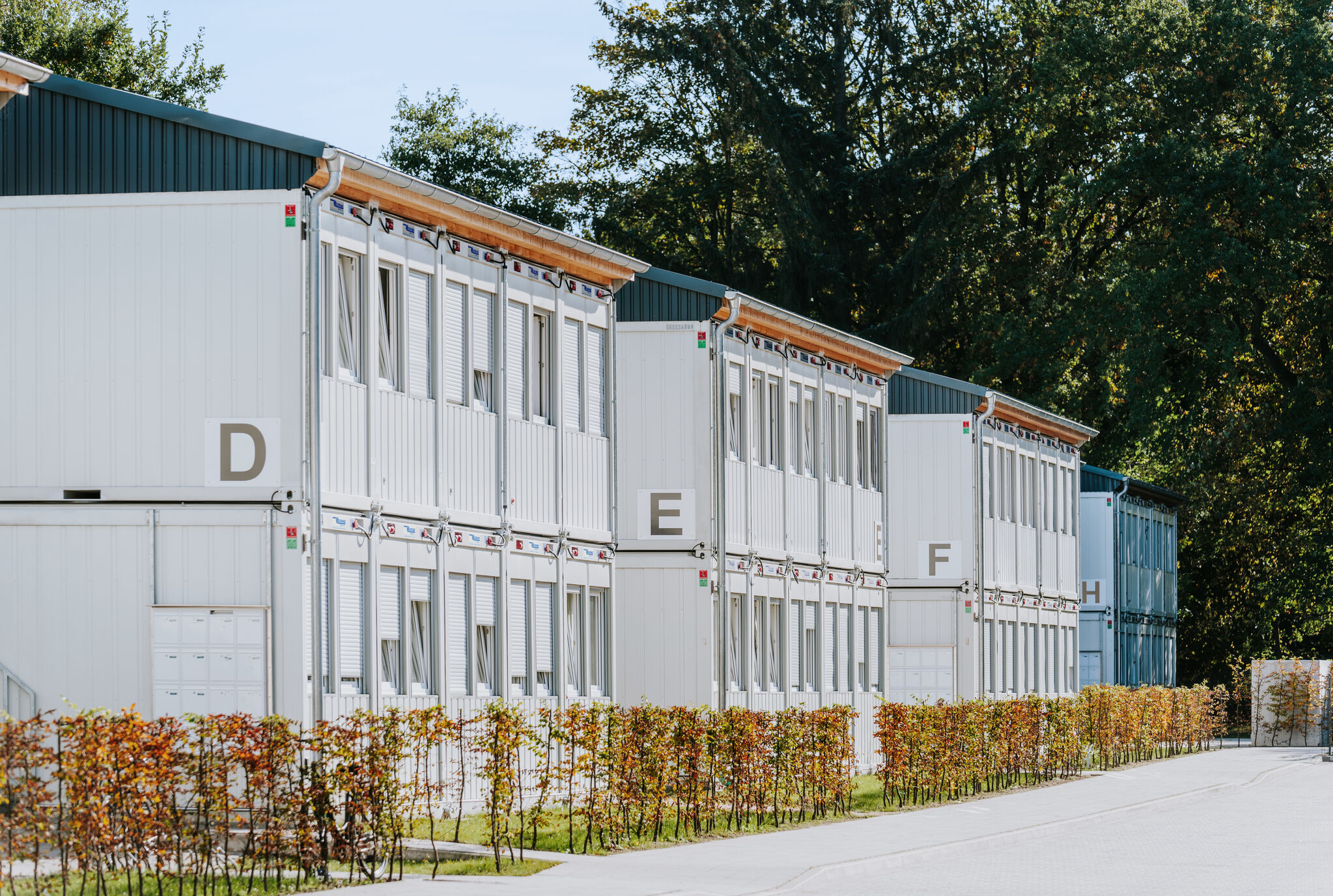
For long-term deployments such as modular school buildings or housing projects, HEPF coordinates purchase and installation of higher-specification systems designed for sustained, dignified use rather than temporary workarounds.
The Option Most Guides Miss: Buy-Back and Redeployment
The binary framing of rent versus buy assumes that buying means you are stuck with the unit forever. That is not necessarily true.
Buy-back arrangements
Some modular infrastructure providers offer buy-back programmes. You purchase a unit at full price, use it for your project, and the provider buys it back at a pre-agreed or market-dependent price at the end. This captures the cost advantage of ownership during the project (no ongoing rental fees, full modification freedom) while removing the long-term storage, disposal and resale burden.
The economics depend on the buy-back price, which will be lower than what you paid. But if the difference between purchase price and buy-back price is less than what cumulative rental would have cost, you come out ahead.
Redeployment across multiple projects
Organisations with recurring modular needs, such as construction firms, event companies or public authorities managing multiple sites, can amortise a purchase across several deployments. A container bought for one school site can be moved to another. A site office used on three consecutive construction projects costs a third per project.
This only works if you have the logistics capability (or a partner who does) to move, store and reconfigure units between projects. But for repeat users, it fundamentally changes the maths.
HEPF supports buy-back arrangements, meaning a client can purchase a container system for a defined project and return it afterward, capturing the cost advantage of ownership without the long-term burden.
Mapping Your Situation to the Right Model
Here are five common scenarios and the commercial model that typically makes the most sense for each:
- Construction site office, 3 to 6 months: Rent. Standard specification, defined end date, low commitment. The unit goes back when the build finishes.
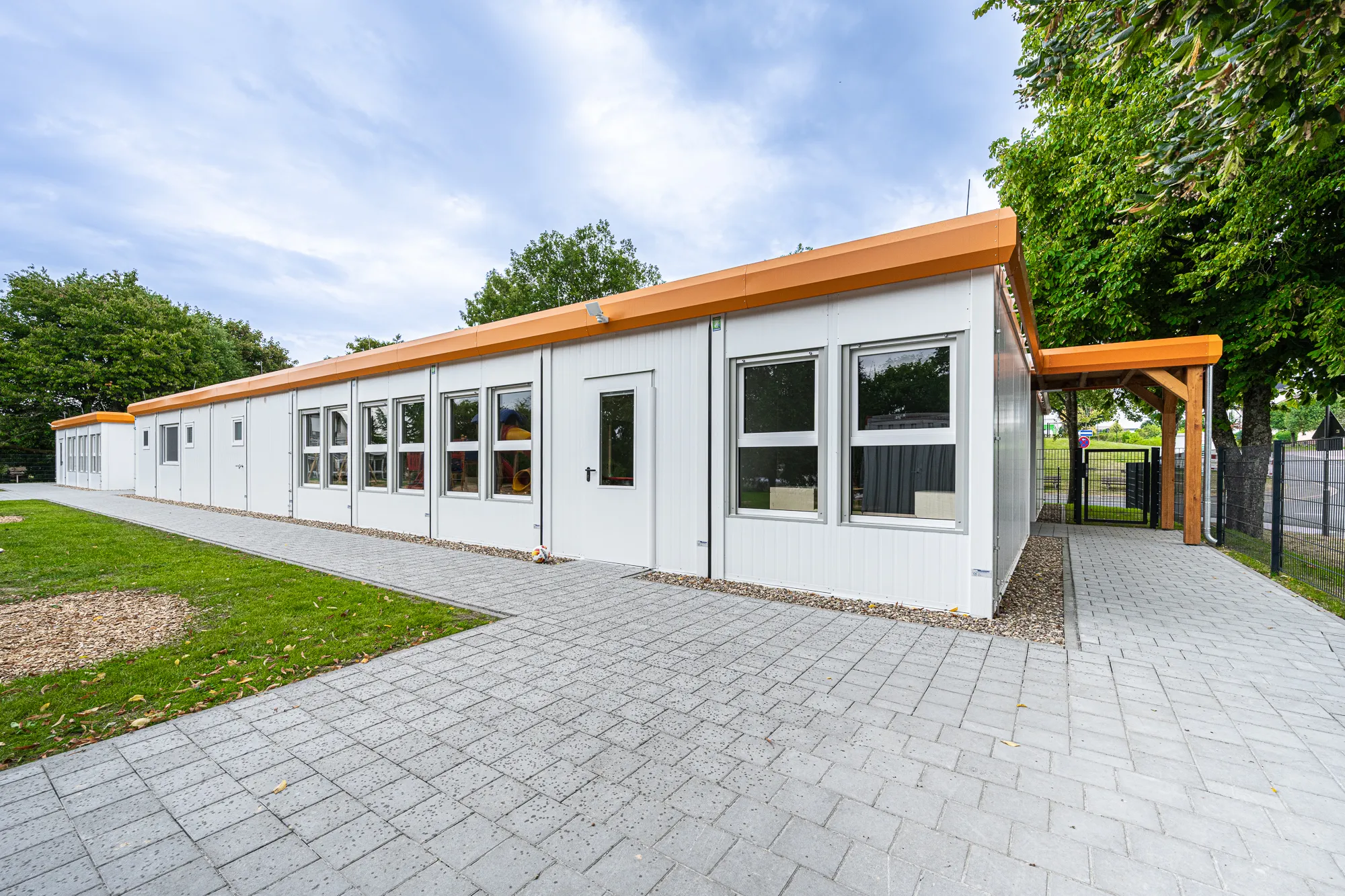
- Interim school building, 1 to 3 years: Lease or buy. Higher specification needed for comfort, safety and acoustic performance. Potential to redeploy to another school site. A lease gives budget certainty; a purchase with buy-back gives modification freedom.
- Event infrastructure, days to weeks: Rent. Speed and flexibility matter most. Foldable systems reduce transport costs and deployment time.
- Permanent modular facility, 5 years or more: Buy. Total cost of ownership is lowest, you have full control over configuration and quality, and depreciation offsets the capital cost.
- Recurring seasonal need such as an annual festival: Buy with storage between seasons, or lease annually. The right answer depends on whether you have affordable storage and whether the provider offers favourable repeat-lease terms.
Starting the Conversation Properly
When you approach a modular infrastructure provider, come with your project parameters, not just a container size. The information that shapes the right commercial model includes:
- How long you need the unit, including your best estimate and your worst case
- What the unit will be used for (storage, office, classroom, housing, sanitary, retail) and how many people will occupy it
- Site constraints: access width, ground conditions, crane reach, power and water connections
- What happens at the end: do you want the unit removed, stored, moved to another site, or bought back?
- Your budget structure: can you make a capital purchase, or does the budget require operating expenditure?
Ask whether delivery, installation, configuration and handover are included in the quote, or whether you are buying a box and organising the rest yourself. A good modular partner helps you choose the right commercial model for your situation, not just the cheapest unit on the yard.
HEPF's role as a Swiss-led modular infrastructure partner means the buy-or-rent conversation happens within a full project consultation covering product selection, layout, logistics and installation coordination. The goal is the right modular system for the use case, not a one-size-fits-all answer.
Book a free consultation
Open, non-binding and tailored to your project.