HEPF AG Launches Dedicated Military Division
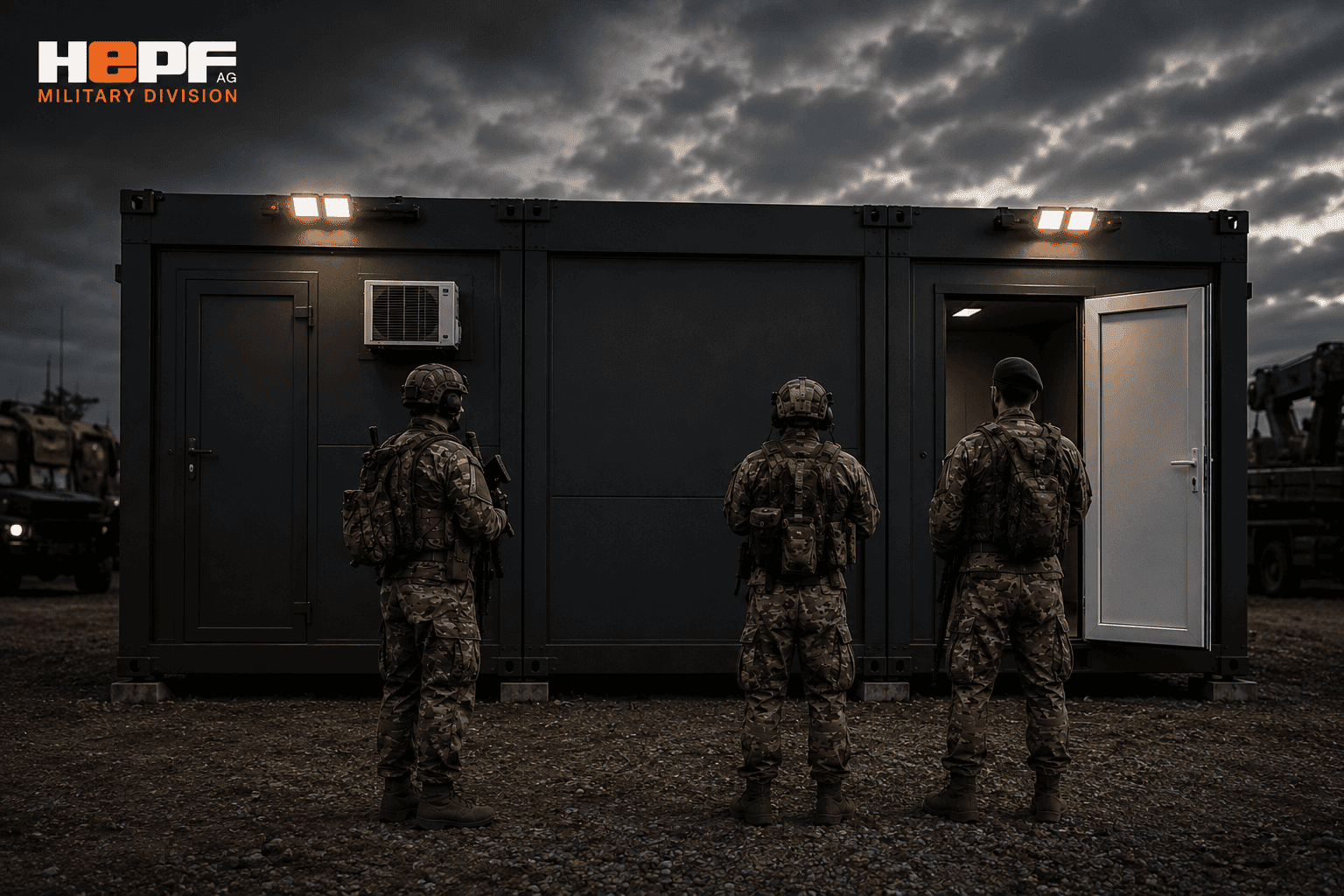
Why HEPF Created a Dedicated Military Division
Military infrastructure operates under different constraints. Transport capacity, deployment speed, protection, mobility and operational security directly determine how effectively infrastructure can be brought into the field.
With the launch of the HEPF Military Division, HEPF is bringing these requirements into a dedicated portfolio of deployable modular systems, from high-density foldable infrastructure to protected, technical and mission-specific solutions.
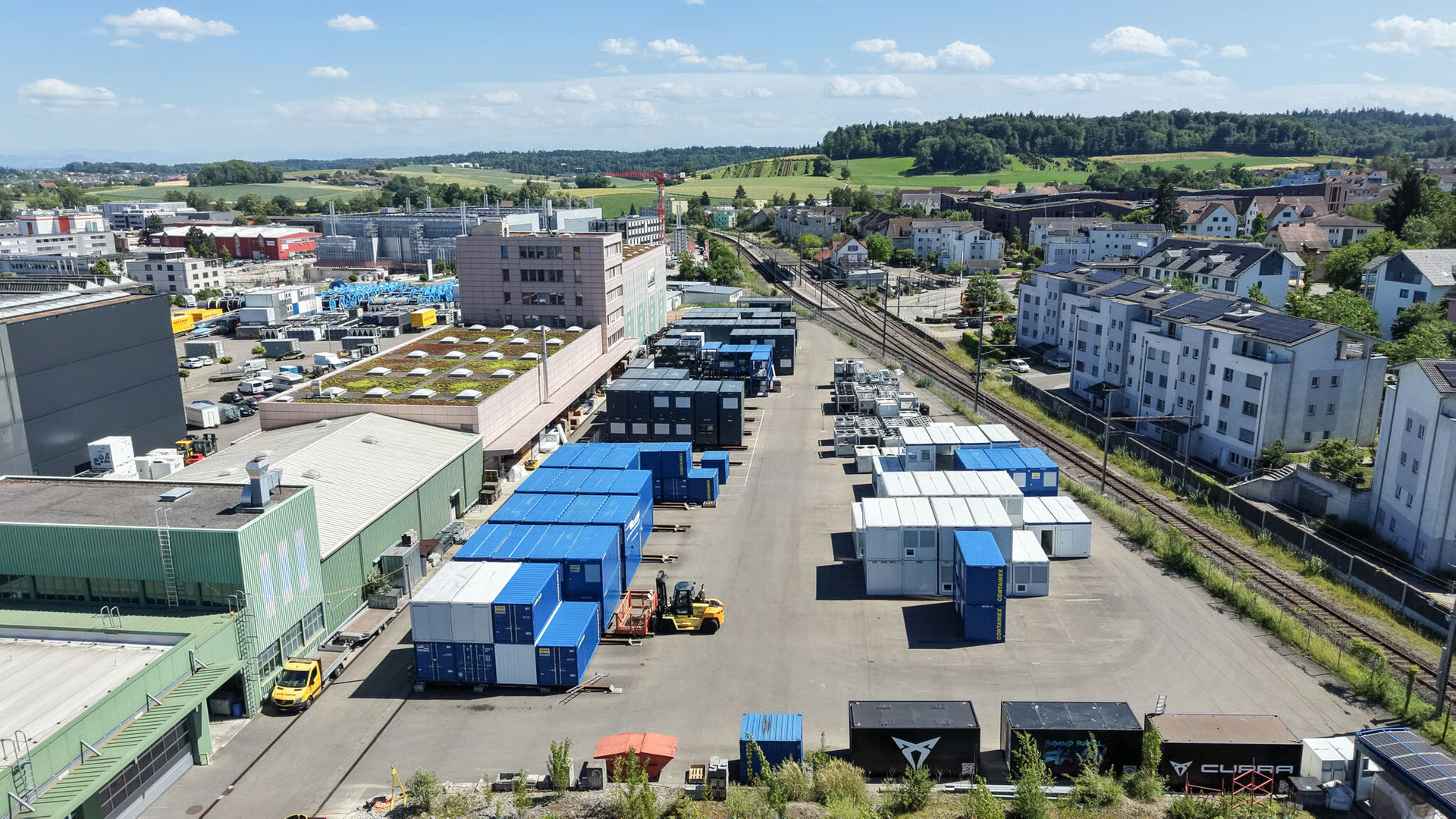
The division builds on HEPF's existing role as a Swiss modular infrastructure partner: plan, configure, source, deliver and deploy, through one point of coordination.
The Logistics Problem Foldable Container Technology Solves
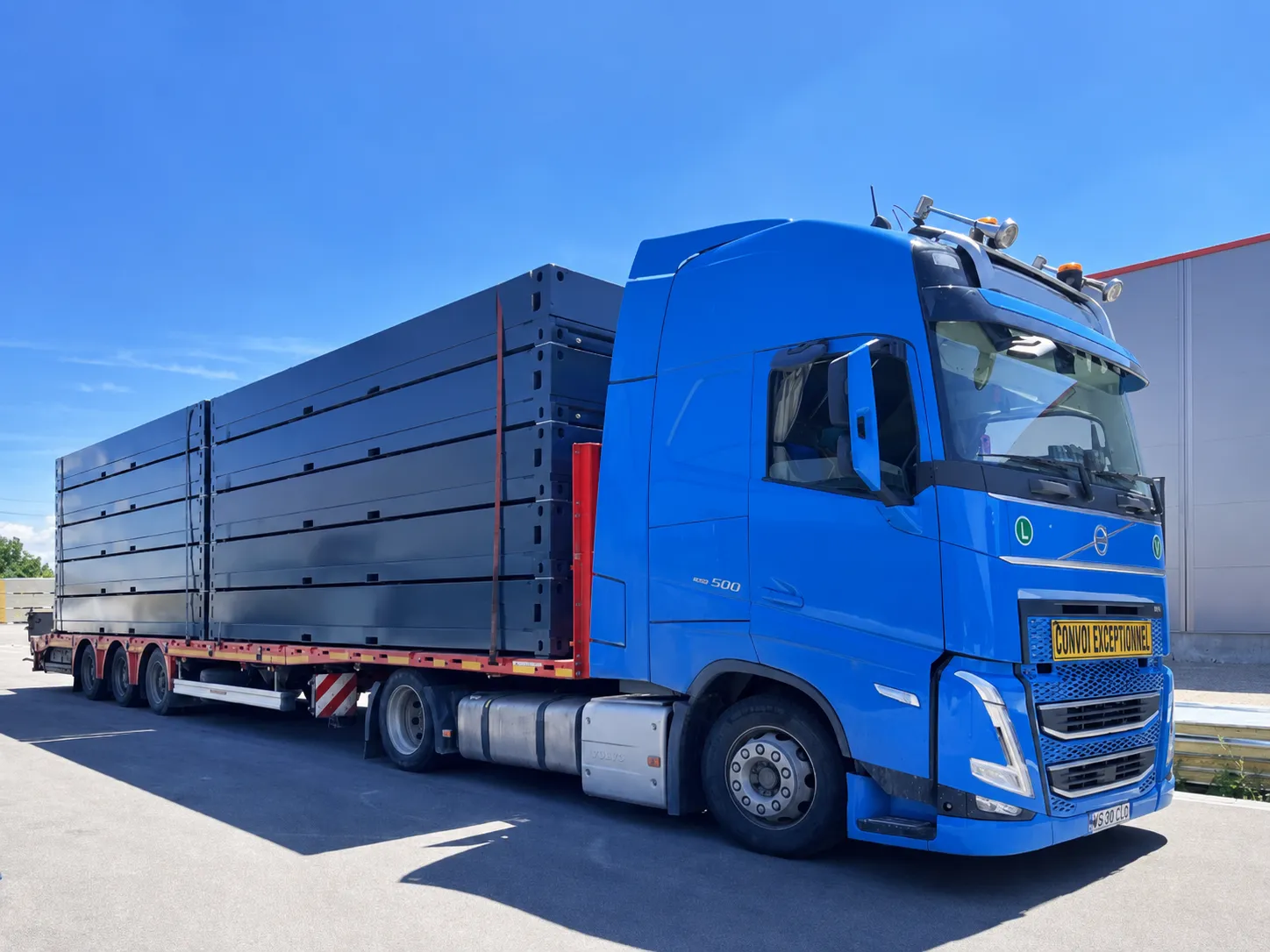
A conventional rigid 20 ft ISO container occupies an entire truck flatbed. One unit per vehicle, one trip per unit. For a field camp requiring dozens of functional modules, the arithmetic is punishing: dozens of trucks, dozens of drivers, fuel for every trip, route clearance for every vehicle, and a convoy footprint that is both expensive and operationally conspicuous.
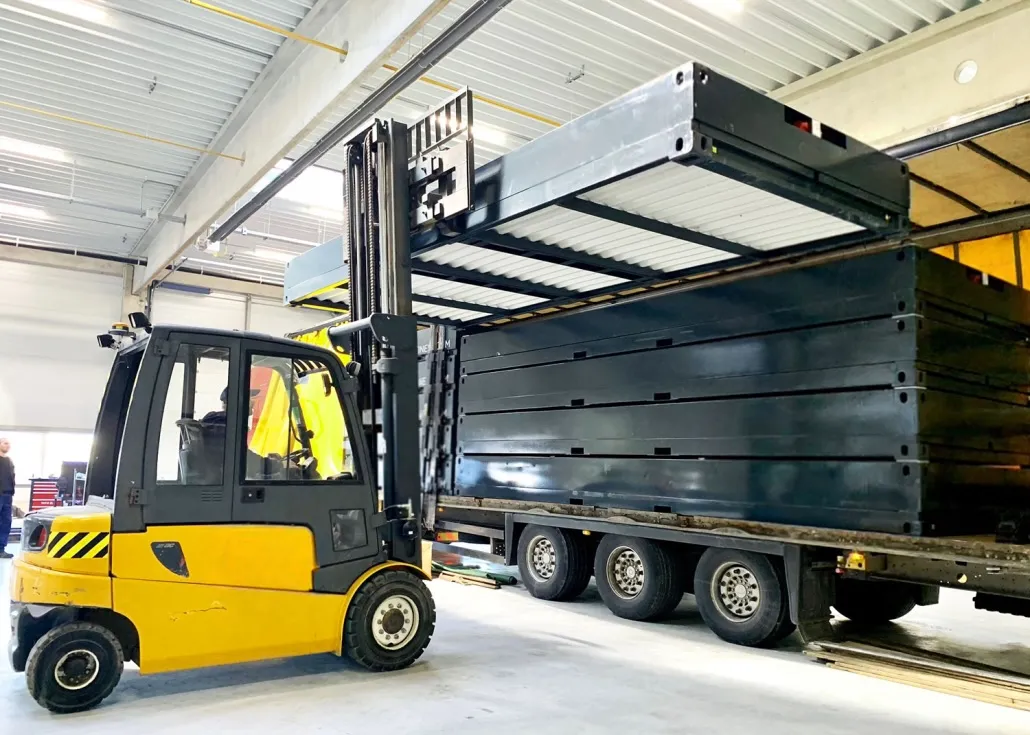
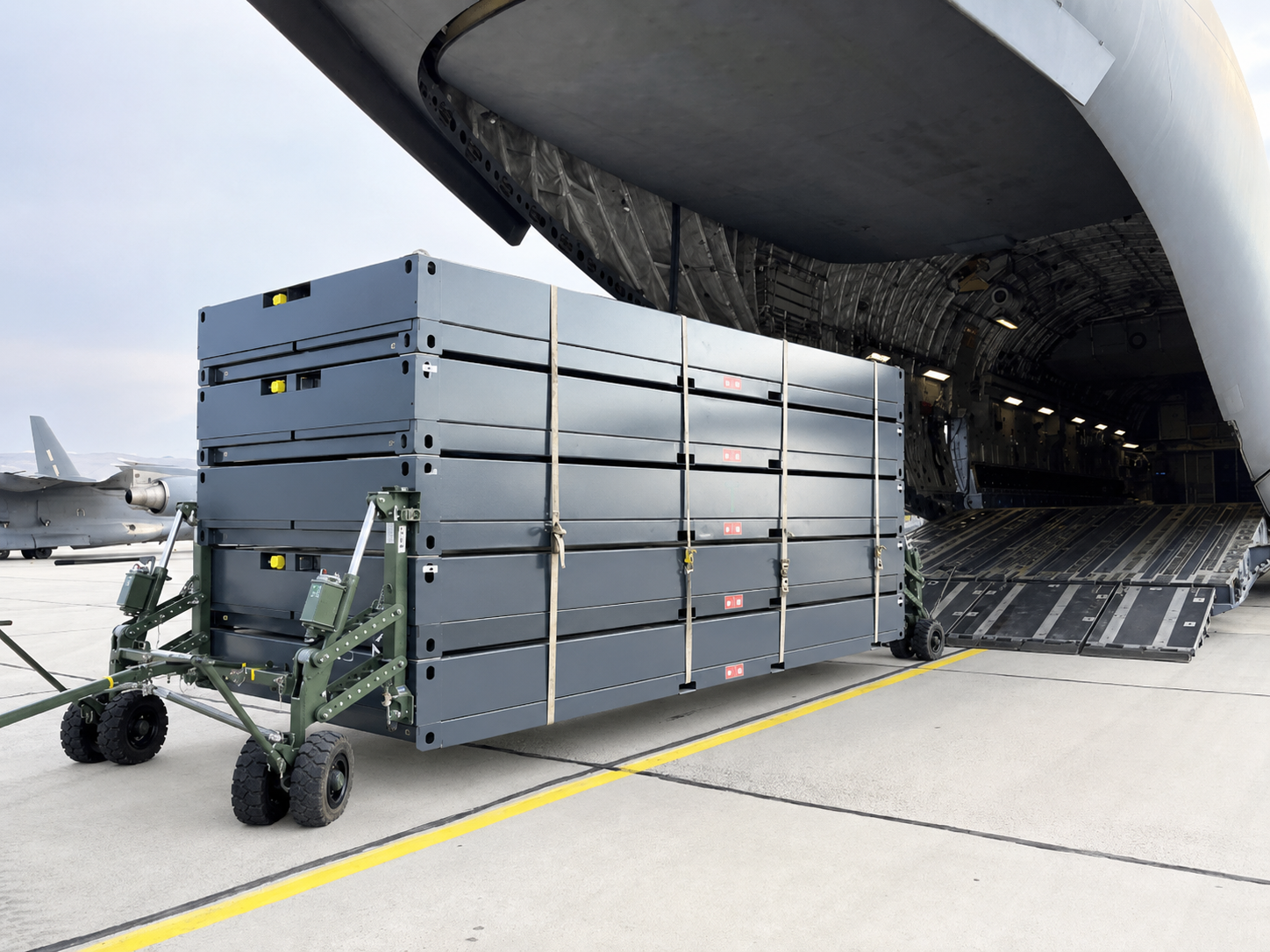
Foldable container technology changes this equation fundamentally. HEPF's existing Foldable Line already demonstrates the principle: collapsible frames that reduce transport volume by up to 80 percent. In practical terms, where you previously needed five trucks to move five rigid containers, a foldable system can stack five collapsed units onto a single vehicle. The military products extend this principle into hardened, field-grade configurations built for defence environments.
Fewer trucks means fewer convoys. Fewer convoys mean reduced fuel consumption, a smaller logistical footprint, faster camp establishment and less exposure during transit. For European defence forces scaling up infrastructure capacity in line with increased spending commitments, foldable modular systems offer a way to deploy more capability with less transport burden.
This is not a marginal improvement. It is a structural change in how deployable infrastructure reaches the field.
FL 20 Hybrid: The Full-Size Foldable Field Container
The operational problem: field units need the internal volume and structural capability of a standard 20 ft ISO container, but they also need the transport efficiency of a collapsible system. Lightweight rapid-deploy shelters offer speed but compromise on durability and load-bearing capacity. Rigid containers offer strength but consume a full truck each.
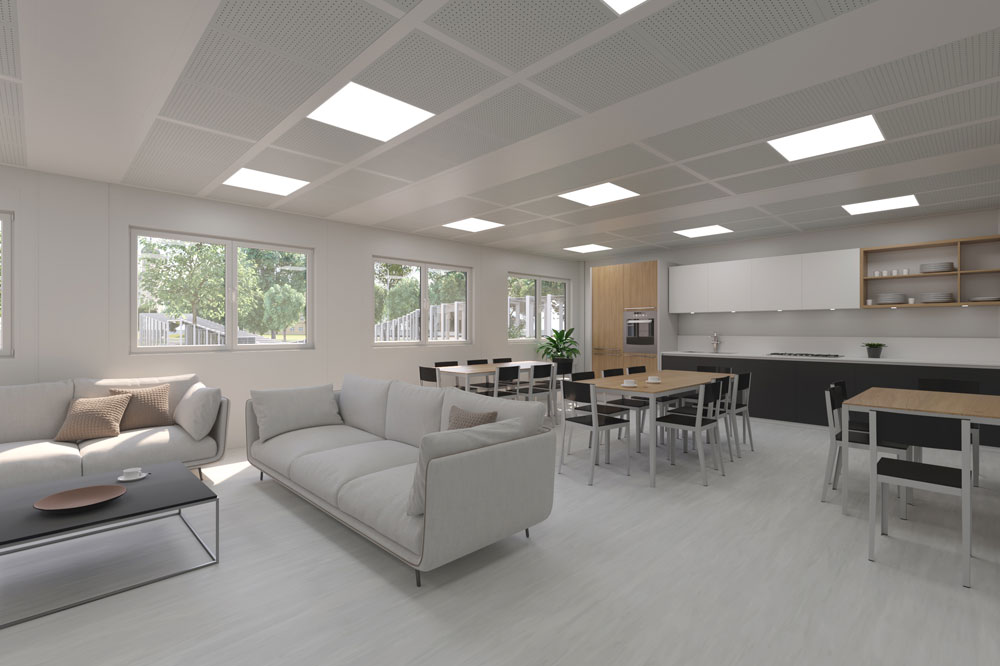
The FL 20 Hybrid bridges this gap. It is a 20 ft foldable container that combines a collapsible frame with the structural capability of a standard ISO container footprint. It can serve as a field office, command post, workshop, medical station or accommodation module, depending on internal fit-out.
Key characteristics:
- Collapses for transport, reducing volume per unit and enabling multiple units per vehicle
- Deploys on-site without heavy crane equipment, reducing dependency on specialist lifting assets
- Compatible with standard container handling approaches
- Configurable interior: the same shell can be fitted for different roles depending on mission requirements
The FL 20 Hybrid is the workhorse of the range. It provides the versatile, full-size module that forms the backbone of most field facility layouts.
FL Light: Lightweight Aluminium Nesting Module
The operational problem: moving accommodation modules to remote or austere locations, particularly by air, demands minimum weight. Steel-frame containers are strong but heavy. Where transport is constrained by payload limits or where access routes cannot support heavy vehicles, a lighter alternative is needed.
The FL Light is an aluminium-frame foldable unit designed for maximum transport density. Multiple units nest inside a single standard cargo container, significantly increasing the number of functional modules per transport sortie. The aluminium construction makes it substantially lighter than steel-frame alternatives, opening up air transport and light vehicle delivery options that would be impractical with heavier systems.
Primary applications include crew quarters, field sleeping accommodation and forward operating positions where rapid, scalable shelter is the priority.
The FL Light complements HEPF's existing FL BedStay, a foldable rapid-deploy sleeping module designed for workforce, crew and emergency accommodation. The FL BedStay accommodates two persons per unit, with 20 units fitting on a single truck. Together, the FL Light and FL BedStay give planners options across the weight and density spectrum for field accommodation at scale.
FL Ballistic Shield: Protective Modular Infrastructure
The operational problem: personnel and sensitive equipment in threat environments need hardened shelter. Conventional approaches involve either permanent fortified structures (slow to build, impossible to relocate) or rigid containers retrofitted with ballistic protection panels (heavy, consuming one truck per unit, and difficult to modify consistently).
The FL Ballistic Shield is a foldable container system with integrated ballistic protection. It provides hardened shelter for personnel, equipment or sensitive operations while retaining the foldable transport advantage. The protection is engineered into the system from the outset, not added as an afterthought to a commercial container.
This addresses a specific gap: deployable ballistic protection that does not sacrifice logistics efficiency. A force that needs protected infrastructure at a forward location can transport multiple collapsed FL Ballistic Shield units on fewer vehicles than would be required for the same number of rigid armoured containers.
Procurement teams evaluating this product should ask about the specific ballistic protection rating and which threat standards the panels are tested against. Protection levels for deployable infrastructure are typically referenced against frameworks such as STANAG 4569, which defines protection levels for logistics and light armoured vehicles. The applicable level for the FL Ballistic Shield will depend on panel specification and configuration.
FL Toolbox: Compact Foldable Equipment Storage
The operational problem: field operations generate a constant need for secure, organised storage of tools, spare parts, maintenance equipment and sensitive gear. Standard storage containers work, but they consume disproportionate transport capacity relative to their contents, particularly when the storage requirement is distributed across multiple positions rather than concentrated in one location.
The FL Toolbox is a smaller-format foldable container purpose-built for field equipment storage. It deploys rapidly alongside operational units, keeping maintenance equipment and spare parts organised, protected and accessible.
- Lockable and weather-resistant
- Stackable for efficient use of limited camp footprint
- Foldable for transport, meaning storage capacity can be scaled up without proportional increases in transport demand
The FL Toolbox extends the principles of HEPF's civilian Storage Line, which provides secure, weather-resistant lockable storage for construction, industrial and event applications, into a military-grade foldable format.
FL Black Hole: Signals-Secure Containment
The operational problem: communications equipment, intelligence systems and certain electronic assets require electromagnetic shielding to prevent signals leakage or external interference. This capability is typically associated with heavy, permanent installations or purpose-built rigid enclosures that are expensive to transport and difficult to relocate.
The FL Black Hole is a foldable container designed for electromagnetic shielding. It is intended for communications, intelligence or electronic equipment that requires isolation from external electromagnetic interference, combining the foldable transport format with shielded construction.
Electromagnetic shielding effectiveness is measured in decibels of attenuation across relevant frequency bands. Standards in this area include NATO SDIP-27 (commonly referred to as TEMPEST) for emissions security and MIL-STD-188-125 for high-altitude electromagnetic pulse protection. Procurement teams should request specific shielding performance data and the standards against which the FL Black Hole has been tested or is designed to meet.
The significance of offering this capability in a foldable format is considerable. Signals-secure facilities that can be collapsed, transported efficiently and redeployed give defence planners options that fixed or heavy rigid installations cannot match.
HEPF coordinates modular infrastructure projects across Europe. The Military Division products can be bought, rented, leased or bought back, the same flexible procurement models HEPF offers across all its product lines.
How the Military Division Connects to the Broader HEPF Portfolio
The five military products do not exist in isolation. A functional field camp needs more than offices, accommodation and protected shelters. It needs sanitation, cold storage, catering support and scalable sleeping capacity. HEPF's civilian product lines fill these gaps directly:
- Sanitary Line modules provide showers, toilets, changing facilities and fresh-water systems for camp hygiene, including accessible configurations
- Reefer and Cold Storage Line containers support field catering, medical cold-chain requirements or pharmaceutical logistics across a temperature range suited to both frozen and chilled storage
- FL BedStay units handle rapid crew accommodation at scale, with 20 two-person units per truck
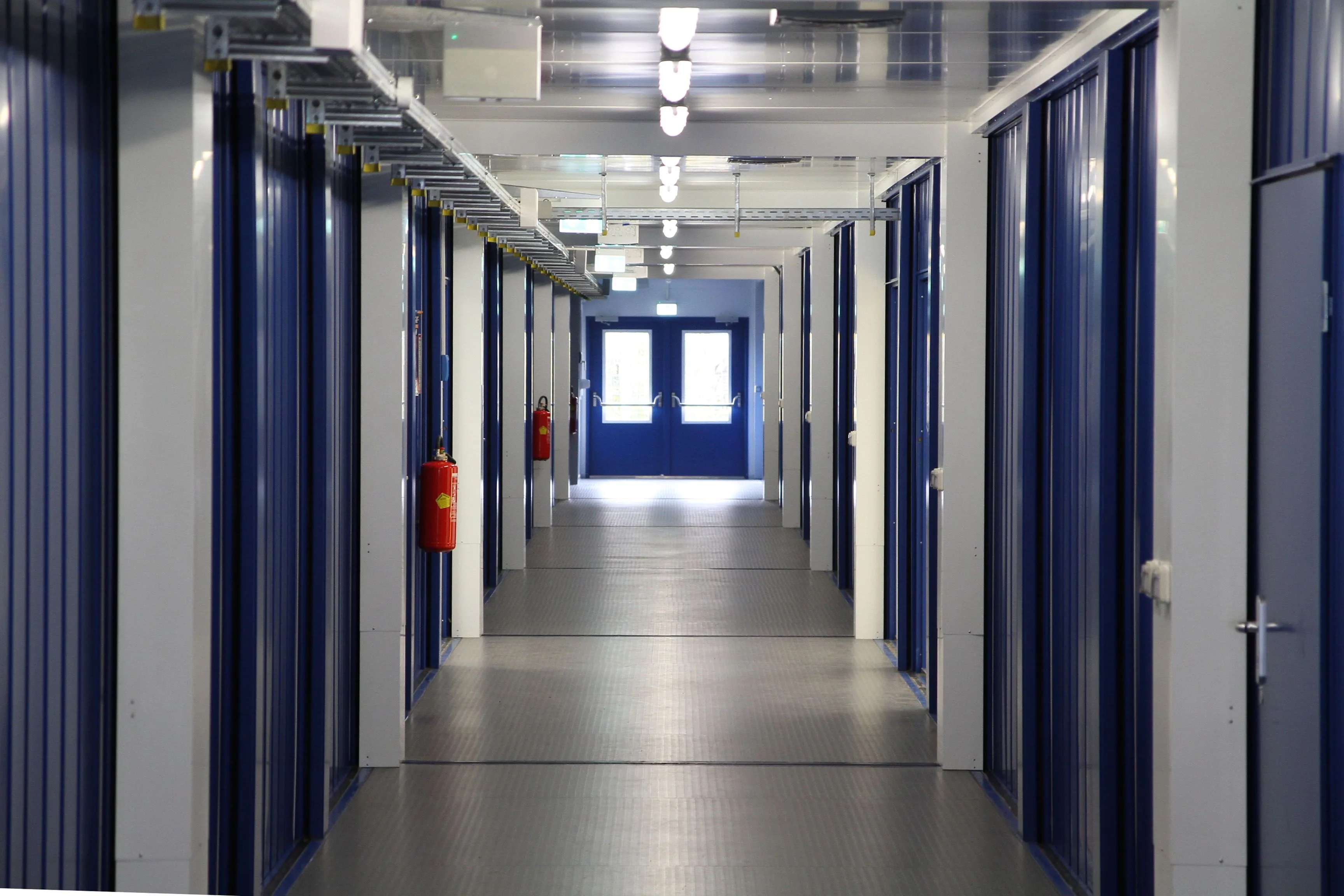
A defence procurement team can assemble a complete, multi-function field facility through a single modular infrastructure partner rather than sourcing sleeping modules from one vendor, sanitary units from another, cold storage from a third, and protective shelters from a fourth. HEPF's project coordination model, plan, configure, deliver, applies identically to military clients.
HEPF has delivered 747+ modules to date with an average deployment time of 14 days, serving clients including the World Economic Forum in Davos, UEFA Women's Euro 2025 and Stadt Zürich. The same operational discipline now extends to the Military Division.
What Defence Procurement Teams Should Consider
If you are evaluating foldable military modular infrastructure, five factors should structure your assessment:
Transport density
How many functional units fit per truck or aircraft? This is the single largest differentiator between foldable and rigid systems. Ask for exact nesting ratios per product type and compare against the transport requirement for equivalent rigid containers.
Deployment speed
Time from arrival on-site to operational readiness. Foldable systems that deploy in minutes with minimal personnel and no crane requirement offer a genuine operational advantage over systems that need hours, specialist equipment or technical support teams.
Multi-role flexibility
Can a single container type serve as an office, accommodation module, storage unit or medical facility with configuration changes? Versatile platforms reduce the number of distinct product types you need to procure, stock and maintain.
Lifecycle and procurement model
Buy, rent, lease or buy-back options matter for exercises, temporary deployments, training rotations or evolving force structures. A system you can return or reconfigure after a deployment ends avoids locking capital into assets you may not need long-term.
Single-partner coordination
Working with one modular infrastructure partner that covers the full range, from accommodation and offices to sanitation, cold storage and protected shelters, reduces procurement complexity. It means one contract, one delivery coordination point and one accountability chain, rather than managing multiple vendors across multiple product categories.
The products described in this article are new to market as a formal military portfolio. Procurement teams should ask directly about field trials, certification status for specific protection and shielding standards, lead times, and through-life support arrangements. Where specifications are pending final certification, a credible supplier will say so plainly.
.webp)

Book a free consultation
Open, non-binding and tailored to your project.