Modular Infrastructure in Healthcare and Pharma: Speed, Compliance, Continuity

Why Healthcare and Pharma Face Infrastructure Pressures That Traditional Construction Cannot Solve
Hospitals do not close during renovation. Pharmacies cannot pause dispensing because a ceiling is being replaced. Pharmaceutical companies running clinical trials or scaling vaccine distribution cannot wait 18 months for a new building. These are not hypothetical pressures. They are the daily reality for facility managers, estates directors, and operations leads across European healthcare and pharma organisations.
Traditional construction timelines for healthcare buildings typically run from 12 to 24 months for a single wing, and considerably longer for a new facility. During that period, active clinical environments must contend with noise, dust, restricted access, and infection control risks from on-site building work. In pharmaceutical settings, even minor contamination or workflow disruption during a production ramp-up or regulatory inspection window can have consequences measured in millions.
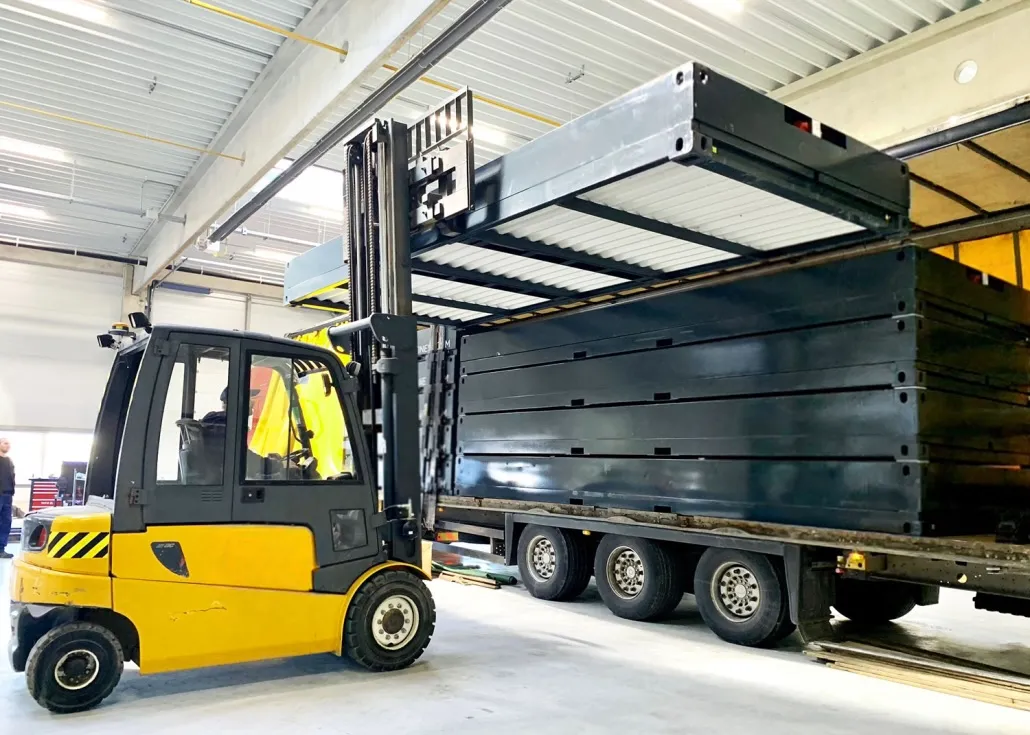
Modular container-based infrastructure addresses these pressures directly. Factory-manufactured, delivered near-ready, and operational in weeks rather than months, modular facilities allow healthcare and pharma organisations to maintain service continuity, meet compliance obligations, and control costs during periods of change. This article sets out the specific use cases, the practical considerations, and what separates a useful modular infrastructure partner from a container rental yard.
Renovation Decant: The Most Common and Least Discussed Use Case
Phased renovation is the single most frequent reason healthcare organisations turn to modular buildings. The scenario is straightforward: a hospital needs to refurbish a ward, outpatient department, or administrative block, but the services housed there must continue operating throughout the works.
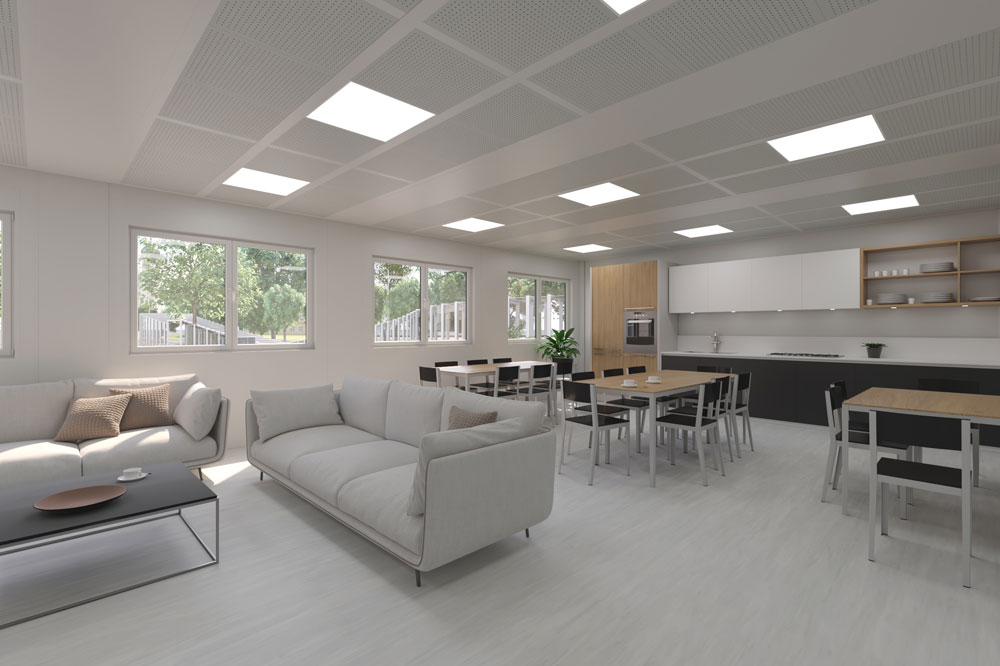
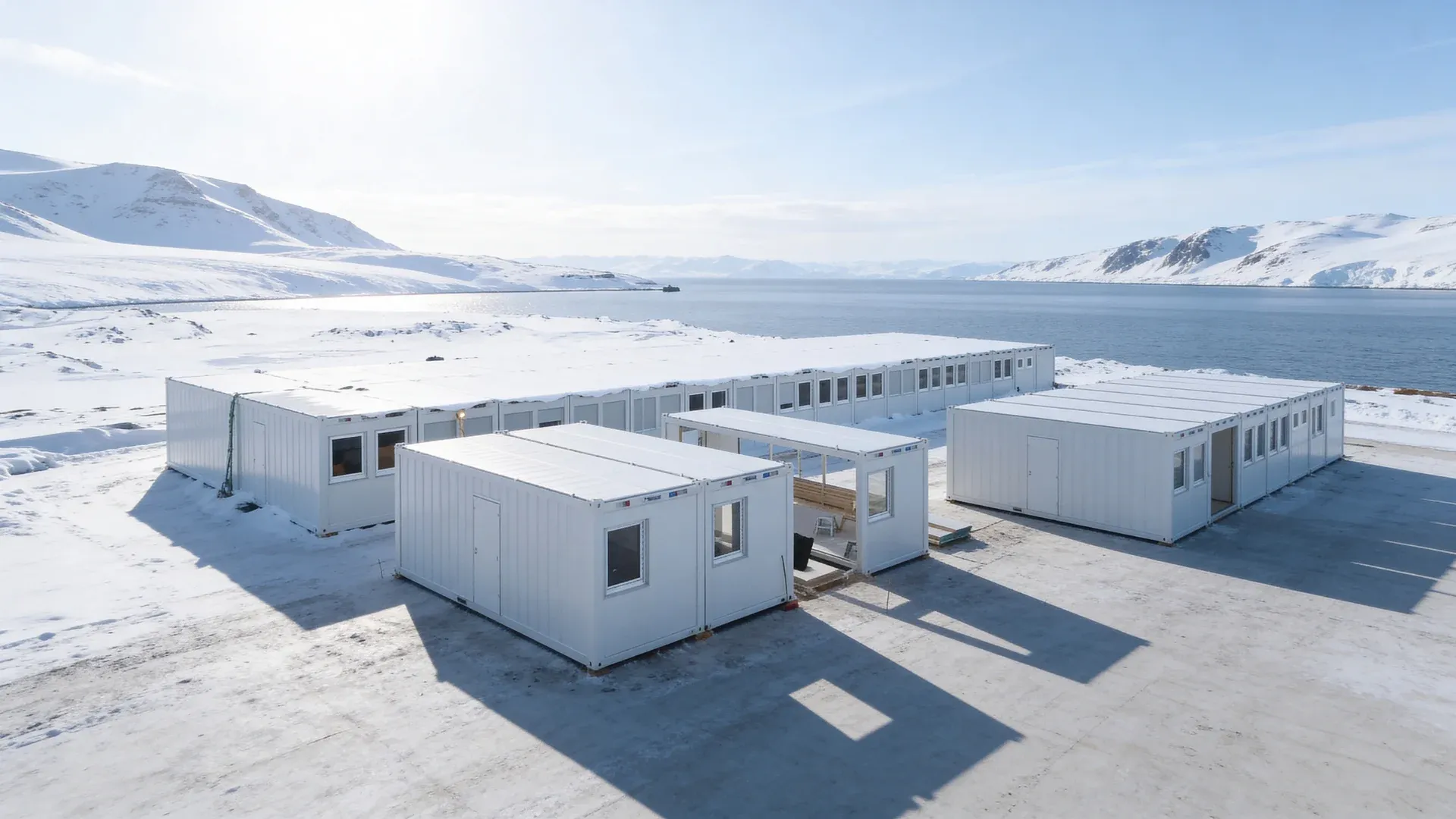
The solution is to decant the affected department into a temporary modular facility on or adjacent to the hospital campus. Outpatient consultation rooms, waiting areas, minor procedure rooms, staff offices, and reception functions can all be configured in linked modular units. These are not site cabins. A properly specified modular facility offers insulation, ventilation, lighting, data connectivity, and finishes that allow clinical and administrative staff to work productively for the duration of the renovation, which may be six months or two years.
Where do modular units go on a hospital campus?
Car parks, adjacent land, and campus perimeters are the most common locations. The footprint is flexible: single-storey configurations suit tight sites, while two-storey linked arrangements can accommodate larger departments. Ground preparation is typically limited to levelling and hard-standing, not deep foundations. Once the renovation phase is complete, units are removed and the site is restored. There is no demolition phase, no significant waste stream, and no permanent alteration to the campus.
This is where the concept of operational continuity matters most. A hospital that decants a department successfully avoids cancelling appointments, diverting patients, or operating in degraded conditions during renovation. The modular facility is not a compromise. It is the mechanism that makes the renovation possible without harming the service.
HEPF AG coordinates exactly this type of phased infrastructure project, from requirement analysis through layout configuration, delivery, installation, and eventual removal or relocation. The principle of temporary infrastructure without temporary thinking means healthcare clients receive facilities that meet operational standards, not site huts relabelled for medical use.
Temporary Pharmacies and Dispensaries: A High-Stakes Modular Application
A temporary pharmacy is not simply a room with a counter. It must meet the same regulatory, storage, dispensing, and accessibility standards as the permanent facility it replaces. In most European jurisdictions, this means compliance with national pharmacy regulations, controlled drug storage requirements, patient accessibility standards (such as DIN 18040 for barrier-free construction in Germany, or equivalent SIA standards in Switzerland), and temperature-controlled storage for specific medications.
Modular container-based pharmacies can be configured with climate control, secure storage zones, patient-facing dispensing counters, consultation areas, and barrier-free access. The key is that these features are specified at the configuration stage, not retrofitted after delivery. A modular pharmacy that arrives on-site should be ready to operate once utilities are connected and regulatory sign-off is obtained.
Can cold-chain integrity be maintained in a container-based pharmacy?
Yes, provided the right equipment is specified. Many medications, and most vaccines, require storage between 2 and 8 degrees Celsius, in line with EU Good Distribution Practice (GDP) guidelines and WHO cold-chain requirements. Refrigerated container units designed for pharmaceutical use maintain precise temperature control, with monitoring and alarm systems that document compliance continuously.
HEPF's Reefer and Cold Storage Line provides refrigerated containers in 10ft, 20ft, and 40ft formats suitable for pharmaceutical cold-chain requirements, from medication storage to vaccine logistics. These are not repurposed shipping containers. They are part of a coordinated modular system selected and configured for the specific use case.
Positioning a temporary pharmacy immediately adjacent to the original pharmacy location minimises patient confusion and staff workflow disruption. For hospital pharmacies, this proximity also preserves established distribution routes to wards and departments.
Administrative and Office Space: The Overlooked Infrastructure Gap
Healthcare campuses are not just clinical environments. They are also large administrative operations, with finance teams, HR departments, training functions, research offices, and project management teams. When a hospital or pharma campus undergoes expansion or renovation, the demand for office and meeting space often spikes at precisely the moment existing space is being disrupted.
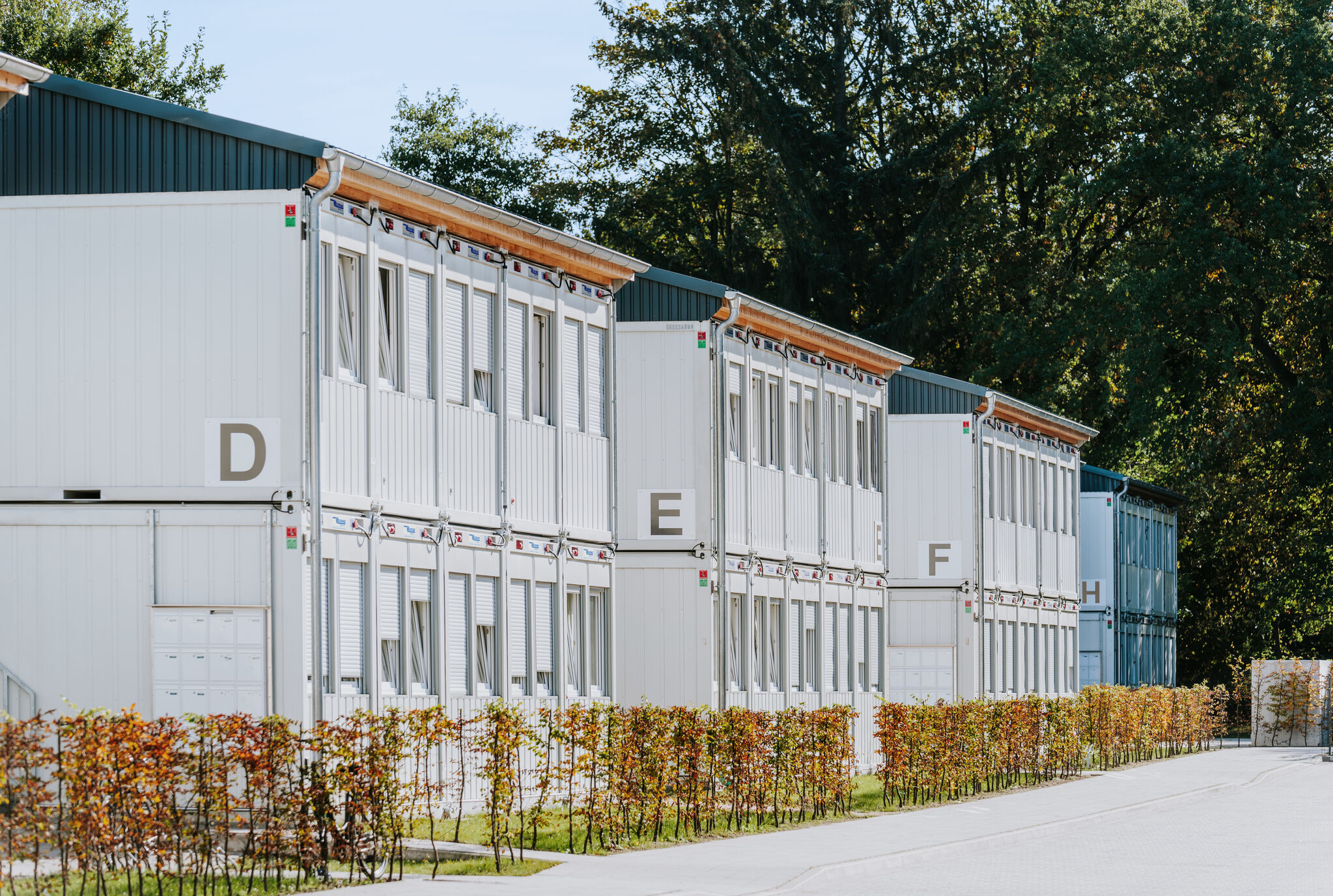
Modular office configurations range from single units serving as project offices to multi-storey linked facilities housing entire departments. The critical distinction is between a basic site cabin and a properly specified workspace. Staff who will occupy these buildings for months or years need adequate thermal insulation, natural and artificial lighting, mechanical ventilation, IT and telecoms connectivity, and internal finishes that do not feel temporary.
How do different modular product lines address quality concerns?
This is where product selection matters. An economical entry-level unit may be perfectly adequate for a six-month site office during construction. But a facility that will house a hospital's finance department for two years, or serve as a patient-facing reception area, requires a different specification.
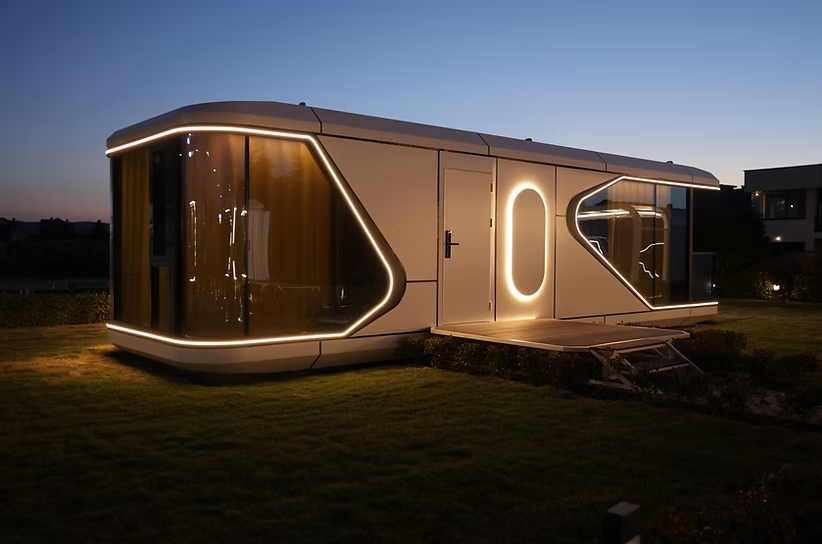
HEPF's Classic Line delivers reliable, professional-grade office and workspace configurations suitable for medium-term use. The Plus Line addresses the legitimate concern that modular looks cheap, offering higher comfort levels, better thermal performance, and architectural quality appropriate for public-facing or long-term healthcare environments. Choosing the right product line at the outset avoids costly upgrades or dissatisfied occupants later.
Cost Predictability and Financial Flexibility
Healthcare construction is notorious for budget overruns. A 2019 McKinsey report on modular construction noted that off-site manufacturing can reduce project costs by up to 20 percent in some sectors, though the more reliable benefit is cost predictability rather than absolute savings. Factory-controlled production, fixed-scope configurations, and reduced on-site variables mean fewer surprises.
For healthcare and pharma organisations, the financial structuring of modular infrastructure is often as important as the headline cost.
Is it better to rent or buy modular healthcare infrastructure?
The answer depends on project duration, budget structure, and organisational accounting preferences.
- Rental suits defined-term projects where the facility is needed for months rather than years, and where the organisation prefers to treat infrastructure as operational expenditure.
- Purchase makes sense for longer-term or permanent deployments, or where the organisation wants to retain and redeploy the asset across multiple sites.
- Leasing offers a middle path, spreading capital outlay while retaining use of the asset for the lease term.
- Buy-back arrangements allow organisations that purchase units to return them at end of use, recovering residual value and avoiding disposal logistics.
HEPF offers rent, buy, lease, and buy-back models, giving healthcare and pharma clients the flexibility to match infrastructure investment to project duration and budget constraints. This is not a marginal detail. For NHS trusts, cantonal hospitals, or pharma companies managing multiple concurrent projects, the ability to treat modular infrastructure as opex rather than capex can be the difference between approval and rejection at board level.
Reduced on-site construction time also lowers indirect costs. Every week a revenue-generating clinical area is disrupted or closed represents lost income and displaced patients. A modular solution that compresses the disruption window from months to weeks delivers financial value well beyond the cost of the units themselves.
Compliance, Safety, and Infection Control
A modular healthcare facility that fails a regulatory inspection defeats its own purpose. Compliance is not an afterthought. It must be designed in from the configuration stage.
Can a modular facility genuinely meet the same standards as a permanent healthcare building?
In principle, yes. Modular buildings can be configured to meet local building codes, fire safety regulations, accessibility requirements, and sector-specific standards. Off-site manufacturing in controlled factory environments can actually improve quality consistency compared to on-site construction exposed to weather, variable labour, and the constraints of building within an active clinical campus.
The relevant standards depend on jurisdiction and use case. In Switzerland, SIA 180 (thermal protection) and SIA standards governing accessibility apply. In Germany, DIN 18040 sets requirements for barrier-free construction. For pharmaceutical applications, EU Good Manufacturing Practice (GMP) and Good Distribution Practice (GDP) guidelines govern facility standards for production, storage, and distribution. Fire safety codes vary by canton or country and must be addressed on a project-specific basis.
The important point is that compliance responsibility sits with the project, not with the container. A credible modular infrastructure partner will help you navigate the permit and compliance landscape, identify which standards apply to your specific use case, and configure units accordingly. But no responsible partner will guarantee permits, because approval depends on local authority decisions that are beyond any supplier's control.
How do you maintain infection control during installation and removal on an active hospital campus?
This is a legitimate concern. On-site construction generates dust, noise, vibration, and foot traffic, all of which pose infection control risks in clinical environments. Modular construction minimises these risks because the majority of building work happens off-site. Delivery and installation involve craning pre-finished units into position, connecting utilities, and completing minimal on-site finishing. The dust and debris associated with traditional construction are largely eliminated.
Installation scheduling can be coordinated around hospital operations, with deliveries outside clinical hours and access routes planned to avoid patient areas. Removal follows the same principle in reverse.
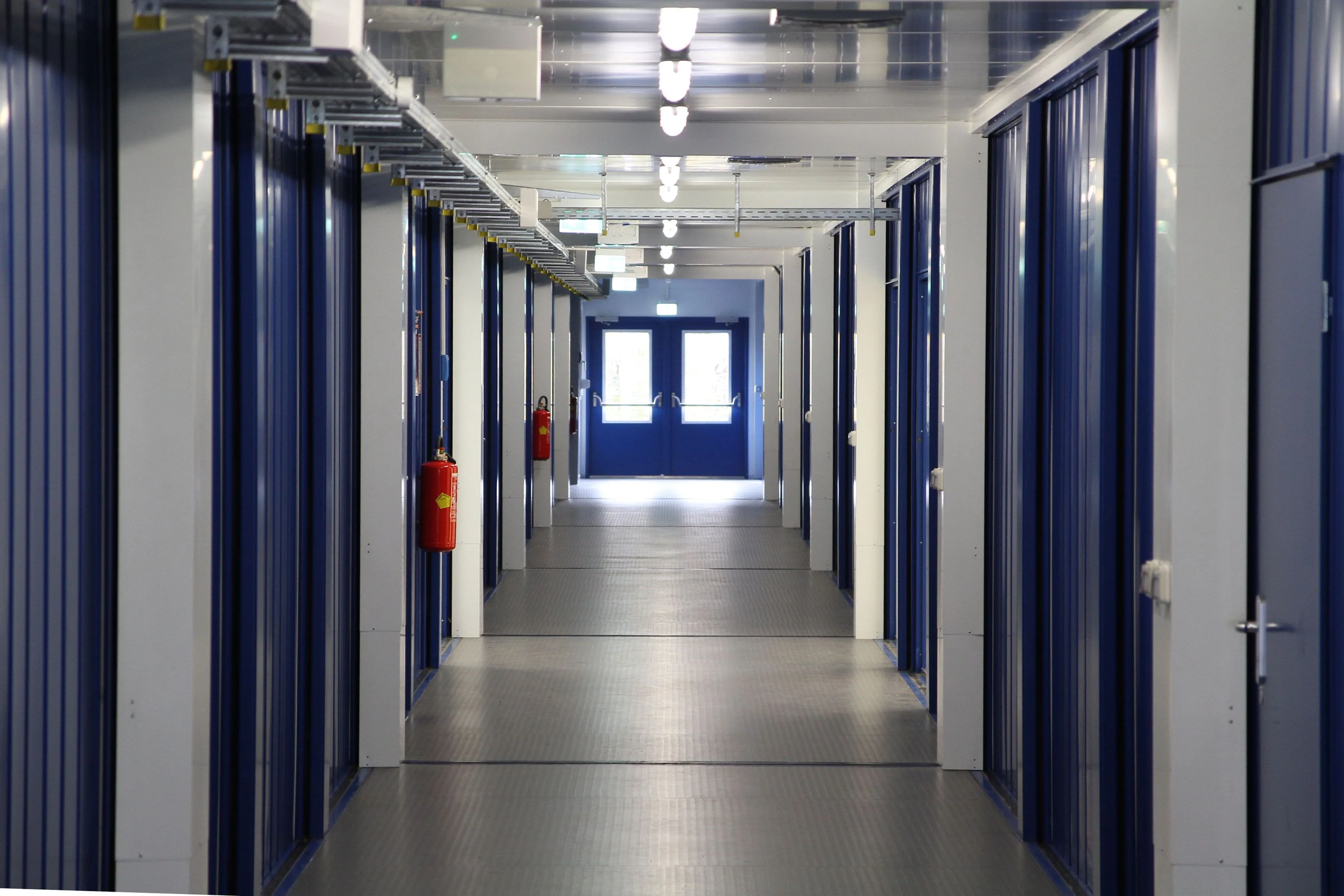
HEPF's Sanitary Line includes barrier-free bathroom and hygiene facilities that are combinable with other product lines, directly relevant for healthcare environments where accessibility compliance is non-negotiable.
Why Adoption Is Accelerating Across European Healthcare
Several forces are converging to make modular infrastructure a strategic rather than emergency choice for healthcare and pharma organisations.
The post-pandemic period demonstrated that healthcare systems need planned surge-capacity infrastructure, not improvised responses. The temporary hospitals deployed during COVID-19, from the NHS Nightingale facilities in the UK to field hospitals in Berlin and other European cities, proved both the concept and the limitations. Purpose-built modular facilities, properly insulated, ventilated, and compliant, are a significant step up from converted exhibition halls.
Labour shortages in traditional construction across Europe are pushing project timelines further out. Off-site manufacturing draws on a different labour pool and is less affected by local trades shortages on any given site.
Ageing building stock across European healthcare systems means renovation programmes will intensify over the coming decade. Each renovation creates a decant requirement. Each decant requirement is a potential modular infrastructure project.
ESG and sustainability reporting obligations are also relevant. Modular construction generates less on-site waste than traditional building. Units can be reused, relocated, or recycled at end of life, supporting circular economy commitments that healthcare organisations increasingly need to document.
What to Look for in a Modular Infrastructure Partner
Not every container supplier is equipped to support a healthcare or pharma project. The difference between a container rental company and a modular infrastructure partner is the difference between receiving a box and receiving a facility.
Key criteria to evaluate:
- Sector understanding. Does the partner have experience with healthcare workflows, phased renovation logistics, and the compliance environment? Or are they primarily serving construction sites and events?
- Full project coordination. Can they handle the path from requirement analysis through layout configuration, sourcing, delivery, installation, utility connection coordination, and handover? Or will you need to manage multiple subcontractors yourself?
- Product breadth. Can they combine office, sanitary, storage, cold-chain, and specialist units into one coordinated facility? A renovation decant project may need consultation rooms, offices, toilets, and refrigerated storage simultaneously.
- Financial model flexibility. Do they offer rent, buy, lease, and buy-back options, or only outright sale?
- End-of-project planning. What happens when the renovation is complete? Is removal included? Can units be relocated to another site in your network? Is buy-back available?
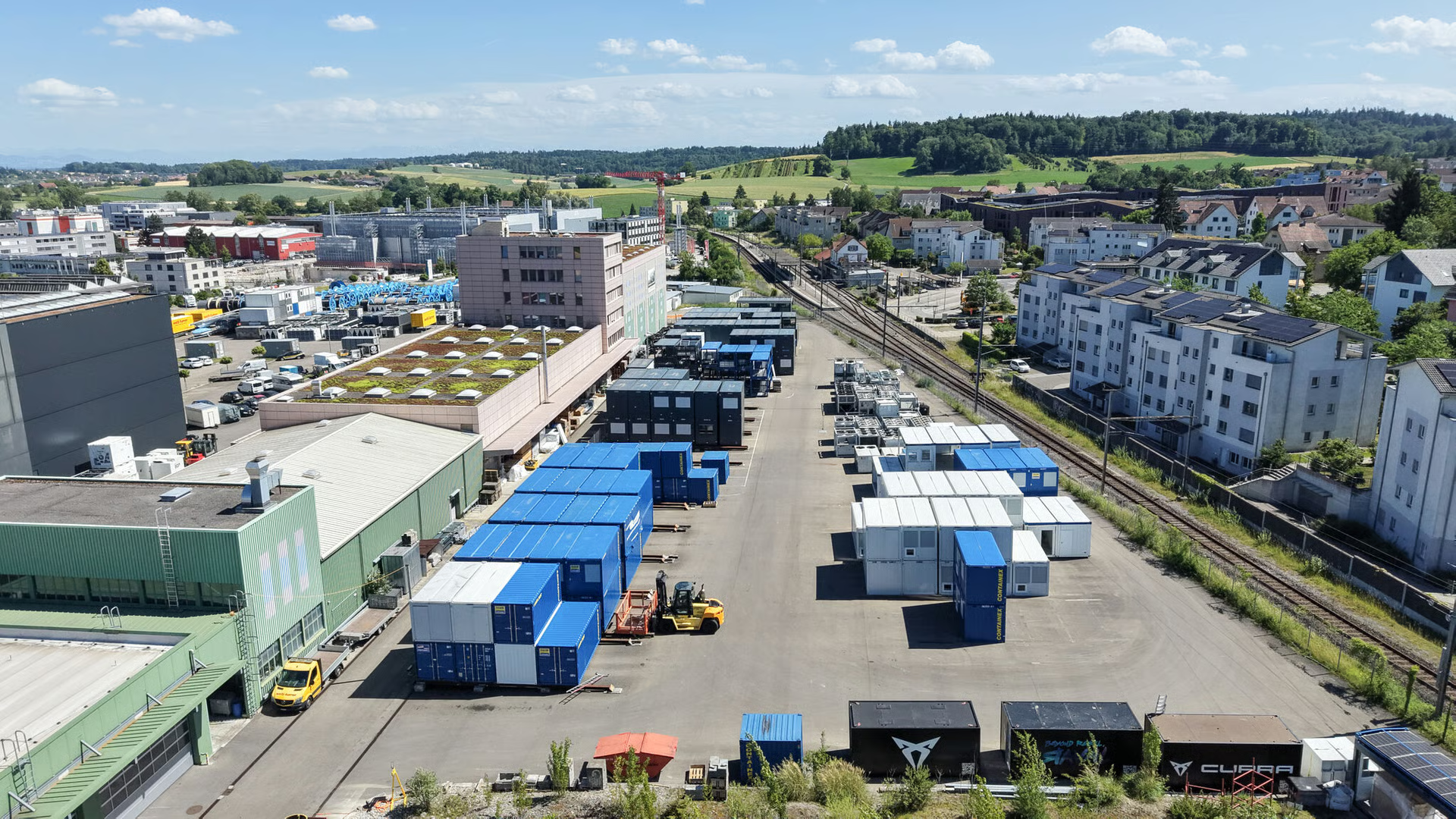
HEPF AG operates as one partner for modular infrastructure, meaning healthcare and pharma clients work with a single Swiss-led coordination point rather than managing multiple vendors independently. From single containers to complete modular facilities: plan, configure, deliver.
The Strategic Shift: From Stopgap to Standard Practice
Healthcare and pharma organisations that adopt modular container-based infrastructure are not settling for less. They are choosing speed over delay, cost predictability over overruns, and operational continuity over disruption. The question for facility managers and estates directors is no longer whether modular infrastructure is viable for healthcare. It is which modular system, configured to what specification, with which partner, and under what financial model.
The starting point is a conversation about your specific requirements, not a container catalogue. Whether you are planning a phased hospital renovation, setting up a temporary pharmacy, scaling pharmaceutical cold-chain capacity, or building a business case for surge-capacity infrastructure, the value of modular lies in how precisely it is configured to your operational reality.

Book a free consultation
Open, non-binding and tailored to your project.