Relocate, Reconfigure, Reuse
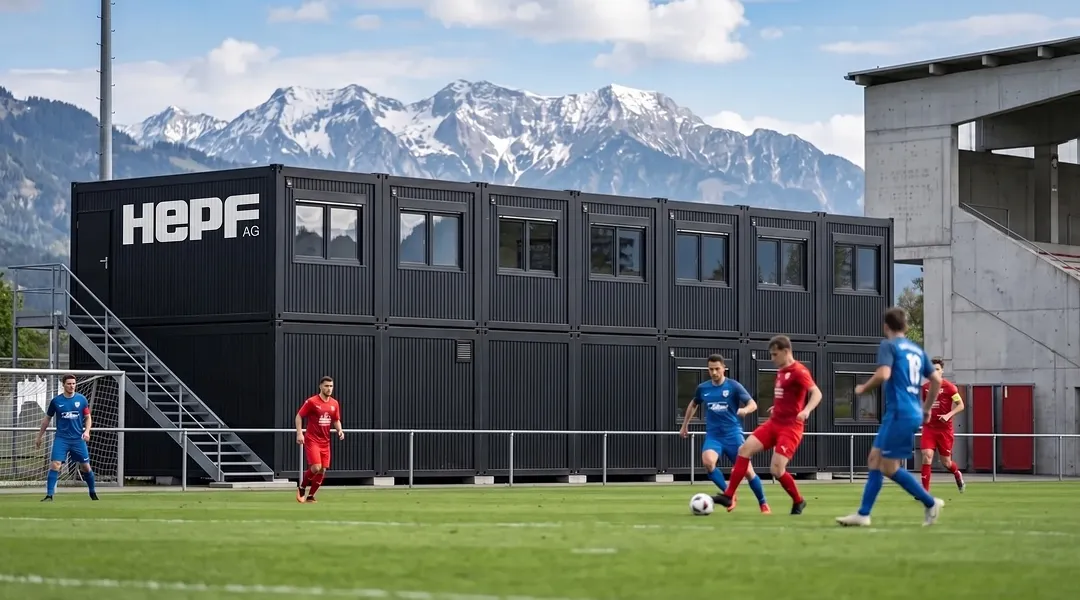
Why Relocation Is Built Into Modular Building Design
Most buildings are designed to stay where they are put. Modular container-based buildings are not. The difference is structural: each module is a self-contained unit with its own steel frame, floor, walls and roof. It does not rely on adjacent modules for load-bearing capacity. When you bolt several containers together to form a school annex or a site office complex, the connections between them are mechanical fixings, not shared structural elements. Electrical, plumbing and HVAC connections between modules are designed with disconnection in mind, using standardised interfaces that can be separated and reconnected.
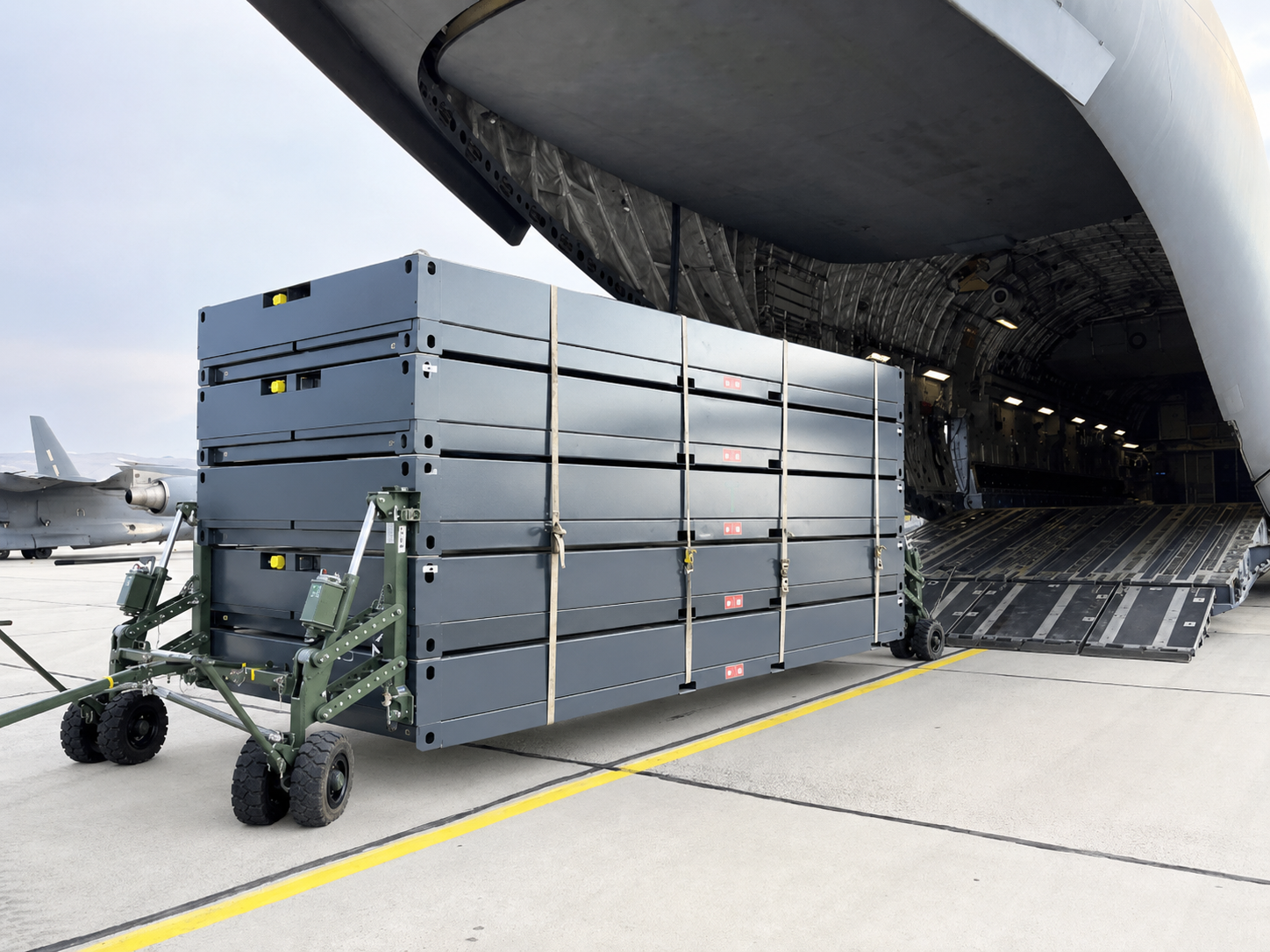
This matters because it means a modular facility is not a single building that happens to be made of containers. It is an assembly of independent units, each of which was transported to site once and can be transported again. Container-based modules built to ISO 668 dimensions (the same standard that governs shipping containers worldwide) are compatible with standard road trailers, rail wagons and ship decks. Moving a 20ft or 40ft module is not a specialist operation. It is the same logistics chain that moves tens of millions of containers across Europe every year.
There is an important distinction to understand here. Relocatable modular buildings are designed and specified with multiple moves in mind. Permanent modular buildings, which may use concrete foundations, fixed service risers and site-specific cladding, can still be moved but at greater cost and complexity. If you know from the outset that your facility may need to serve more than one site, specifying for relocatability is a planning decision you should make before procurement, not after.
When Does Relocation Make Sense?
Relocation is not always the right answer. Sometimes it is cheaper to procure new modules. Sometimes the condition of existing units does not justify the transport cost. But there are clear scenarios where redeployment of modular buildings is the most rational option.
Temporary projects reaching completion
Construction site offices, event infrastructure and interim classroom buildings all have a defined end date. When that date arrives, you have a facility with years of useful life remaining. Relocating it to a new site, or returning it to a supplier under a rental or buy-back arrangement, extracts value from an asset you have already paid for.
Organisational changes
School rolls fluctuate. Workforces move between regions. Seasonal businesses scale up and down. A six-module office facility that served a project team in one city can serve a different team in another. The building does not care about the reason for the move.
Lease expiry or site redevelopment
If your site lease ends or the landowner has other plans, a modular building can leave with you. This is not possible with traditional construction, where demolition is typically the only option. The financial argument is straightforward: you avoid both demolition costs and the full cost of a new build at your next location.
Cost comparison
Relocation costs depend on distance, module count, site access and the extent of service reconnection required. As a rough framework, relocating a container-based modular facility typically costs significantly less than procuring an equivalent new facility, and a fraction of what traditional construction would cost for the same floor area. The exact figures depend on your project, but the principle holds: you have already paid for manufacturing, materials and fit-out. Redeployment lets you use that investment again.
The Relocation Process: What Is Actually Involved
Claiming that modular buildings can be relocated is easy. Understanding what the process requires is more useful. Here is what happens in practice.
Site assessment at the new location
Before anything moves, the new site needs evaluating. Ground conditions determine foundation requirements. Access routes determine whether modules can reach the site without obstruction. Local building regulations determine whether you need a new permit. In Switzerland, cantonal building rules vary; in Germany, the Landesbauordnung differs by state; in Austria, building law is also state-level. A module permitted in Zurich may need fresh approval in Munich. This is a planning consideration, not a reason to avoid relocation, but it must be addressed early.
Disconnection and preparation
Services are disconnected: electrical supply, water, drainage, data. Mechanical fixings between modules are removed. Each unit is checked for transport readiness. For a typical container-based facility, this takes one to three days depending on scale and the complexity of service connections.
Transport logistics
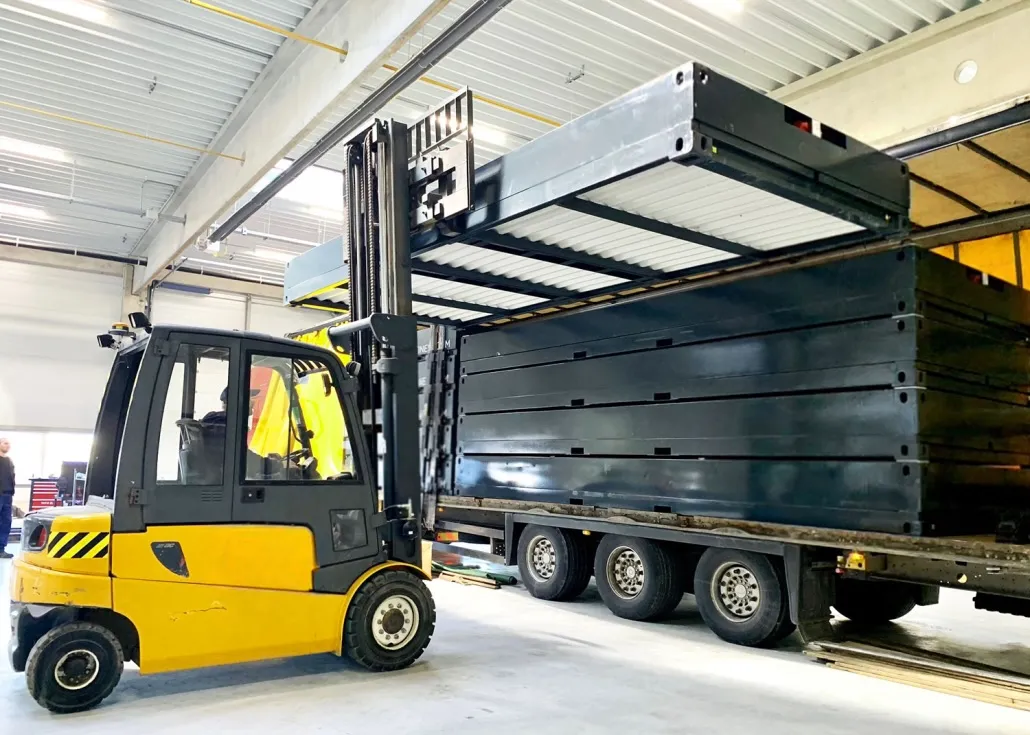
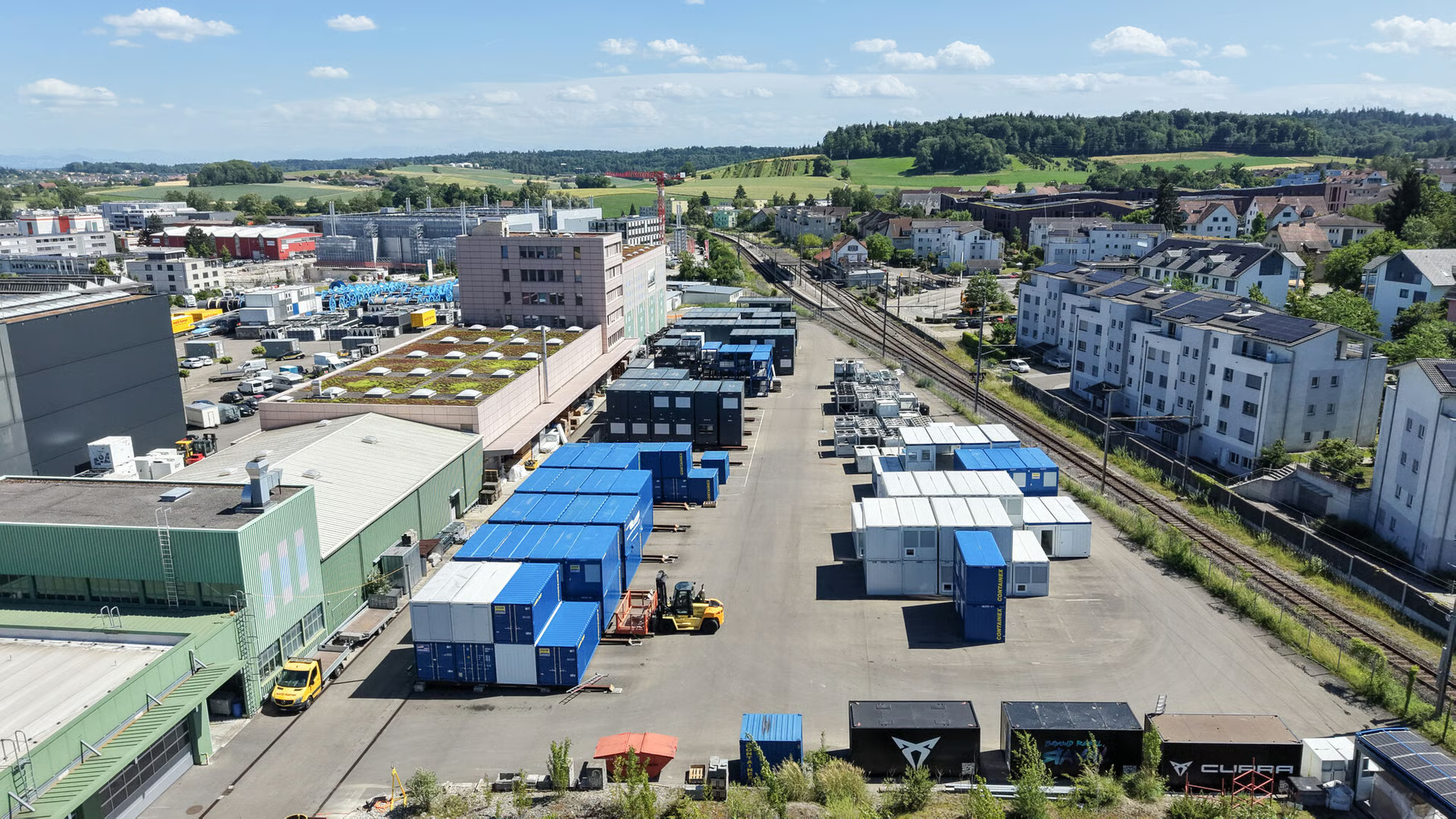
Standard container modules travel on standard low-loader trailers. Route planning accounts for dimensional restrictions, weight limits, bridge clearances and any permits required for oversized loads. For urban sites with narrow access, crane positioning must be planned in advance. None of this is unusual logistics, but it does require coordination, particularly for multi-module facilities where delivery sequencing matters.
Reinstallation
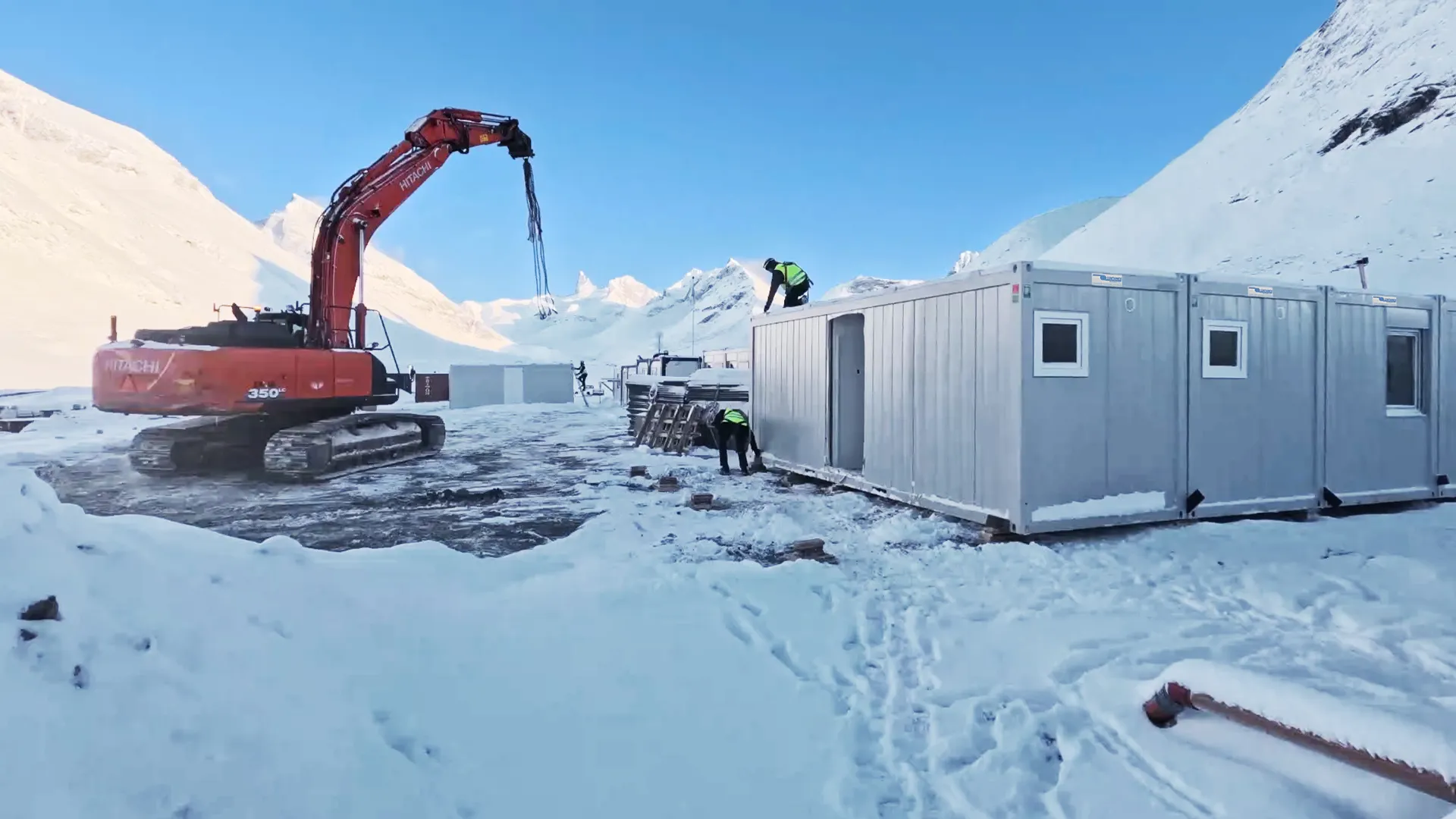
At the new site, foundations are prepared (often simple pad or strip foundations for relocatable buildings), modules are craned into position, levelled and connected. Services are reconnected. For a facility of eight to twelve modules, reinstallation typically takes three to five days once foundations are ready.
Inspection and recommissioning
Once installed, the facility is inspected, services are tested and any local compliance requirements are verified. If the new site falls in a different wind load or snow load zone, structural adequacy may need reassessing against the relevant Eurocodes (EN 1990 to EN 1999). This is a standard engineering check, not a redesign.
Reconfiguration: Changing the Layout Without Starting Over
Relocation means moving the same facility to a new site. Reconfiguration means changing what the facility is or does, often without moving it at all. This is where modular construction offers something traditional buildings cannot match.
Expanding capacity
Adding modules to an existing facility is straightforward when the original installation used standardised connection points. A four-classroom school annex becomes a six-classroom annex. A site office gains a meeting room. The new modules connect to the existing structure using the same mechanical and service interfaces.
Downsizing
The reverse is equally possible. When demand drops, modules can be removed, returned to the supplier, or redeployed elsewhere. You are not left maintaining floor area you no longer need.
Changing internal layouts
Within individual modules, internal partitions can typically be moved, added or removed to convert open-plan space to cellular offices, or to subdivide a large room into smaller ones. The extent depends on the product line and specification, but non-structural internal walls are designed to be reconfigurable.
Changing the use case entirely
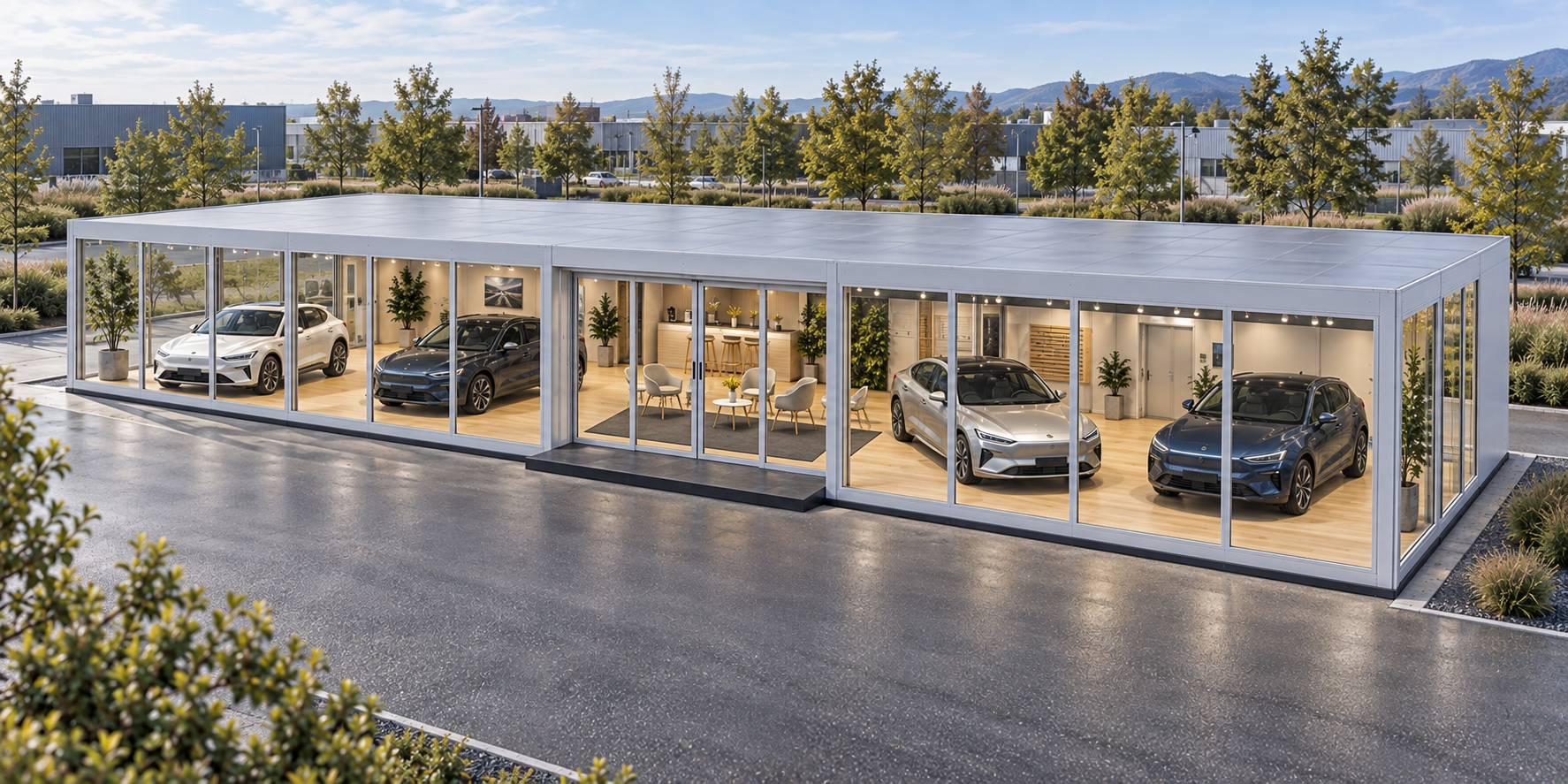
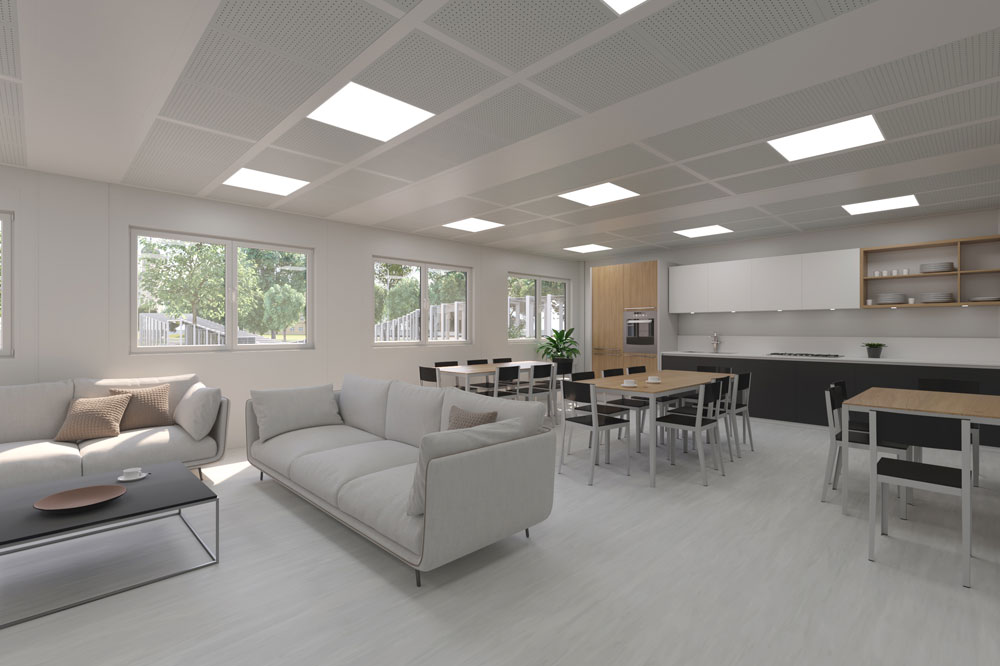
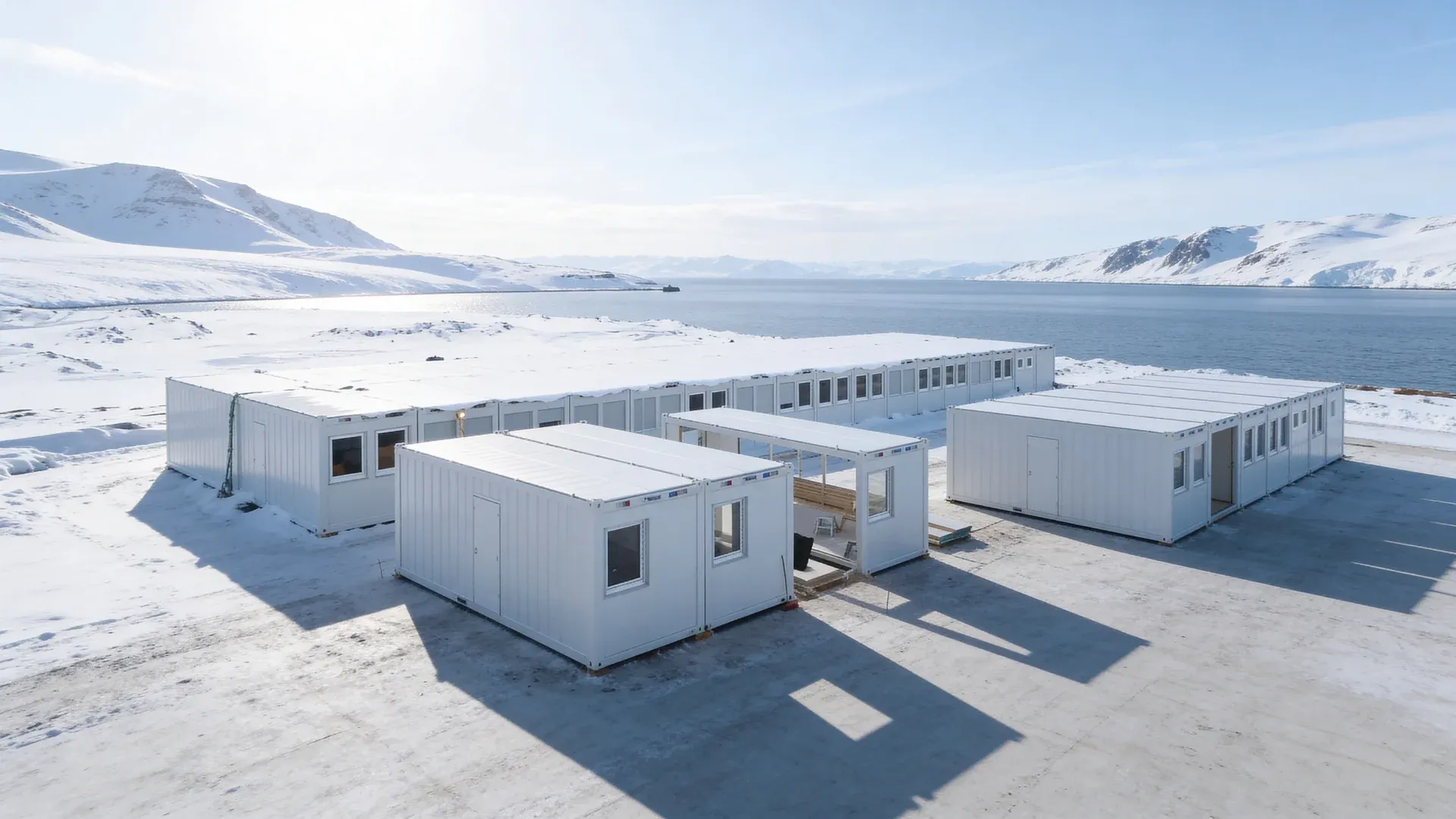
This is where reconfiguration becomes genuinely powerful. An office facility can become housing. A school annex can become a medical station. A workforce accommodation block can become a training centre. The structural shell does not change; the internal fit-out does. When different functional modules can be integrated, the possibilities expand further. Adding sanitary containers (toilets, showers, accessible bathrooms) to an existing workspace creates a self-contained facility. Adding storage containers to a housing complex provides secure lockable space for residents.
HEPF's product portfolio spans multiple lines, from the Classic Line for schools, offices and housing, to the Sanitary Line for washroom facilities, and the Storage Line for secure storage. This means reconfiguration is not limited to rearranging the same units. Clients can integrate entirely new functional modules into an existing facility as needs evolve.
What Limits Relocation or Reconfiguration?
Honesty about limitations is more useful than pretending there are none.
Not all modular systems are equally relocatable
Permanent modular buildings with cast foundations, fixed service risers or bespoke external cladding require more effort and cost to move. Container-based systems designed for redeployment are inherently simpler to relocate because of their standardised dimensions and self-contained structure.
Permits and regulations differ between sites
A facility permitted at one location is not automatically permitted at another. Building codes, zoning rules, fire regulations and accessibility requirements may all differ. This is manageable with proper planning, but it is not a step you can skip.
Wear and condition
Modular containers are durable, but they are not immune to wear. Older units may need refurbishment before redeployment: repainting, replacing seals, updating electrical systems. A condition assessment before relocation tells you what is needed and whether the investment is worthwhile.
Site-specific customisations
If the original installation involved bespoke elements, such as fixed utility connections, custom cladding tied to the building envelope, or permanent ramps and access structures, these add complexity to disconnection and may not transfer directly to the new site.
Transport access
Narrow roads, low bridges, weight-restricted routes and tight urban sites can all constrain which modules can reach a location. This is a logistics question, not a design limitation, but it needs answering before you commit to a relocation plan.
Planning for Future Flexibility From Day One
The time to plan for relocation or reconfiguration is at the start of a project, not at the end. Several decisions made during initial procurement and installation determine how practical future moves will be.
Specify for disassembly
Choose modular systems with standardised connection points, bolted rather than welded joints, and service interfaces designed for disconnection. If you know the facility may move, say so during specification.
Document the installation
A clear record of how modules are connected, where services enter and exit, and what foundations were used makes future disconnection faster, cheaper and less prone to error. This documentation is rarely produced by default; you need to ask for it.
Choose the right commercial model
Rental and lease models often include end-of-term options: return, extend, relocate or buy. Buy-back arrangements allow you to recover value from modules you no longer need. These commercial structures make relocation financially practical because the cost of the building's next chapter is accounted for from the start.
HEPF offers rent, buy, lease and buy-back models, meaning clients can plan from the outset for a building's next use. Whether a facility is returned, relocated or reconfigured, the commercial model supports flexibility without locking you into a single-use scenario.
Work with a partner who thinks beyond delivery
A supplier who coordinates only the initial installation cannot help you when you need to move or reconfigure three years later. A project partner who manages the full lifecycle, from requirement through to redeployment or return, is better positioned to advise on what to specify now so that future flexibility is preserved.
Real-World Scenarios: Redeployment in Practice
Abstract principles are less useful than concrete examples. Here is how relocation and reconfiguration play out across different sectors.
Education
A temporary school annex of six classroom modules serves one campus for two years while permanent facilities are renovated. When the renovation completes, the modules are relocated to a second campus facing its own capacity pressure. The building serves a total of five or more years across two sites, at a fraction of the cost of two separate construction projects.
Events
Modular hospitality suites, sanitary facilities and back-of-house infrastructure are installed for a major event, operated intensively for two to four weeks, then removed and stored or redeployed to the next venue. HEPF has delivered modular infrastructure for the World Economic Forum in Davos and UEFA Women's Euro 2025, contexts where facilities must be installed rapidly, perform at a high standard, and then be removed or redeployed. This kind of operational experience informs how redeployment is planned from the start.
Housing
Refugee or workforce accommodation may be needed urgently in one region, then required elsewhere as demand patterns shift. Relocating container-based housing modules is faster and more cost-effective than procuring new units each time demand moves. It also preserves the quality and dignity of the accommodation, because you are redeploying a complete, proven facility rather than starting from scratch with budget constraints.
Industrial
Site offices and storage containers follow a construction project from phase to phase, moving as the active work zone shifts. A 12-module office complex that served the civil engineering phase is relocated to serve the fit-out phase at a different part of the same development, or to an entirely different project.
Reuse Over Demolition: The Sustainability Case
The environmental argument for modular building reuse is real, but it is better framed as an economic argument with environmental benefits.
Construction and demolition waste accounts for roughly 35 to 40 percent of total waste generated in the EU, according to Eurostat. Every modular facility that is relocated rather than demolished avoids contributing to that figure. The EU Waste Framework Directive (2008/98/EC) establishes a clear hierarchy: prevention and reuse sit above recycling and disposal. Relocating a modular building is reuse in its most direct form.
The embodied carbon argument is equally straightforward. Manufacturing a container module requires steel, insulation, cladding, glazing and fit-out materials. All of that embodied energy is preserved when the module is redeployed. You avoid the carbon cost of new production while extracting further use from materials already in circulation. This aligns with circular economy principles in the built environment, not as an aspiration but as a practical outcome of choosing relocatable modular infrastructure.
The key point: reuse is not a bonus feature of modular buildings. It is a core economic and environmental characteristic, but only if you plan for it.
Frequently Asked Questions
Can a modular building actually be moved once installed and connected to services?
Yes. Container-based modular buildings are designed with disconnectable service interfaces and bolted mechanical connections. Disconnection, transport and reinstallation are routine operations, not emergency procedures.
How many times can a container building be relocated?
There is no fixed number. Container modules built to ISO 668 standards are structurally tested for repeated transport cycles. The practical limit is condition-based: with proper maintenance and periodic refurbishment, modules can be relocated multiple times over a service life of 20 years or more.
Do I need new planning permission at the new site?
Almost certainly, yes. Building permit requirements are site-specific and jurisdiction-specific. In Switzerland, cantonal rules apply; in Germany and Austria, state-level building codes govern. Factor permit timelines into your relocation plan from the start.
How long does relocation take?
For a container-based facility, disconnection and preparation typically take one to three days. Transport is usually a single day for domestic moves. Reinstallation takes three to five days for a facility of eight to twelve modules, assuming foundations are ready. Total elapsed time from decision to operational facility: typically two to six weeks, including planning and permits.
Is a relocated building as good as a new one?
A well-maintained modular building that has been properly disconnected, transported and reinstalled performs to the same standard as when first installed. Older units may benefit from refurbishment, such as repainting, seal replacement or service upgrades, but the structural integrity of a steel-framed container module does not degrade through relocation.
What commercial models support relocation?
Rental, leasing and buy-back arrangements all provide structured pathways for what happens when the initial use ends. These models mean the cost of relocation or return is anticipated in the original agreement, rather than being an unplanned expense.
.webp)
Book a free consultation
Open, non-binding and tailored to your project.