Rent, Lease or Buy Modules
Why the Financial Model Matters as Much as the Building
Most delays in infrastructure projects are not caused by a lack of available buildings. They are caused by a lack of available budget, or by the wrong kind of budget. A school that needs four additional classrooms for the next three years may have operational funds but no capital approval. A logistics company expanding into a new site may have capital but not want to commit it to a building it might vacate in 18 months. An event organiser needs facilities for ten days and has no interest in owning anything at all.
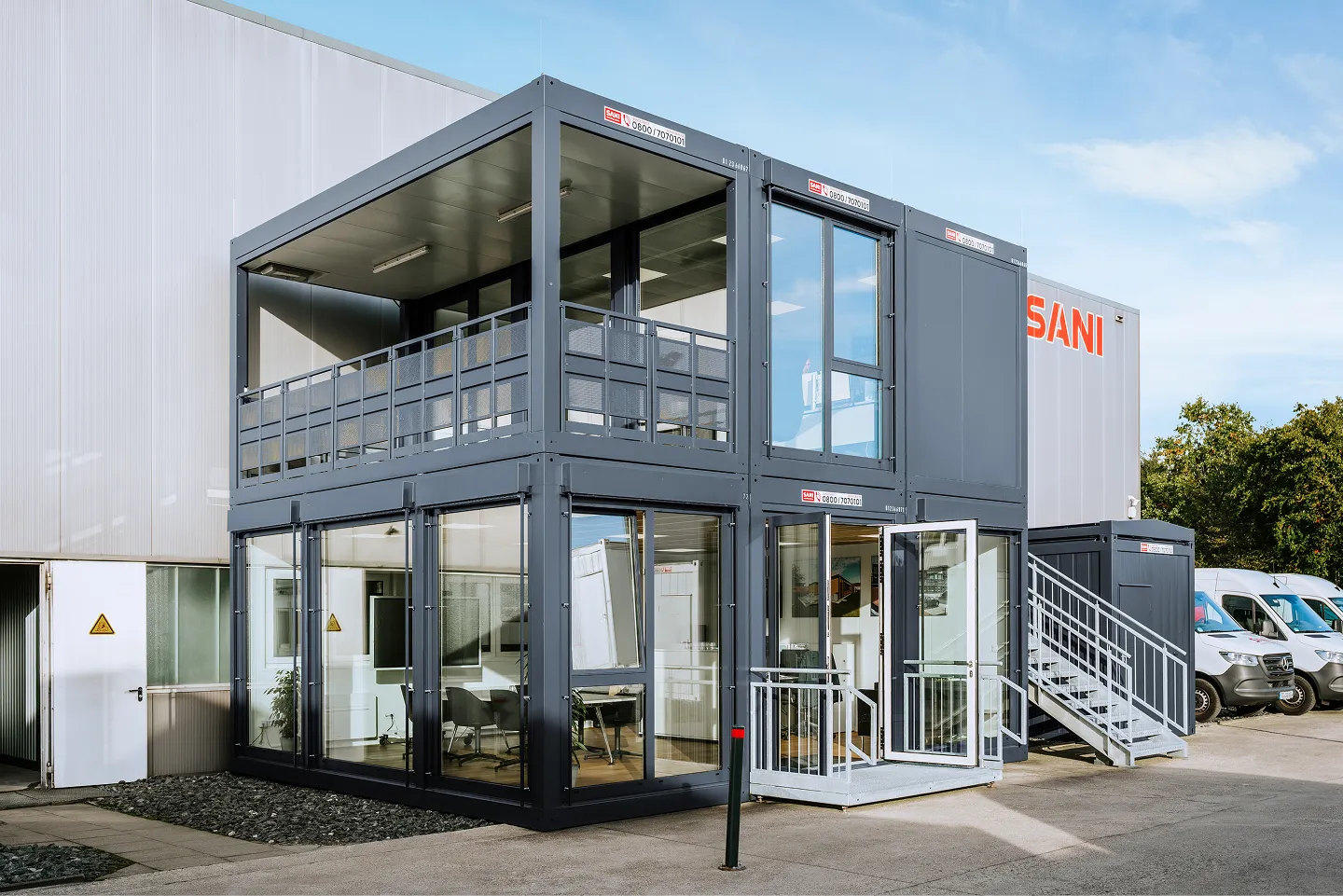
Modular buildings are unusual in construction because they genuinely support multiple financial models. A conventionally built extension can only be purchased. Once built, it stays where it is, and its value is tied to the site. A modular building can be purchased, rented, leased or returned, because it is a discrete, relocatable asset. This makes the financial decision not just a matter of preference but a genuine planning tool.
If you are evaluating modular infrastructure for any purpose, the question of how to acquire it deserves the same attention as what to acquire. Getting the financial model right can be the difference between a project that starts this quarter and one that waits another fiscal year.
The Four Main Acquisition Paths for Modular Buildings
There are four distinct ways to acquire modular infrastructure. Each has a different cost profile, a different ownership outcome, and a different level of flexibility. Understanding them clearly is the first step.
Outright purchase
You buy the building. You own it. You are responsible for its maintenance, and you decide what happens to it when you no longer need it: sell it on, relocate it to another site, or decommission it. This gives you the most control and, over a long enough period, the lowest total cost. The trade-off is that you commit capital upfront and accept the risk that your needs might change before the asset has paid for itself.
For purchased modular buildings, depreciation periods typically range from 10 to 25 years depending on classification, jurisdiction and how the building is used. If the building is classified as a temporary structure, the depreciation schedule may be shorter, which can have tax advantages but also affects how lenders and auditors view the asset.
Rental
You pay a periodic fee to use the building. You do not own it and have no obligation to keep it beyond the rental term. This is the most flexible model and the one with the lowest commitment. Rental agreements often include transport, installation and sometimes maintenance, though you should always confirm what is covered. At the end of the term, the building is collected and returned.
Rental suits confirmed short-term needs. If you know you need the space for under 12 months, or if the duration is genuinely uncertain, rental avoids the risk of owning an asset you cannot use.
Lease or lease-to-own
A lease is a structured payment arrangement over a fixed term, typically one to five years or longer. Unlike rental, a lease usually commits you for the full term. In return, the periodic cost is often lower than rental on a per-month basis, and the arrangement can be structured so that ownership transfers to you at the end.
Lease-to-own is particularly useful when you expect to need the building long-term but cannot or prefer not to commit the full purchase price upfront. It spreads the cost and, if structured correctly, can convert to an asset on your books at the end of the term.
One accounting point worth noting: under IFRS 16, most leases now appear on the balance sheet as a right-of-use asset with a corresponding liability. This changed the old distinction where operating leases were off-balance-sheet. If your organisation reports under IFRS, your finance team will want to understand how a lease is classified before signing. This does not make leasing less attractive, but it does mean the accounting treatment should be checked early, not assumed.
Buyback arrangement
A buyback is a purchase with a pre-agreed return path. You buy the building outright, use it for as long as you need, and the supplier commits to buying it back at a defined price or formula if your requirements change. This gives you ownership benefits (full control, potential tax advantages of asset ownership) while reducing the risk that you are stuck with a building you no longer need.
Buyback arrangements are less common in conventional construction for the obvious reason that a permanent building cannot be returned. They exist in the modular sector specifically because the building can be disassembled, transported and redeployed. The buyback value reflects the building's residual worth, which depends on its condition, specification and remaining useful life.
HEPF AG offers all four pathways as part of its project coordination model. The financial structure is discussed alongside layout, specification, delivery and installation from the outset, not treated as a separate process.
Matching the Financial Model to the Use Case
The right acquisition model depends on three things: how long you need the space, how certain that timeline is, and what budget line is available. Mapping these to real scenarios makes the choice concrete.
Short-term, confirmed duration (under 12 months)
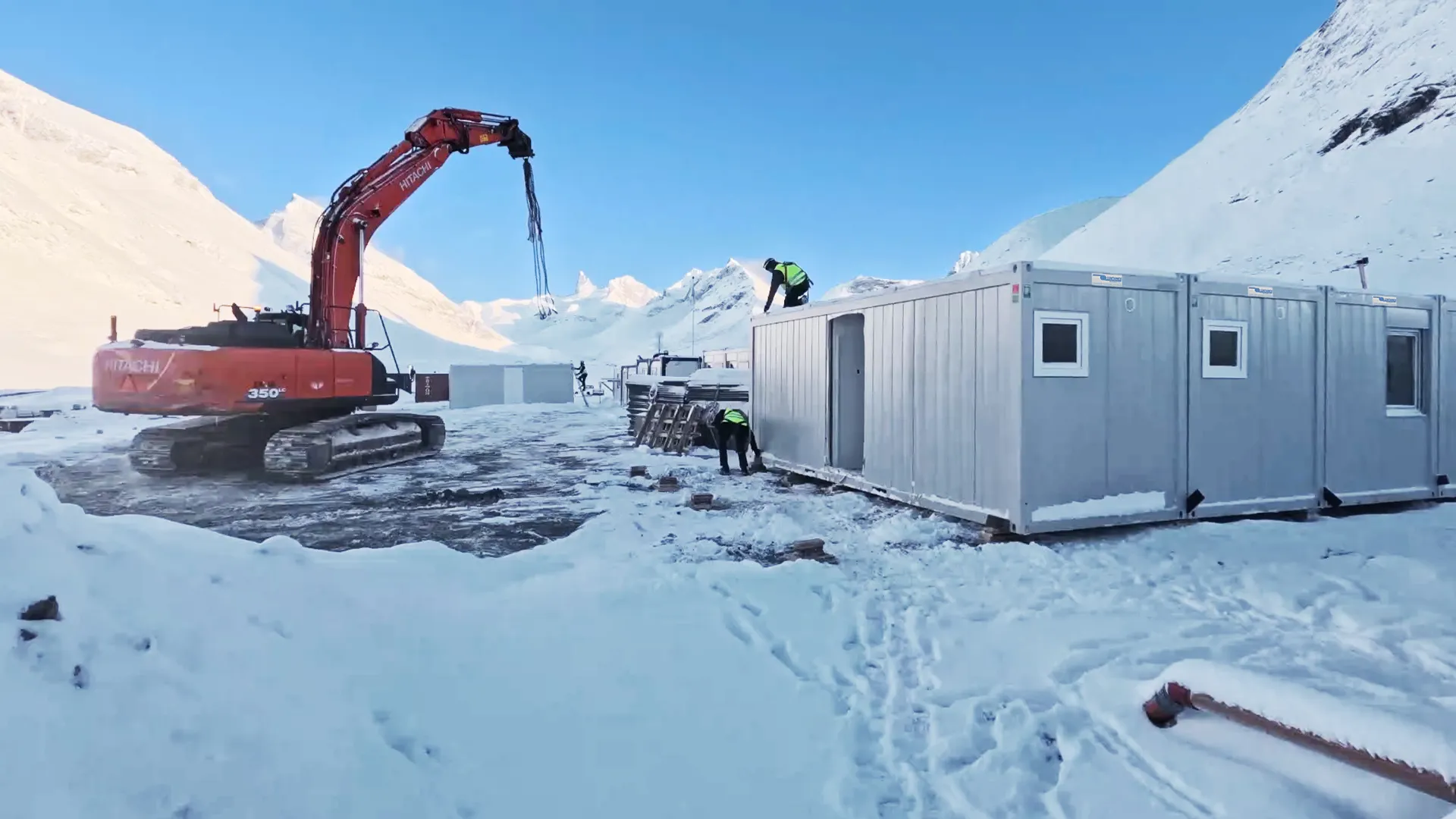
Event facilities, construction-phase site offices, temporary welfare units during a renovation, emergency accommodation after a natural disaster. For all of these, rental is the clearest path. You need the space quickly, you know roughly when you will stop needing it, and ownership would be a burden rather than a benefit.
Medium-term, reasonably certain (one to five years)
A school expansion while a permanent building is under construction. Interim office space for a company relocating. Project-based workforce housing on an industrial site. Leasing offers cost control with a known monthly payment, and the term can be aligned to the project timeline. If there is a reasonable chance the need becomes permanent, lease-to-own keeps that option open without requiring the decision now.
Long-term or permanent (five years and beyond)
Workforce housing that will be needed for the foreseeable future. A permanent classroom wing. A logistics hub building. Purchase or lease-to-own makes financial sense here because the total cost over the asset's life will be lower than ongoing rental, and you retain the residual value of the building.
Uncertain timeline
This is the most common real-world situation, and the one where the financial model matters most. If you genuinely do not know whether you will need the space for two years or seven, a buyback arrangement protects you. You get the benefits of ownership for as long as you need them, and a defined exit if things change. Alternatively, starting with a rental and converting to a lease or purchase if the need proves durable is a practical approach, provided the terms allow it.
HEPF coordinates modular infrastructure across education, housing, events, industrial and military sectors. Each has different budget cycles and approval processes, and the acquisition model is tailored accordingly.
Residual Value: the Financial Logic That Makes Modular Different
The single strongest financial argument for modular buildings, and the one most often overlooked, is residual value.
A conventional building extension, once constructed, is part of the site. If you no longer need it, your options are limited: repurpose it, leave it empty, or demolish it. Its value is embedded in the property and cannot be extracted independently.
A modular building is a moveable asset. At the end of its useful life on your site, it can be disassembled, transported and reinstalled elsewhere, sold to another user, or returned to the supplier. This means it retains tangible financial value even after your need for it ends. For organisations that are uncertain about long-term requirements, this changes the risk calculation fundamentally. Purchasing a modular building is not the same commitment as purchasing a permanent extension, because the exit options are broader and the potential for value recovery is real.
This also affects the rental and leasing market. Suppliers can offer competitive rental and lease rates precisely because the buildings have a second, third and fourth life. The cost is spread across multiple deployments, not recovered from a single user.
What to Ask Before Committing to a Financial Model
Before you choose an acquisition model, work through these questions. They are the questions your finance team, procurement department or board will ask, and having clear answers will speed up internal approval.
How long will the space be needed? Distinguish between confirmed duration (contractual, regulatory or project-based) and estimated duration. The gap between these two numbers is your risk exposure.
Is there a realistic possibility the requirement grows, shrinks or relocates? If yes, favour models with flexibility: rental, lease with break clauses, or buyback.
Does the organisation prefer to own the asset or avoid ownership obligations? Some organisations want assets on the balance sheet for strategic reasons. Others, particularly those with constrained capital budgets, prefer to keep infrastructure as an operational cost.
What budget line is available, and on what timeline? In many public sector organisations, capital and operational budgets are separate pots with separate approval processes and timescales. A project that cannot be funded from the capital budget this year might be fundable immediately from the operational budget as a rental. This is not a workaround; it is a legitimate planning decision.
Are there regulatory or accounting requirements that favour one model? IFRS 16 treatment of leases, public procurement rules, depreciation schedules and tax treatment all vary by jurisdiction and organisation type. Involve your finance team early.
What helps ensure that all requirements are addressed before construction on a building project actually begins?
The most reliable way to ensure nothing is missed is to treat the financial model as part of the project brief, not a downstream decision. When the space requirement, the layout, the specification, the timeline and the funding model are all discussed together from the start, misalignments surface early. A building that is perfect technically but funded on the wrong basis will stall in procurement. A financial model that is approved but does not account for site preparation, foundations, utility connections and decommissioning will blow the budget later. Integrated planning, where the project partner understands both the technical and financial dimensions, is what prevents these gaps.
Common Misconceptions About Financing Modular Buildings
"Leasing is always more expensive than buying"
On a pure total-payment basis over the full life of the building, yes, leasing typically costs more than a single upfront purchase. But this comparison ignores the cost of capital, the value of flexibility, and the risk of owning an asset you may not need for the full depreciation period. If you buy a building for a ten-year need and your requirement ends after four years, the effective cost of those four years of use is far higher than leasing would have been. The right comparison is total cost adjusted for how long you actually use the building, not the sticker price.
"You can only rent basic site containers"
This was arguably true 20 years ago. Today, full modular facilities including classrooms, offices, housing units and public-facing buildings are available on rental and lease terms. Premium modular lines with high thermal performance, architectural finishes and full accessibility can be rented in the same way as a basic storage container. The acquisition model and the building quality are independent variables.
"Rented buildings look temporary"
Appearance is a function of specification, not ownership. A rented modular building from a premium product line looks and performs identically to a purchased one, because it is the same building. If you need a facility that looks permanent and performs to a high standard but you only need it for three years, renting a premium-specification unit is a rational choice.
"Financing modular buildings is complicated"
It can be, if the financial conversation happens after the building has been selected and the contract is being drawn up. It is straightforward when the acquisition model is discussed at the same stage as the space requirement and layout. A project partner who coordinates both the technical and financial aspects of modular infrastructure can present options clearly and help you match the model to your situation without separate workstreams.
When to Start the Financial Conversation
The answer is: at the same time as you define the space requirement. Not after you have selected a building. Not after you have received a quote. At the beginning.
There are practical reasons for this. If you define a requirement, select a modular building, get internal enthusiasm for it, and then discover that the capital budget is fully committed for the next 18 months, the project stalls. If instead you begin with the question "we need 400 square metres of classroom space for approximately three years, and we have operational budget available now but no capital approval until next year," the acquisition model becomes part of the solution rather than an obstacle to it.
Early financial planning also avoids a common problem in public sector procurement: specifying a purchase when a rental would be faster, cheaper and more appropriate, simply because purchase is the default assumption. Rental and leasing are not compromises. They are tools. Using them deliberately, based on the actual budget structure and timeline, is better planning.
The goal is infrastructure that is possible now. Not deferred because of capital constraints, not undersized because the budget only stretches to a fraction of the real need, and not over-committed because the only model on the table was full purchase. The financial model should enable the project, not constrain it.
HEPF supports the path from requirement to installed facility, including helping clients determine whether renting, leasing or purchasing best fits their project timeline and financial constraints. This guidance is part of the coordination service, integrated from the first conversation.

.webp)
Book a free consultation
Open, non-binding and tailored to your project.