Modular Infrastructure at Events
No Site, No Services, No Time: The Reality of Event Builds
Most festival and large-event sites start as nothing. A field, a car park, an urban plaza with a power supply and not much else. Within a build window of 5 to 14 days, that empty ground needs to become a functioning environment with offices, sanitation, catering cold chain, secure storage, retail points, hospitality areas, and sometimes accommodation for hundreds of crew. Then, after the event, the entire facility needs to disappear in three to seven days, leaving the site as it was found.
These are not construction timelines. They are logistics operations with hard opening dates that do not move. A festival with 40,000 tickets sold does not postpone because a groundworks contractor overran. A UEFA tournament match does not shift because temporary offices were not ready for the broadcast compound.
The constraints are specific and cumulative:
- Build windows compress further when weather delays eat into already tight schedules.
- Programme changes late in planning alter spatial requirements after infrastructure has been ordered.
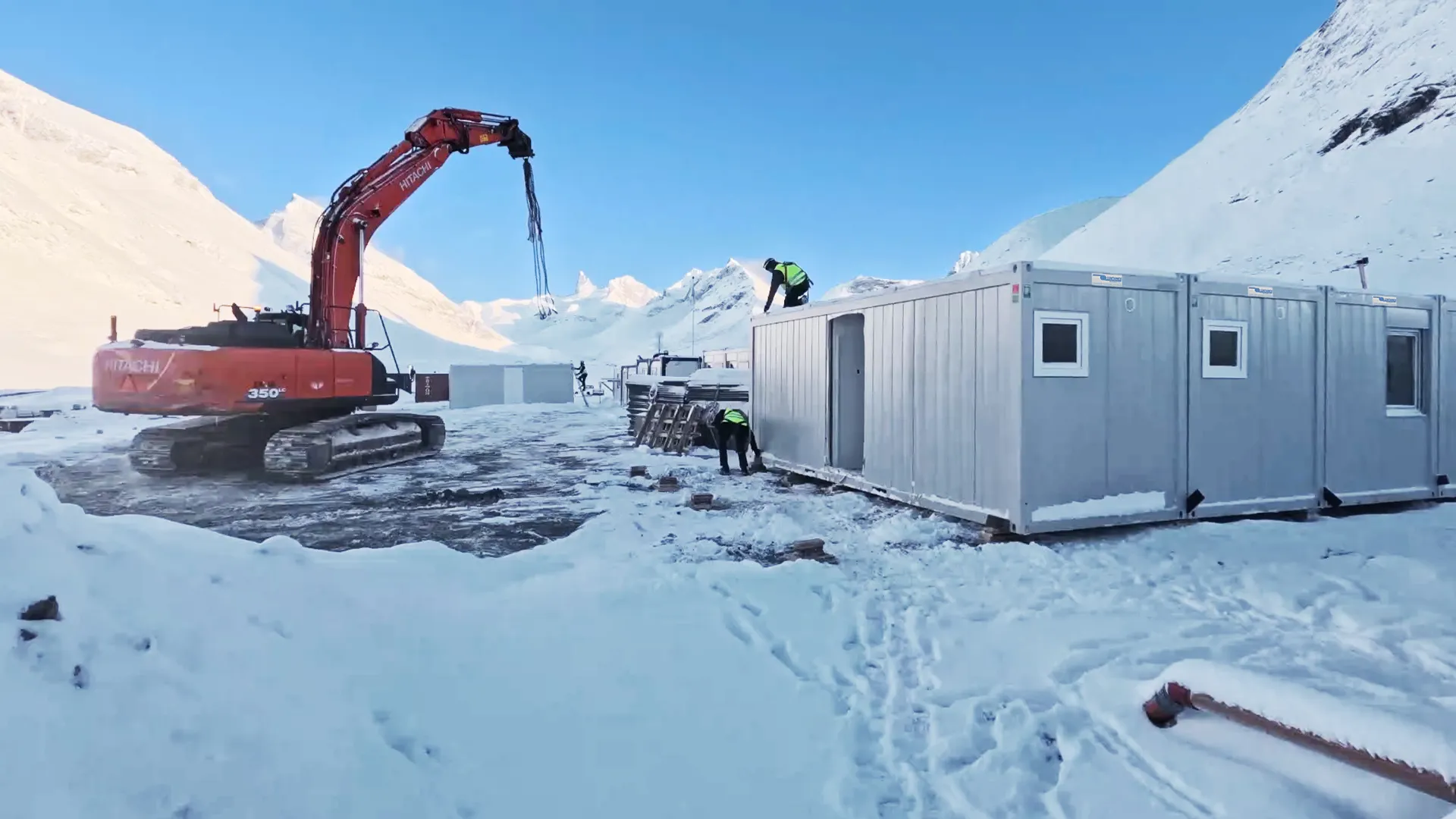
- Many sites have no mains water, no drainage, no permanent power, and sometimes limited vehicle access.
- Permitting and licensing timelines for temporary structures can run to the wire, leaving almost no margin for on-site construction.
Traditional construction methods are not just slow for this context. They are structurally incompatible with it. You cannot pour foundations, erect framing, fit interiors, and commission services in a week. Modular container-based infrastructure exists because event delivery demands a fundamentally different approach: one where the building arrives already built.
What Modular Infrastructure Actually Means in an Event Context
The term "modular" covers a wide range, from a single storage container dropped at a site entrance to a multi-storey hospitality complex assembled from dozens of interconnected units. In the event context, what matters is not the modularity itself but what it makes possible: pre-configured, factory-finished facilities that arrive on site ready to connect and operate.
A practical way to understand the distinction is to compare two scenarios.
In the first, an event organiser hires a bare shipping container to use as a site office. It arrives empty. It needs electrical fit-out, insulation, furniture, data cabling, and connection to temporary power. All of that work happens on site, using on-site labour, during the build window. It is a container, but it is not modular infrastructure.
In the second, an organiser receives a pre-fitted office unit with integrated lighting, power distribution, climate control, furniture, and data points. It is craned into position, connected to a power supply, and operational within hours. That is the difference between a box on a field and a planned facility delivered as infrastructure.
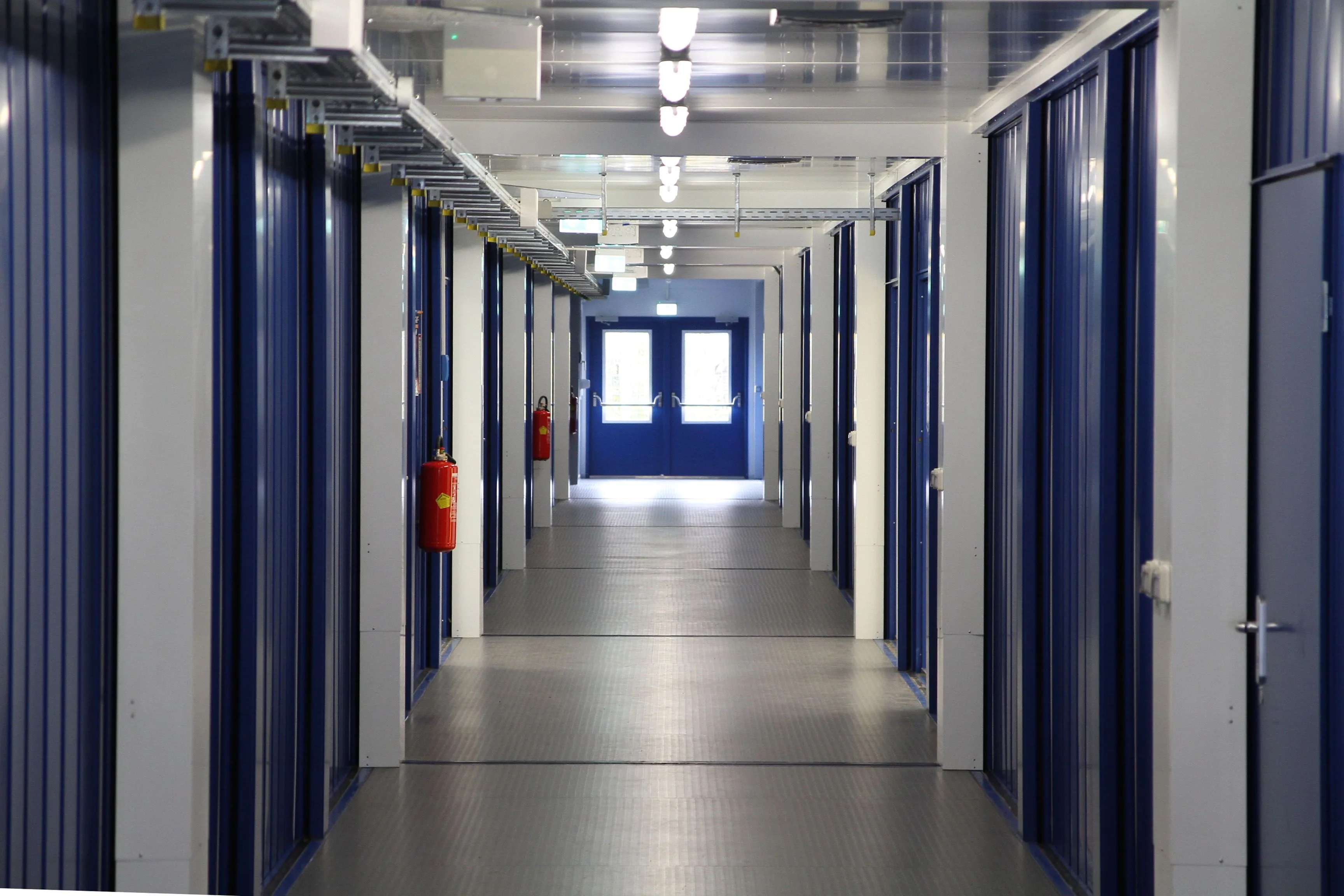
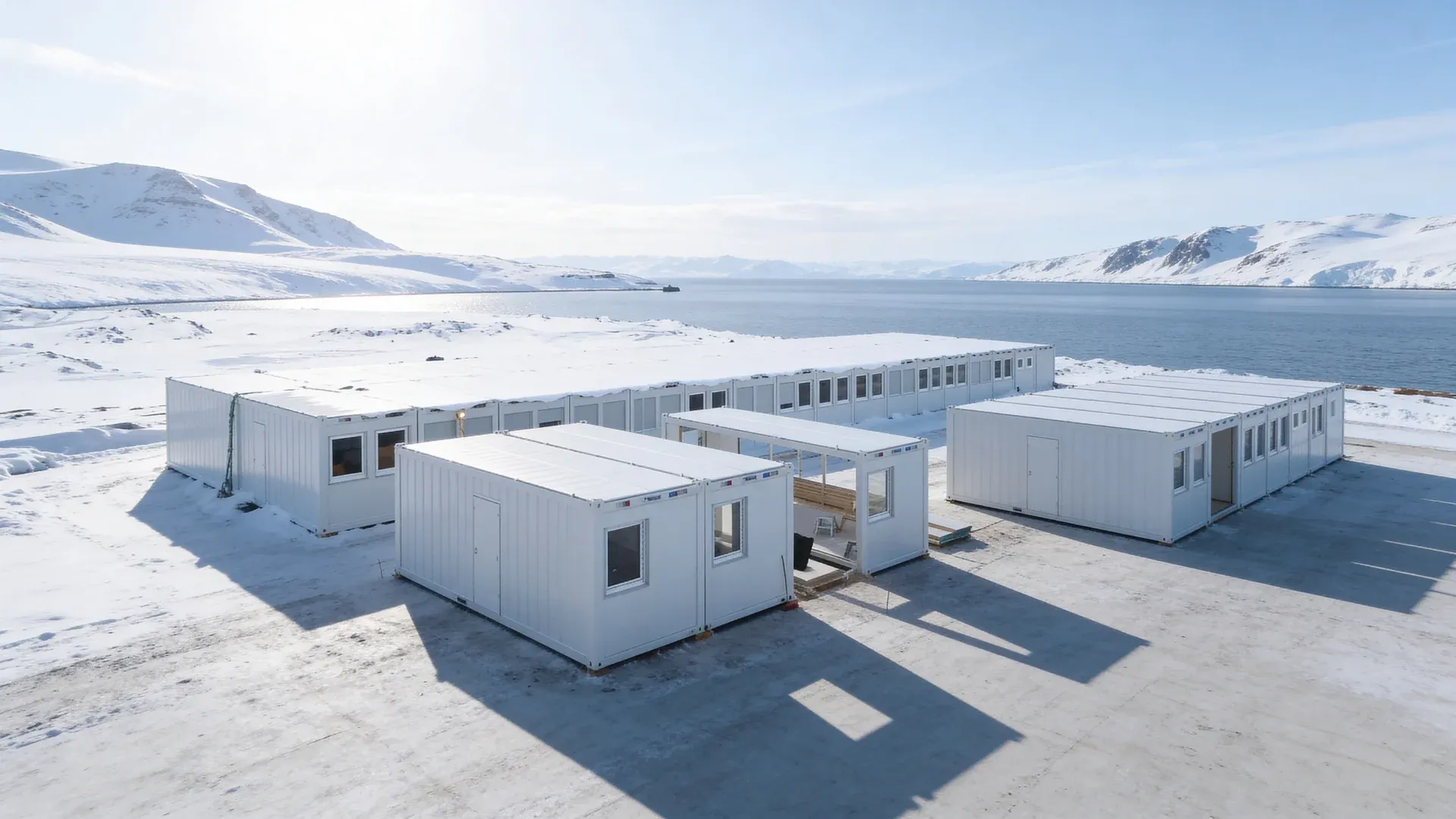
Scalability is the other defining characteristic. A single unit serves as a ticket office or production office. Combine four and you have a press centre. Combine twenty with corridor connections, stairways, and shared services and you have a two-storey hospitality village with reception, meeting rooms, and catering. The same base units, reconfigured for each event, each site, each brief.
And "modular event infrastructure" is not limited to structures people work in. It includes the full range of operational facilities an event requires: sanitary systems with toilets, showers, and accessible bathrooms; refrigerated containers maintaining cold chain for food and beverage vendors; secure lockable storage for production equipment and merchandise; retail kiosks and ticketing points; and sleeping accommodation for crew, artists, and workforce.
How is modular different from traditional temporary structures like marquees?
Marquees and tent-based structures serve a different purpose. They provide large open spans for audience-facing spaces, exhibition halls, and dining areas. They are not well suited to functions requiring solid walls, secure doors, climate control, plumbing, or heavy loading. Modular container-based systems complement rather than replace fabric structures. The office compound, the sanitary block, the cold store, the crew accommodation, the secure storage area: these are the functions where modular container infrastructure is the practical default.
Speed of Deployment as a Non-Negotiable
Labour availability is now one of the defining constraints in event production. Across Europe, the pool of skilled temporary crew for event builds has contracted since 2020. Day rates have risen. Experienced site managers report that tasks which once required booking crew two weeks out now require two months. The result is that every hour of on-site labour is more expensive and harder to secure than it was five years ago.
Modular infrastructure directly addresses this. A pre-fitted unit that arrives ready to place and connect might need two crew members and a crane operator for installation, compared to a site-built equivalent requiring carpenters, electricians, plumbers, and general labour over several days. The labour saving is not marginal. For a mid-scale festival building out 30 to 50 infrastructure units, the difference can amount to hundreds of crew-hours.
Foldable and flat-pack systems
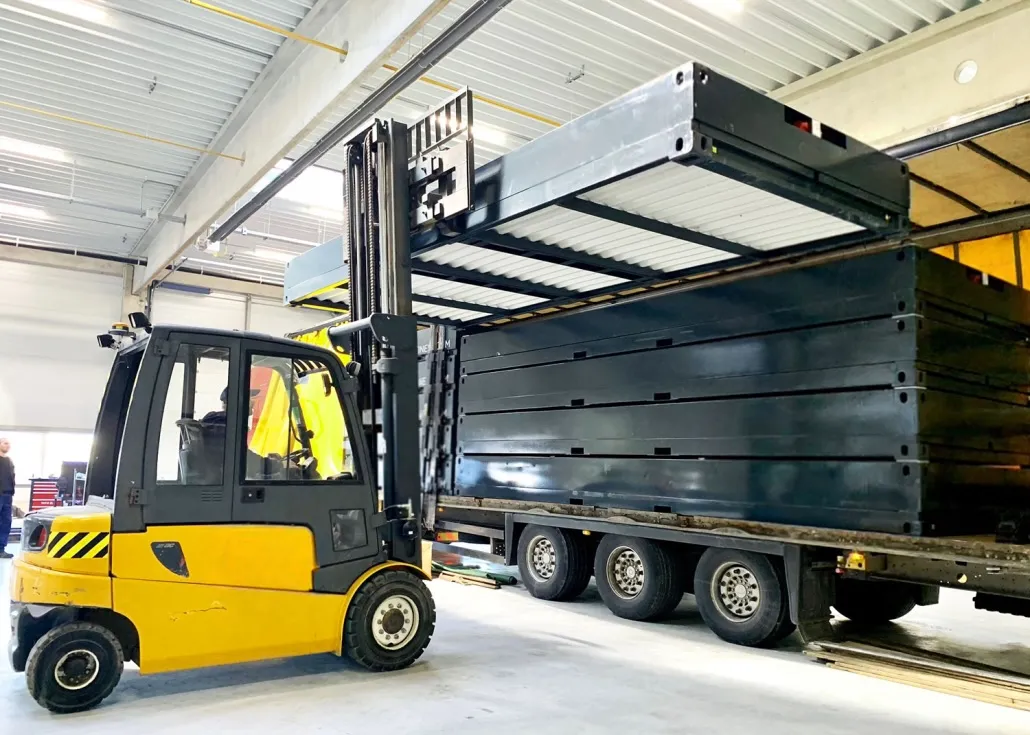
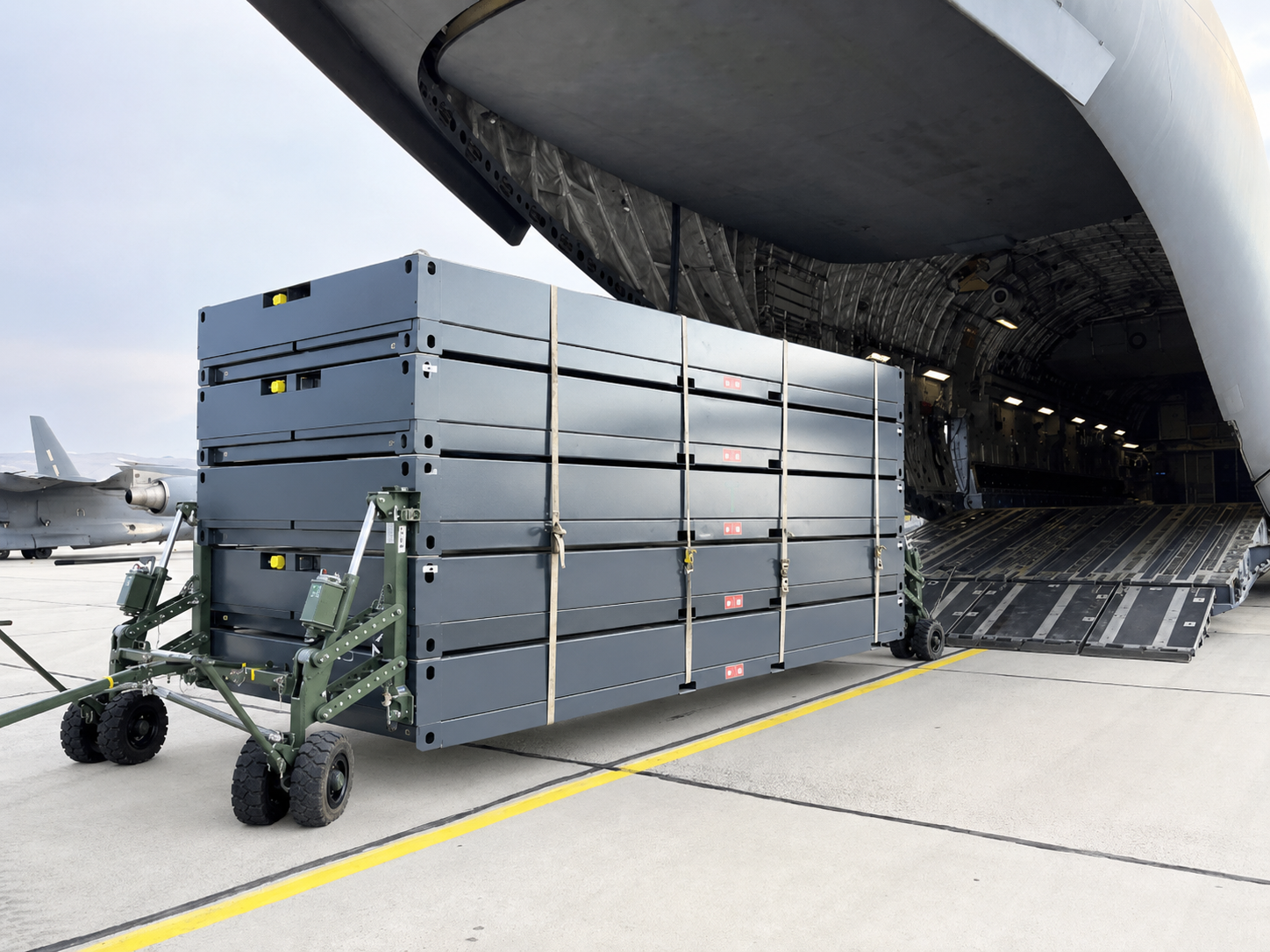
A further compression of the logistics chain comes from foldable modular systems. A conventional 20-foot container occupies one full truck position. A foldable unit of equivalent floor area can be transported flat, meaning four or more units fit on a single truck. For an event deploying 20 retail kiosks, that reduces transport from 20 truck movements to five. On sites with limited access roads or tight delivery windows, this is not a convenience. It is the difference between completing a build on time and not.
Foldable retail units designed for point-of-sale applications can be erected and operational in minutes rather than hours, which matters when a site layout change at 6am on build day five means relocating a ticket office that needs to be open by noon.
Similarly, foldable sleeping modules for crew and workforce accommodation offer the same logistics advantage: more capacity per truck, faster erection on site, and meaningful reduction in the transport footprint of the build.
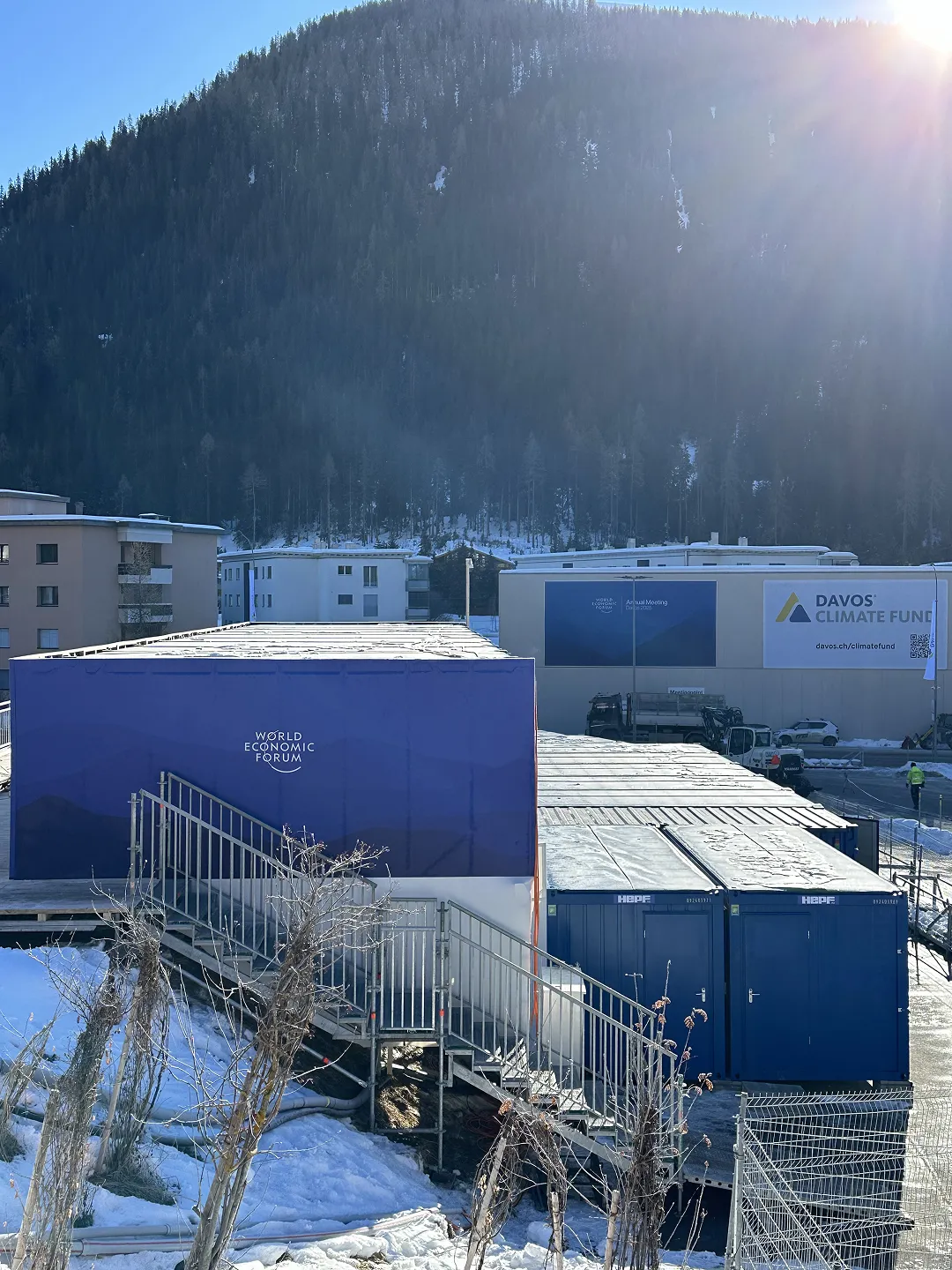
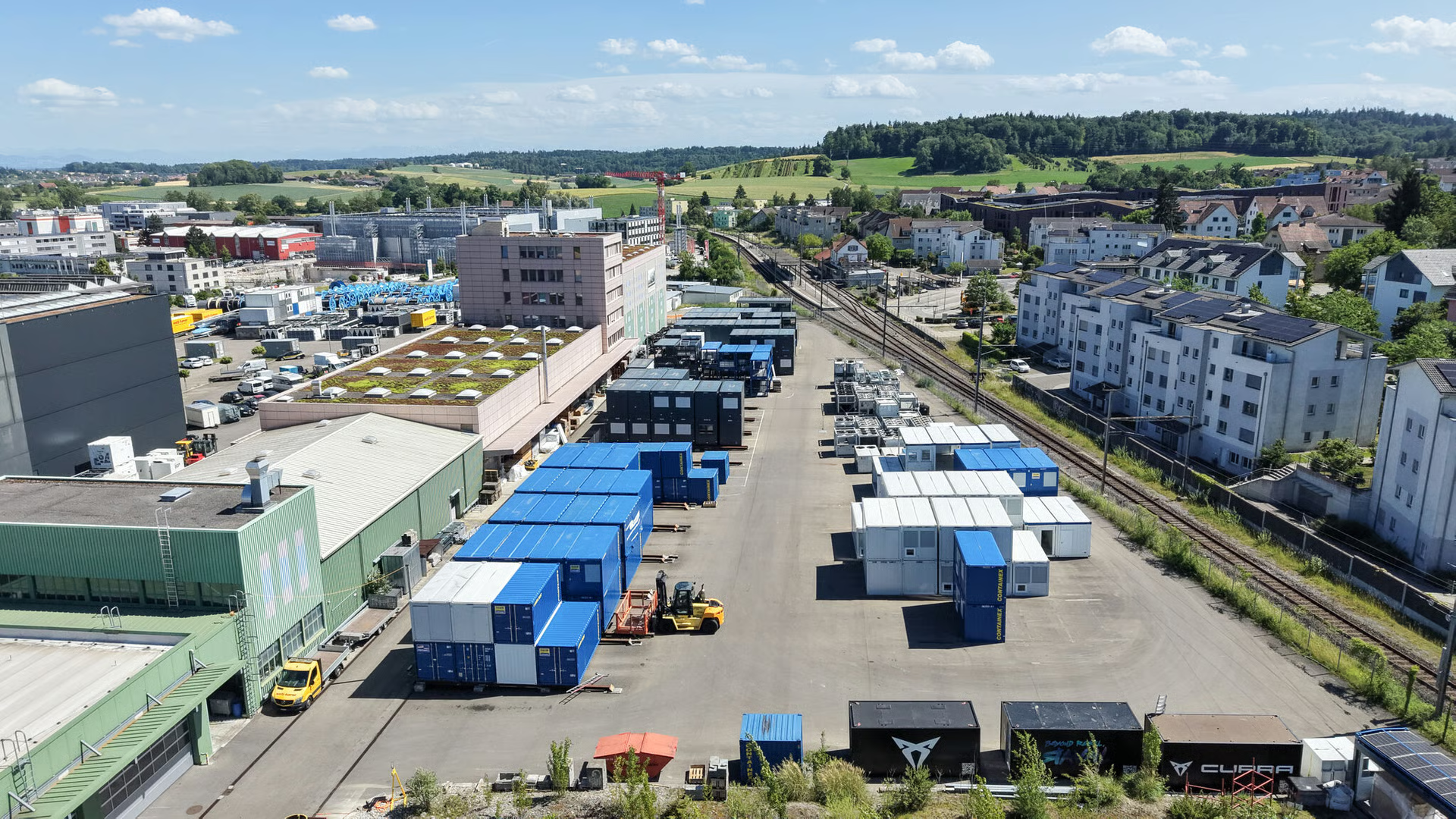
HEPF context: HEPF's FL Retail Line is a patented foldable point-of-sale unit designed for ticketing, kiosks, and event retail where speed and footprint efficiency are critical. The FL BedStay Line provides rapid-deploy sleeping modules for crew and workforce accommodation. Both are designed to compress the logistics chain that drives cost and risk in event builds. HEPF also coordinates modular infrastructure for major events including the World Economic Forum in Davos and UEFA Women's Euro 2025, where deployment timelines are measured in days and operational failure on opening day is not an option.
The Full Infrastructure Stack: Beyond Structures
One of the least discussed aspects of event infrastructure planning is the sheer number of distinct facility types required. An event is not a building project with one output. It is a simultaneous commissioning of multiple systems, all of which must be operational at the same moment: doors open.
Sanitation
Toilets, showers, and changing facilities are the baseline. At any public event with a capacity above a few hundred, sanitary provision is a licensing condition, not optional. Accessible and barrier-free facilities are increasingly a hard requirement in licensing applications, not a nice-to-have. Modular sanitary units arrive with plumbing, drainage connections, and fresh-water systems pre-installed. The on-site work is connection to water supply and waste handling, not fit-out.
For multi-day festivals with camping, shower facilities for thousands of attendees represent a significant infrastructure commitment. Modular sanitary systems designed for this scale include multiple cubicles per unit, hot water provision, and drainage capacity matched to high-throughput use.
Cold storage and refrigerated containers
Food and beverage logistics at events depend on maintaining cold chain integrity from delivery to service. Refrigerated containers in 10-foot, 20-foot, and 40-foot configurations serve catering operations, food vendor compounds, bar stock storage, and any application where temperature-controlled storage is required. These are not generic containers with a cooling unit bolted on. Purpose-specified reefer units maintain precise temperature ranges and are built to food hygiene requirements.
For events with significant catering operations, the cold storage requirement can run to dozens of units. Coordinating their delivery, positioning, power connection, and temperature commissioning within the build window is a logistics exercise in its own right.
Secure storage
Production equipment, artist gear, merchandise stock, sponsor assets, AV equipment, barriers, signage: the volume of high-value material on an event site is substantial. Secure, weather-resistant, lockable storage containers provide the obvious solution, but they need to be in the right place at the right time, and they need to be genuinely secure. A padlock on a shipping container is not the same as a purpose-specified storage unit with multi-point locking and weather sealing.
Offices, accommodation, and public-facing spaces
Site offices for production, artist liaison, medical, security, and event control. Crew accommodation for multi-day builds and events. Public-facing spaces for VIP hospitality, sponsor activations, press centres, and broadcast compounds. Each of these has different specifications, different fit-out requirements, and different expectations of quality. The modular approach handles this through product lines designed for distinct use cases rather than one-size-fits-all boxes.
HEPF context: HEPF's product portfolio covers this full stack: the Sanitary Line for toilets, showers, barrier-free bathrooms, and fresh-water systems; the Reefer/Cold Storage Line for food logistics and catering; the Storage Line for secure, weather-resistant lockable units; office and accommodation configurations from the Classic and Plus Lines; and the Smart Line for premium hospitality and leisure applications. This breadth means a single coordination partner can plan, source, deliver, and install the full range of infrastructure an event requires.
Rent, Buy, or Reuse: The Financial Logic for Event Organisers
Events are temporary by definition, but infrastructure spending does not have to be disposable. The financial model you choose for modular infrastructure should match the pattern of your programme.
Single or infrequent events
Rental is the default. You access the facilities you need for the duration you need them, with no capital expenditure and no storage liability between events. The rental cost is a known, plannable line item in your production budget.
Recurring annual events
If you run the same festival or event annually, the calculation changes. Renting the same infrastructure every year means paying the rental margin repeatedly. A lease arrangement or purchase with buy-back option may offer better value over a three-to-five-year horizon, depending on storage and maintenance costs between uses.
Touring or multi-site programmes
For a programme that moves between venues, such as a touring exhibition or a series of roadshow events, owning a fleet of modular units that travel with the programme can be more cost-effective and logistically simpler than procuring rental infrastructure at each new site.
Sustainability as a procurement factor
Reusable modular infrastructure directly supports the environmental commitments that now feature in procurement decisions across the European festival sector. Frameworks such as A Greener Festival certification and the Vision:2025 initiative assess waste reduction, transport footprint, and material reuse. Infrastructure designed for repeated deployment over many years scores well against these criteria compared to single-use custom builds that are dismantled and scrapped after one event.
HEPF context: HEPF offers flexible commercial models across its product range. Units can be rented, bought, leased, or bought back, allowing event organisers to match their infrastructure investment to the duration, frequency, and financial structure of their programme.
Premium Appearance Without Permanent Construction
The concern that modular infrastructure "looks cheap" is legitimate and worth addressing directly. A bare steel container with a corporate logo zip-tied to the side does look cheap. It communicates that the organiser spent money on the headline act and nothing on the operational environment.
But that is not what modern modular event infrastructure looks like. Purpose-designed units for public-facing and premium applications offer:
- Insulated wall and roof systems with interior finishes comparable to permanent buildings
- Climate control (heating and cooling) that maintains comfort in all weather conditions
- Architectural cladding, branded wrapping, and window configurations that integrate with event design language
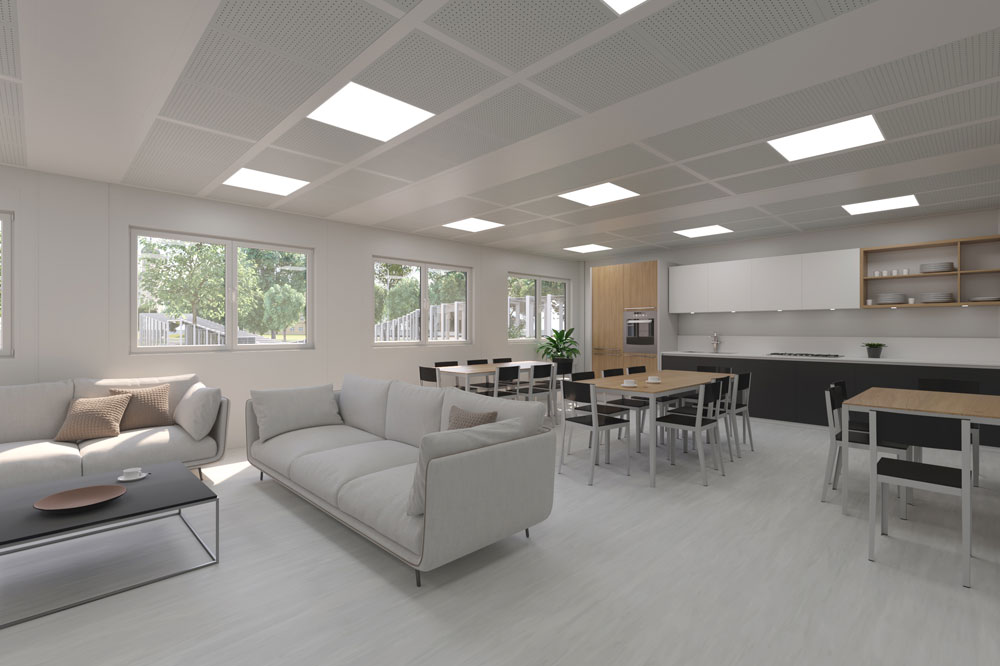
- Flooring, lighting, and furniture packages specified for the intended use, whether that is a VIP lounge, a press interview room, or a sponsor activation space
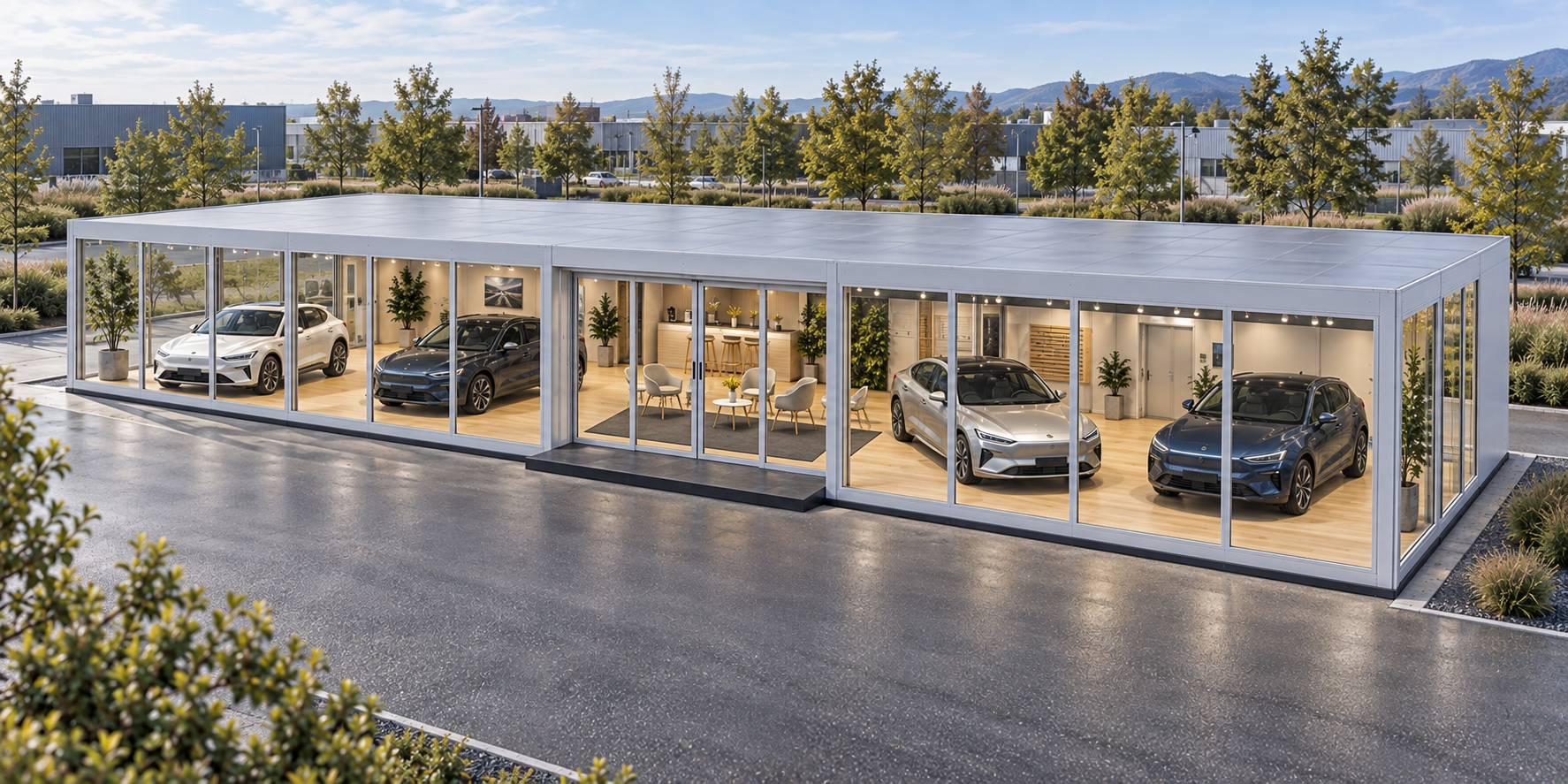
The gap between temporary modular infrastructure and permanent construction has narrowed to the point where, for many applications, the difference is invisible to the end user. A guest entering a hospitality unit at a major sporting event should not be able to tell whether they are in a modular facility or a permanent building. If they can, the specification was wrong.
For events where brand perception is part of the deliverable, such as sponsor activations, corporate hospitality, and broadcast-facing environments, the visual and experiential quality of infrastructure is not a secondary concern. It is part of the product.
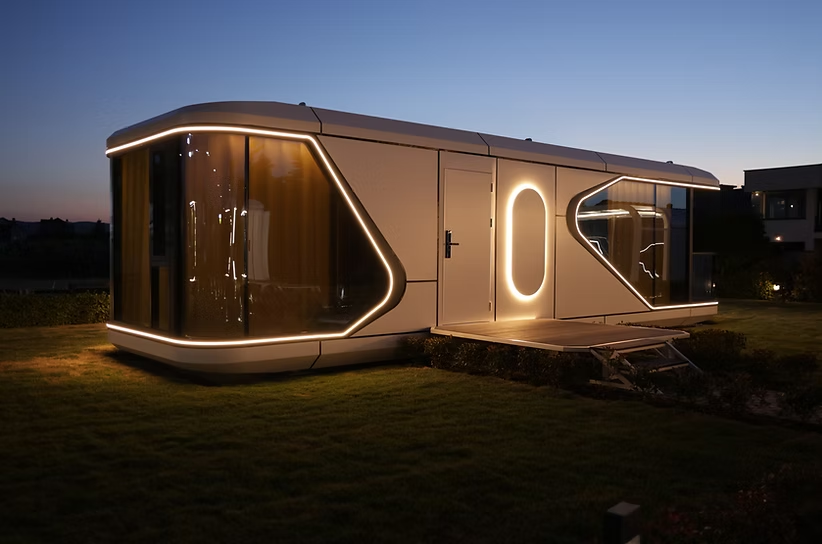
HEPF context: HEPF's Plus Line is designed specifically for public-facing and long-term installations where the modular origin of the building should be invisible. Higher thermal performance, better architectural detailing, and interior quality that meets the expectations of premium environments. The Smart Line serves hospitality and leisure applications, including guest accommodation, where the experience standard is comparable to boutique hotel rooms rather than temporary site cabins.
One Partner vs. Multiple Suppliers: Coordination as the Hidden Cost
This is where most event infrastructure procurement goes wrong, and where the greatest operational risk sits.
A typical mid-scale festival might source its infrastructure from five or more separate suppliers: one for site offices, another for sanitary facilities, a third for cold storage, a fourth for secure storage, and a fifth for crew accommodation. Each supplier has its own delivery schedule, its own site access requirements, its own crane or forklift needs, and its own commissioning process.
When everything runs to plan, this works. When it does not, and it frequently does not, the consequences cascade.
A delayed sanitary unit delivery blocks the access road needed for the cold storage delivery. The cold storage arrives late, which means the power contractor cannot commission the reefer units on schedule. The crew accommodation is in place but has no water connection because the sanitary contractor, who was also handling water distribution, is a day behind. By build day four of a seven-day window, the production manager is managing supplier conflicts instead of building an event.
The coordination overhead of managing multiple infrastructure suppliers is real, measurable, and rarely accounted for in procurement budgets. It consumes production management hours, creates accountability gaps when something goes wrong, and introduces failure modes that would not exist under a single-partner model.
A consolidated approach, where one partner handles product selection, layout planning, sourcing, delivery scheduling, installation coordination, and handover across the full infrastructure requirement, removes these failure modes. It does not eliminate risk entirely. But it reduces the number of interfaces where things go wrong, and it gives you one point of contact when they do.
Can one supplier realistically handle the full infrastructure scope?
This is a fair question, and the answer depends on the supplier's model. A company that manufactures one product type and tries to stretch into adjacent categories may introduce more risk than it removes. The model that works is a coordination partner with a broad product portfolio and established sourcing relationships, one that selects and configures the right system for each function rather than forcing everything through a single product line.
HEPF context: HEPF's operating model is built around this single-partner principle. As a Swiss-led modular infrastructure partner, HEPF coordinates the full path from requirement to operational facility: product selection, layout configuration, sourcing, delivery, installation coordination, and handover. The breadth of the product portfolio, from basic site containers through premium hospitality units to foldable rapid-deploy systems, means the right system is matched to each function rather than one product being stretched across incompatible use cases. For deadline-driven event environments, this consolidation of coordination under one partner is not a convenience. It is a risk management decision.
.webp)
Book a free consultation
Open, non-binding and tailored to your project.