Foldable Containers at Events:
The Logistics Problem That Foldable Containers Solve for Events
Event infrastructure operates under a constraint that most construction projects never face: a fixed, non-negotiable deadline. A festival site might have three to five days for full infrastructure deployment. A corporate event at a convention centre might have a single overnight window. Everything, from crew offices to retail kiosks to sleeping quarters, must arrive, stand up, function, and later disappear within a schedule that cannot slip by a day.
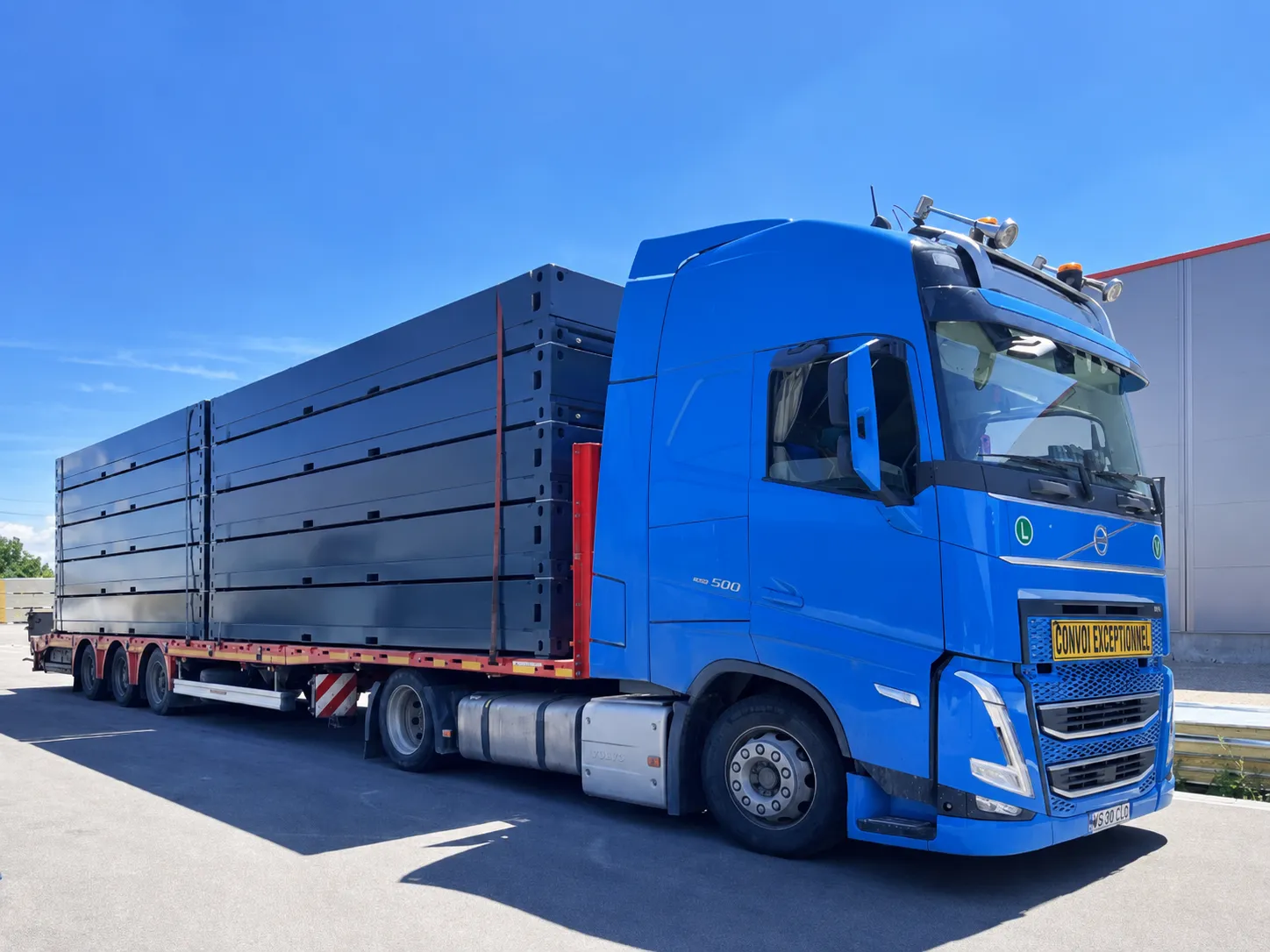
The bottleneck is rarely the structures themselves. It is getting them to site. Every standard container or portable cabin occupies the full footprint of a truck for the journey in and again for the journey out. Multiply that by the dozens or hundreds of units a large event demands, and you have a logistics operation that is expensive, carbon-intensive, and vulnerable to delay. Foldable containers address this directly: by collapsing to a fraction of their erected volume, they compress the transport schedule, reduce truck movements, and give site crews more time for fit-out rather than structural assembly.
This article explains how the folding mechanism works, what the transport savings actually look like in practice, and how to decide whether foldable containers are the right choice for your event.
How a Foldable Container Actually Folds
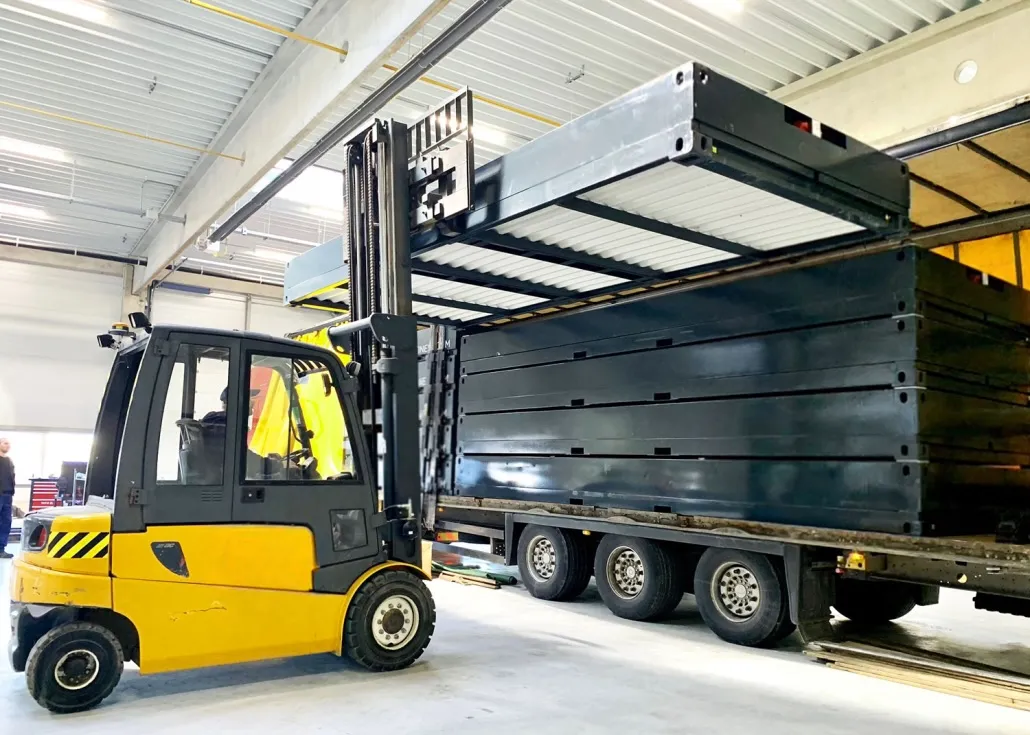
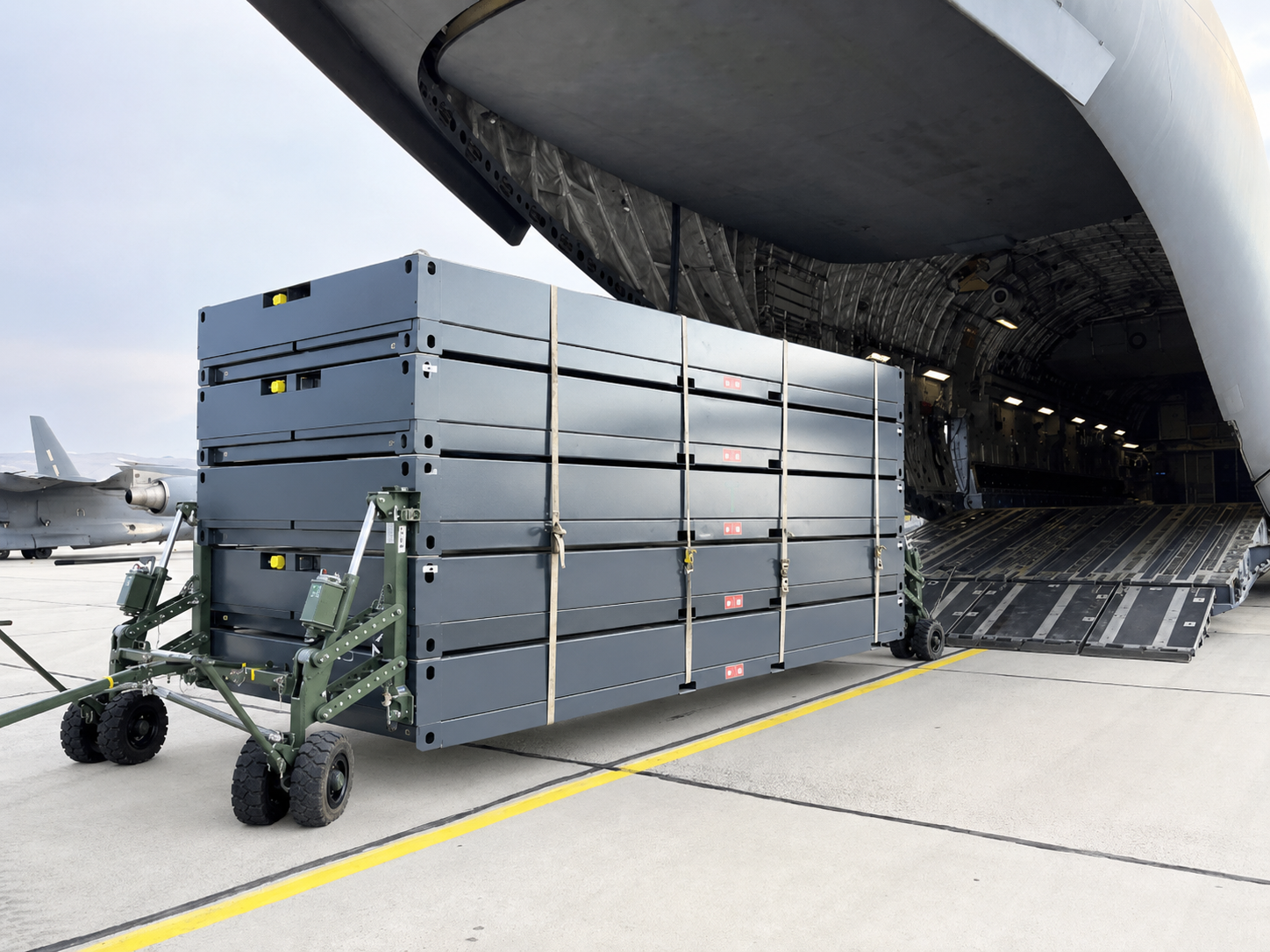
A foldable container is not a tent or a pop-up marquee. It is a rigid, steel-framed structure with a reinforced floor plate and roof frame connected by hinged wall panels. In the collapsed state, the floor and roof sit close together with the wall panels nested between them.
The corner castings are ISO-compatible, meaning folded units can be handled, stacked, and transported using the same equipment and methods as standard shipping containers. This is a practical detail that matters: you do not need specialist trailers or non-standard lifting gear.
How long does setup take?
A single 20 ft foldable unit can typically be erected by two people in five to ten minutes on a levelled surface. The process is the reverse of folding: the roof frame lifts, the wall panels swing out and lock into position, and the unit is structurally complete. No welding, no bolting of separate panels, no crane lift in most cases. The absence of a crane requirement is significant for event sites, where access roads are often narrow, weight-restricted, or shared with other contractors working simultaneously.
Once erected, a foldable container has the same load-bearing characteristics as a conventional rigid container of equivalent specification. The locking mechanisms on the wall panels transfer loads through the corner castings to the floor frame. You can stack erected units where the design allows it, and folded units stack neatly for transport and storage.
Transport Efficiency: The Numbers Behind Fewer Trucks
This is where foldable containers earn their place on an event logistics plan.
A standard 20 ft container occupies one truck position. A 40 ft carries one or two standard units depending on configuration. That ratio is fixed: one container, one journey.
Modular foldable containers achieve a volume reduction of roughly 4:1 when collapsed. In practical terms, four to five folded 20 ft units occupy the same transport space as a single standard container. For certain product lines, the ratio is even more favourable. Rapid-deploy sleeping modules, for example, can achieve densities of up to 20 folded units per truck, which transforms the logistics equation for crew accommodation at multi-day events.
What does this mean for a real event?
Suppose your event requires 40 units of various types: offices, retail kiosks, crew quarters, storage. With standard containers, that is roughly 40 inbound truck movements and 40 outbound, assuming one unit per truck. With foldable containers at a 4:1 ratio, the same 40 units require approximately 10 inbound loads and 10 outbound. That is 60 fewer truck journeys across the event cycle.
The savings cascade outward from that single change. Fewer trucks mean lower freight costs. They mean less road congestion around the venue during build and strike, which matters enormously for sites in urban areas or on single-access roads. They mean a shorter delivery window, which gives your site crew more of the build schedule for fit-out, branding, electrical connection, and commissioning rather than waiting for the next lorry.
There is also a carbon argument. Each heavy goods vehicle journey carries a measurable emissions cost. Eliminating 60 truck movements from a single event is not a rounding error in a sustainability report.
How to improve transport efficiency for event infrastructure
The most direct way to improve transport efficiency for event infrastructure is to reduce the number of loads. Foldable containers do this mechanically, by collapsing the cargo volume. But the efficiency gain extends beyond the folding itself. Because units arrive in batches rather than one by one, unloading can be sequenced to match the site plan. Crews erect units in the order and location needed rather than working around whatever arrived first. This turns a chaotic delivery schedule into something closer to a planned assembly sequence.
Why Fixed Deadlines Change the Calculation
In conventional construction, a late delivery costs you time but not necessarily the project. In events, a late delivery can cost you the event. The doors open on a published date. The broadcast schedule is set. The audience has tickets.
This non-negotiable timeline changes how you evaluate infrastructure options. Speed of deployment is not a nice-to-have; it is a primary specification.
Foldable containers compress both ends of the logistics timeline. On the inbound side, fewer truck movements mean fewer scheduling dependencies, fewer chances for a single delayed vehicle to cascade through the build plan. On the erection side, five to ten minutes per unit with a two-person crew means a team of four can stand up eight to ten units per hour. Compare this to crane-based placement of standard containers, where each lift is a sequenced operation requiring a crane operator, banksman, and clear exclusion zone.
For context, a complete 600 m² modular infrastructure solution was delivered for the World Economic Forum in Davos within 12 to 13 days. For UEFA Women's Euro 2025, a 100 m² container office solution was deployed in a single day. These are real timelines achieved on real sites with real deadline pressure.
Event Use Cases Where Foldable Containers Fit Best
Not every event application calls for a foldable system. Standard modular containers remain the right choice for large, long-duration installations where transport efficiency is less critical than internal specification. But for applications where speed, volume, and redeployment matter most, foldable containers have clear advantages.
Pop-up retail and ticketing
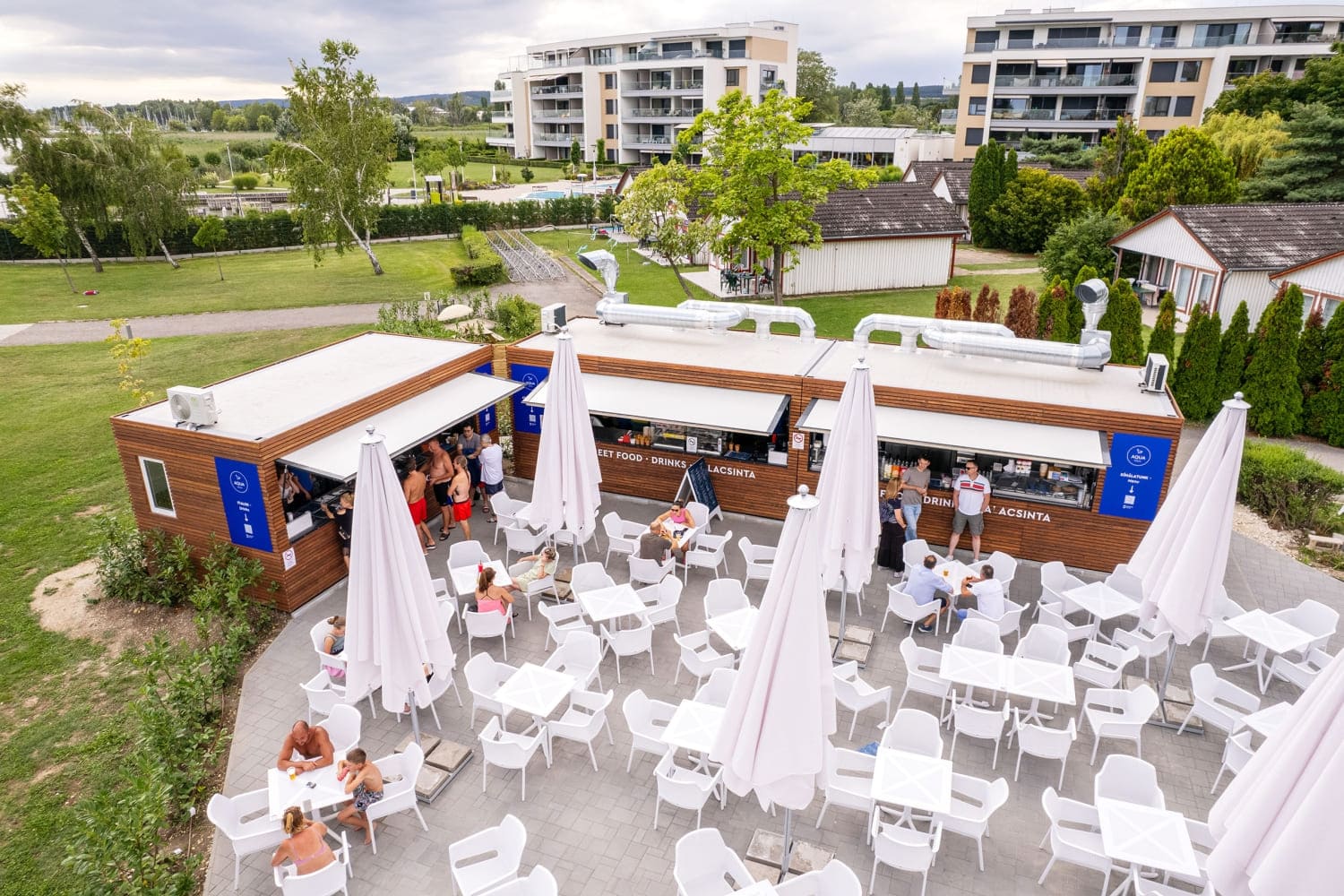
Foldable point-of-sale units with fold-out counters can be operational within minutes of arrival. For a festival with 15 or 20 retail points spread across a site, the ability to deliver and erect all of them in a single morning rather than across two days of crane lifts is a meaningful operational gain.
Crew and workforce accommodation
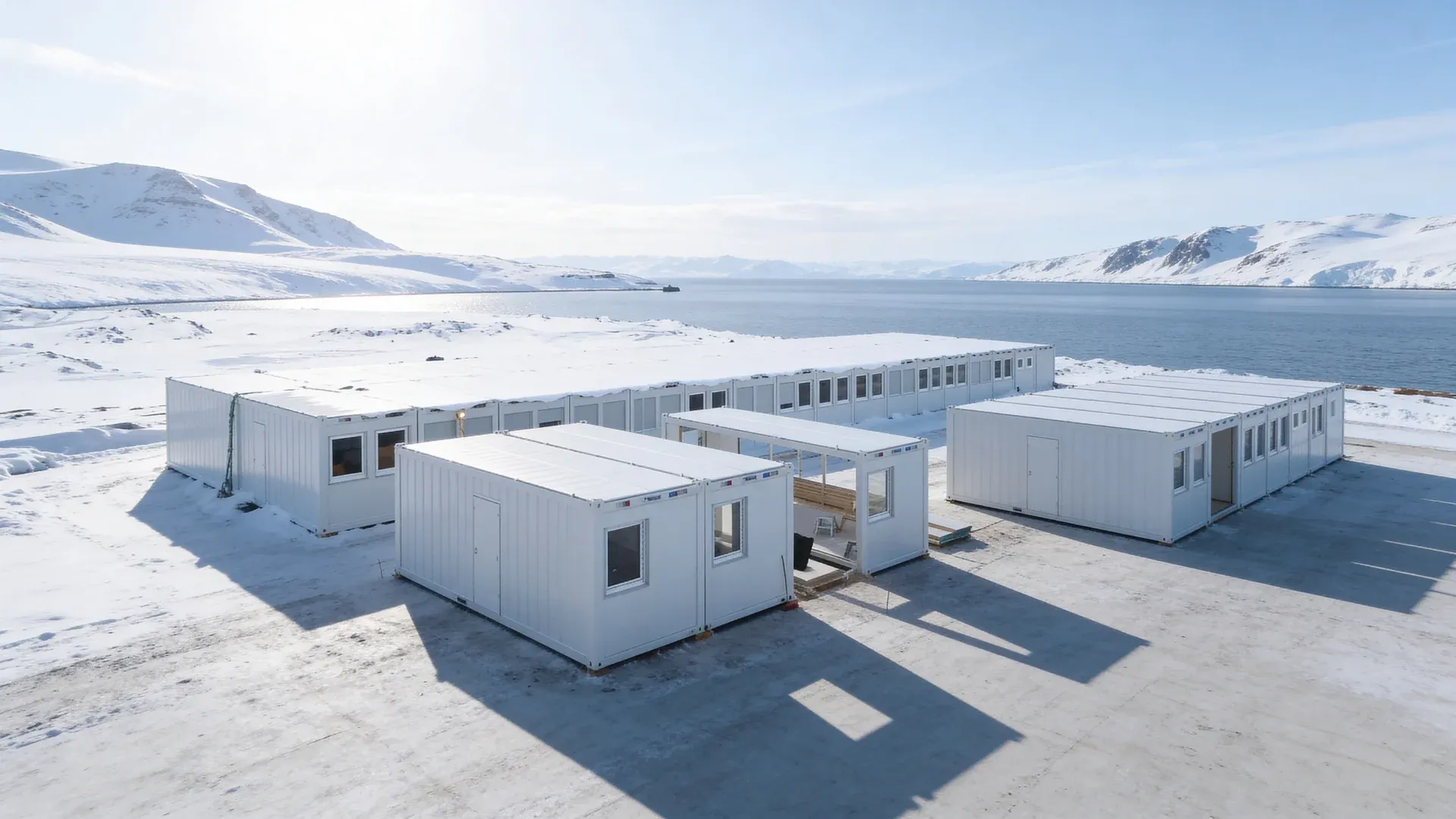
Multi-day festivals, touring productions, and sporting events need sleeping quarters for crew, security, medical staff, and production teams. Foldable sleeping modules at densities of up to 20 units per truck mean you can deliver an entire crew village in a fraction of the truck movements that standard cabins would require. This is particularly valuable for touring productions that move between cities on a weekly schedule.
Operational and security offices
Event control rooms, accreditation centres, and security posts need to be among the first structures operational on site. Foldable units that erect without a crane can be placed and occupied while heavier infrastructure is still being delivered around them.
Back-of-house storage
Secure, weather-resistant storage that arrives with the event and leaves with it. Foldable storage units are not a compromise; they lock, they are weatherproof, and they stack in transit.
After the Event: Redeployment and Storage
The strike is the mirror image of the build, and it is often more compressed. Venues want their sites back. Foldable containers fold down in the same five to ten minutes they took to erect, load onto trucks at the same 4:1 or better ratio, and leave.
Between events, folded units require 75 to 80 percent less depot space than their erected equivalents. If you are an event hire company or a production firm holding stock between seasons, that storage saving is a direct reduction in overhead.
The reuse cycle is where the total cost argument strengthens. A foldable container is not single-use infrastructure. Units deploy, return, store flat, and deploy again across multiple events and multiple seasons. Each reuse cycle amortises the initial cost further and avoids the waste stream associated with single-event temporary structures such as scaffold-and-cladding builds or bespoke timber installations.
What makes this approach more sustainable than alternatives?
The sustainability case for foldable containers at events rests on three factors: fewer transport movements per deployment (lower fuel burn and emissions), physical reuse across many cycles (lower material consumption over time), and compact storage (lower land use between events). None of these require heroic assumptions. They follow directly from the mechanical properties of the system.
Choosing the Right Foldable System for Your Event
The decision is not simply "foldable or not." Different foldable product lines serve different functions, and the right choice depends on your specific use case, site constraints, and commercial model.
Start with the application
Are you fitting out a retail village, housing a crew, running operations, or storing equipment? Each of these may call for a different unit type. A foldable point-of-sale kiosk with an integrated counter is a different product from a foldable sleeping module with beds and ventilation.
Assess your site access
Foldable containers are strongest where site access is constrained. Narrow streets, pedestrianised zones, weight-restricted bridges, venues where a crane cannot operate or would block other contractors: these are the conditions where crane-free erection and high-density transport become decisive advantages. If your site has wide access roads and a crane already on hire for stage rigging, the access argument is less pressing, though the transport volume argument still holds.
Evaluate your delivery window
How many units do you need, and how many days do you have to get them on site and operational? If the answer is "many" and "few," foldable containers shift from a preference to a practical necessity.
Consider rental versus purchase
Foldable containers are well suited to rental models. Their compact transport and storage profile means the rental provider can hold more stock in less space and deliver it more efficiently. If you are procuring for a single event, rental is likely the right model. If you run a recurring event or operate across a season of events, purchase or lease may offer better value over time. Units can typically be bought, rented, or leased depending on the project.
Ask the right questions of your supplier
What is the actual collapse ratio for the specific unit you are quoting? How many fit on one truck? What is the realistic erection time with the crew size you can provide? What ground preparation is needed? Can the units be connected to mains power and water on site? What is the turnaround time between events? These are the questions that separate a useful specification from a brochure claim.
.webp)

Book a free consultation
Open, non-binding and tailored to your project.